Get Full Government Meeting Transcripts, Videos, & Alerts Forever!
Get email alerts on the Public Safety Policing topic
No spam. Unsubscribe anytime.
Idaho State Police lays out FY2026 requests: fentanyl unit, forensic lab expansion, housing and staffing concerns
Summary
Colonel Bill Gardner and legislative analysts presented the Idaho State Police FY2026 budget requests Feb. 12, including a fentanyl‑focused unit, forensic staffing and a new Meridian lab, a proposed transfer tied to reductions in the Highway Distribution Account, and continued concern about trooper vacancies and retention.
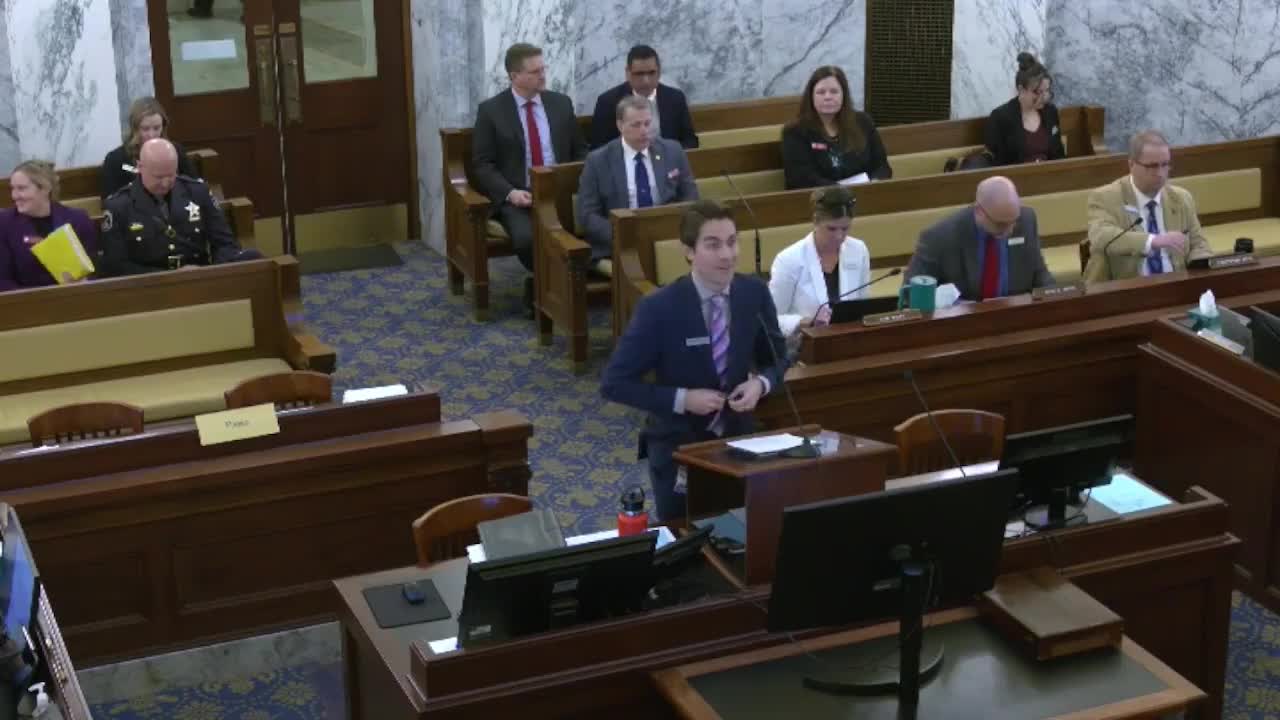
The Joint Finance and Appropriations Committee heard Feb. 12 from the Idaho State Police on its FY2026 budget requests and related operational issues, with agency leaders seeking funding for a fentanyl‑focused enforcement unit, additional forensic staffing, disaster recovery for law‑enforcement IT, and continued support to address recruitment and retention shortfalls.
"This enhancement added 10 FTP and $1,043,300 to create a unit with a focus on fentanyl trafficking and mitigation," budget policy analyst Noah Peterson said when summarizing an enhancement request. Peterson described a package of requests the agency submitted, including personnel conversions, a forensic deputy lab manager, and a proposed transfer tied to a statutory change that will reduce future HDA (Highway Distribution Account) distributions to the law enforcement fund.
Idaho State Police Director Colonel Bill Gardner testified on operational results and staffing needs. Gardner told the committee the state's full‑time drug interdiction team has recently seized "over 65,000 fentanyl pills, over a full pound of fentanyl powder, [and] 150 pounds of methamphetamine," and described additional large seizures in recent operations. He said the agency is pursuing a mix of one‑time and ongoing requests to sustain operations and reduce backlogs in vehicle upfitting, laboratory capacity and investigations.
Key requests described to the committee include:
- A remote housing supplemental of $268,100 for a state‑owned unit moved from the originally proposed location in Mackay to Fairfield, which the agency said allows cost savings and use of Idaho Transportation Department property.
- Fleet service positions: conversion of two contracted fleet workers to two full‑time FTP and a net personnel cost of $63,300 to eliminate contracted upfitting backlogs.
- Special investigations unit for Department of Correction facilities: creation of four positions (one detective sergeant and three detectives) and a $757,300 total request (about $443,300 ongoing for personnel and $314,000 one‑time for vehicles and computers).
- Forensic deputy lab manager: one FTP and $118,200 to add managerial capacity as the division builds a new Meridian forensic laboratory.
- DNA collection legislation estimate: $168,100, based on about 1,681 samples annually at roughly $100 per sample, tied to draft legislation widening mandatory collection for certain misdemeanors.
- A requested transfer of $4,995,500 and roughly 37.48 FTP from the law‑enforcement fund to the general fund in FY2026 to allow patrol to maintain operations as statutory HDA distributions phase out pursuant to prior legislation (Senate Bill 1201, 2019, was cited in context of the HDA changes).
- The Sexual Assault Kit Initiative (SACI) investigators: converting intended part‑time retired contractors to two permanent employees to allow POST certification and continued case work (a net‑zero operating to personnel transfer of $402,100 was described).
- ILETS disaster recovery database: a $233,000 ongoing request from the Idaho Law Enforcement Telecommunications Fund to maintain a disaster recovery site for the central switch and critical data access.
Peterson also walked the committee through fund history for the division: ISP has 583.67 FTP, reported 38.67 vacancies as of August last year and a five‑year average fill rate of about 92.5%. He flagged that 2023 included large one‑time appropriations (about $26 million combined between enhancements and supplementals) and that some expenditure percentages in later years were depressed by unliquidated purchase orders tied to one‑time spending.
Committee members pressed agency officials on centralizing IT positions under the Office of Information Technology Services (OITS), noting a governor's revision reduced the number of transferred FTP from 20 to 16 and increased the net operating cost. Senator Cook said she feared "creating a shadow IT department" if the move were only partial; Noah Peterson and Colonel Gardner said agency‑level application and operations support argued for keeping some personnel in ISP to provide real‑time support for applications.
Several legislators raised concerns about staffing and retention. Senator Woodward noted population growth and asked how trooper vacancies affect public safety; Gardner testified that northern Idaho has been particularly affected and that the agency is losing troopers to other jurisdictions and municipal agencies, emphasizing pay competitiveness. The director thanked the committee for the 8% CEC increase for troopers and said he was committed to returning with a plan to address recruitment and retention.
On the Millennium Fund request, budget staff and the Division of Financial Management clarified the governor recommended a one‑time $500,000 operating appropriation from the Millennium Fund for a fentanyl public information campaign; DFM confirmed the recommendation as one‑time during committee discussion.
The committee asked for follow‑up on several items: where the four IT positions not moved under OITS would be reassigned, additional detail on forensic lab construction timelines and capabilities, and clarification of federal grant expenditures tied to the Sexual Assault Kit Initiative. Agency staff said they would provide more detailed follow‑up information to committee members.
No formal votes were taken on the ISP enhancement package during this hearing; the presentation and questions were part of the agency budget review process.