Get Full Government Meeting Transcripts, Videos, & Alerts Forever!
Get email alerts on the Career Technical Education Budget topic
No spam. Unsubscribe anytime.
Legislators hear $10 million proposal to expand CTE capacity as welding, nursing programs remain oversubscribed
Summary
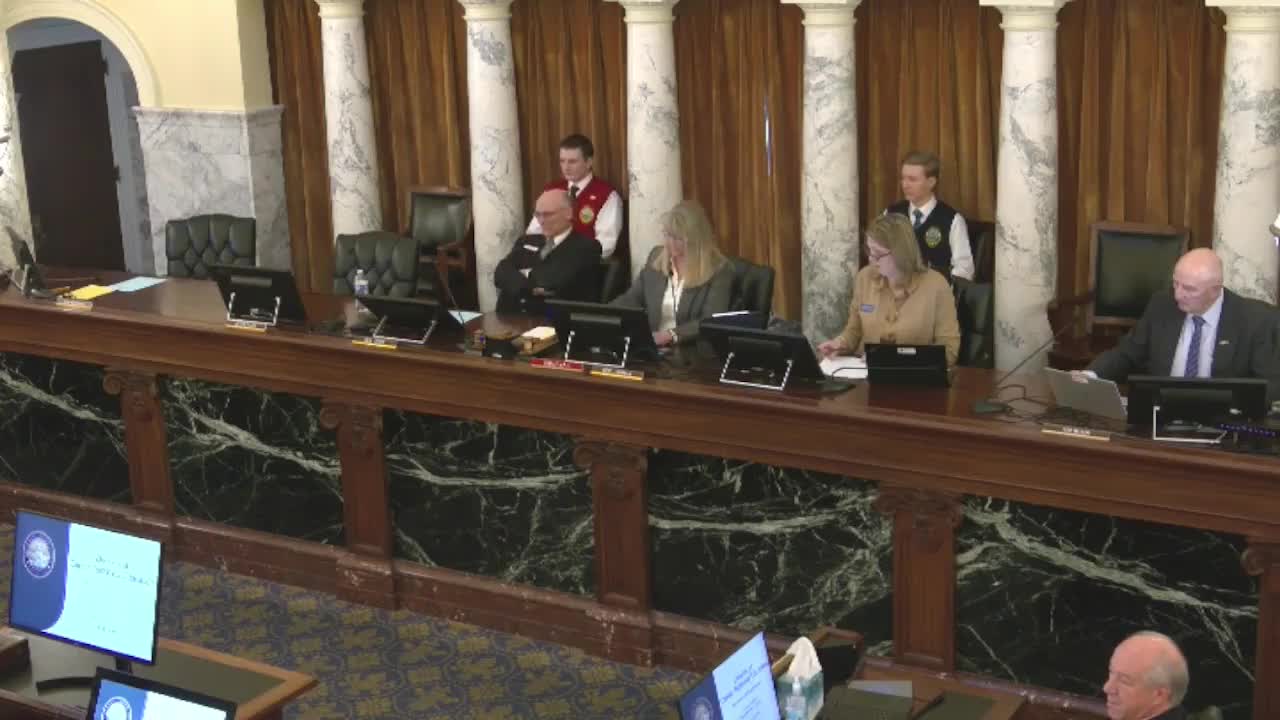
The Joint Finance-Appropriations Committee on Monday heard that Idaho’s Career Technical Education (CTE) is experiencing rapid growth in student demand and is seeking ongoing and one-time funds to expand capacity.
The Joint Finance-Appropriations Committee on Monday heard that Idaho’s Career Technical Education (CTE) is experiencing rapid growth in student demand and is seeking ongoing and one-time funds to expand capacity.
Kevin Campbell, a budget and policy analyst with the Legislative Services Office, told JFAC the division supports secondary, postsecondary and adult programs across the state and relies on a mix of state and restricted funds, including the Displaced Homemaker Fund, the Hazardous Materials and Waste Enforcement Fund and the Motorcycle Safety Fund. Joshua Whitworth, executive director for the State Board of Education and interim administrator for the Career Technical Education division, told the committee the governor has recommended $10 million ongoing to build capacity in high‑demand CTE programs.
The request packages multiple items: ongoing staff and instructor funding, district supports and a proposed business‑industry engagement manager to connect schools with employers. Whitworth said the governor’s proposal would be distributed to technical colleges and school districts based on demonstrated demand and industry partnership, not by equal allocation. “The grant would require some engagement by industry to participate in that,” Whitworth said, describing the approach as a three‑year rotation that prioritizes programs with employer commitment.
Why it matters: committee members repeatedly raised that demand currently exceeds available seats in several programs that feed in‑state industry. Legislators and CTE staff identified welding and nursing among the most oversubscribed programs; senators and representatives pressed staff for lists of oversubscribed programs and for details on how grant dollars would be allocated and overseen.
What CTE described to the committee
- Structure and scale: Kevin Campbell said CTE’s system covers secondary schools, Idaho’s six technical colleges (College of Eastern Idaho, College of Southern Idaho, College of Western Idaho, North Idaho College, Lewis‑Clark State College and Idaho State University), adult education and workforce training centers. Campbell said CTE reported roughly 569 full‑time positions (FTP) allocated to CTE activities, with about 93.3% of one fund category spent on personnel costs.
- Funds and fees: Campbell summarized three funds cited by the division: the Displaced Homemaker Fund (revenue from a $20 fee on divorces, directed to career training at Centers for New Directions), the Hazardous Materials and Waste Enforcement Fund (revenue from trip and annual hazmat permits, used for firefighter hazmat training) and the Motorcycle Safety Fund (revenue tied to driver’s licenses, motorcycle registrations and program registration fees, directed to motorcycle safety training).
- Recent appropriations and enhancements: Campbell and Whitworth listed multiple ongoing and one‑time appropriations in FY2024–FY2026 requests, including: $509,300 for additional staff and administration; $131,700 for additional secondary enrollment; $581,800 for new instructional staff at technical colleges; $83,600 for a coordinator to assist instructors; $434,800 for firefighter training equipment; $5,000,000 ongoing for CTE readiness in middle and high schools; $10,000,000 one‑time for secondary CTE programs; $5,000,000 one‑time for postsecondary equipment and investments. For FY2026 the division requested an additional $664,000 ongoing for instructors, $125,400 for a business‑industry engagement manager, $50,000 for adult education and literacy, and a small one‑time computer purchase for the engagement manager.
- Demand drivers and constraints: Whitworth told the panel demand is up across secondary and postsecondary systems and attributed current waitlists to three constraints: student demand, available qualified faculty/instructors, and physical facilities (for example, adequate lab or welding booths). “We are really kind of at a giant spike on the facility and faculty need,” he said. Whitworth and multiple legislators emphasized that expanding seats typically requires adding both instructors and physical space, and that some programs also have regulatory or safety staffing ratios that limit rapid expansion.
Questions and follow up requested by lawmakers
- Federal grants and timing: Representative Petzke asked about federal grant availability; Whitworth said federal funding appears to be available but cautioned the division must be “diligent about when we pull that down” and follow federal guidance on allowable costs.
- Oversubscribed programs and reporting: Several members asked staff to provide a list of oversubscribed postsecondary programs. Whitworth said the division can supply that list and provide specifics for secondary programs on follow up.
- Business‑industry engagement manager: Legislators asked how that position differs from work performed by the Workforce Development Council. Whitworth and staff described the proposed manager as a district‑level liaison embedded with local school districts to broker direct employer partnerships (equipment donations, matched funding, apprenticeship connections), while the Workforce Development Council provides broader strategy and advisory services.
- Fund balances and use: Senators asked about a reported negative or low balance in the Hazardous Materials and Waste Enforcement Fund; Whitworth said staff will validate reporting and return with details. Representative Tanner and others queried motorcycle safety fund balances and suggested the division review fee structures and program expenditures, and Whitworth agreed to follow up.
No formal vote recorded: the committee took testimony and asked follow‑up questions; there was no formal motion or vote during the CTE presentation on Feb. 10.
Ending: Committee members asked the division for additional details on oversubscribed programs, a planned distribution and oversight model for the $10 million ongoing proposal, and fund‑balance clarifications for restricted funds. Whitworth said the division will provide lists of oversubscribed programs and further financial detail to the committee.