Get Full Government Meeting Transcripts, Videos, & Alerts Forever!
Get email alerts on the Tax Appeals topic
No spam. Unsubscribe anytime.
Board of Tax Appeals seeks $29,200 to raise members' per diem from $300 to $400; bill required to change statute
Summary
The Board of Tax Appeals requested a $29,200 ongoing appropriation to raise the three-member board's per diem from $300 to $400 per day, saying members perform preparation and decision work beyond hearings and that statutory change (Idaho Code section 63-3804) would be required.
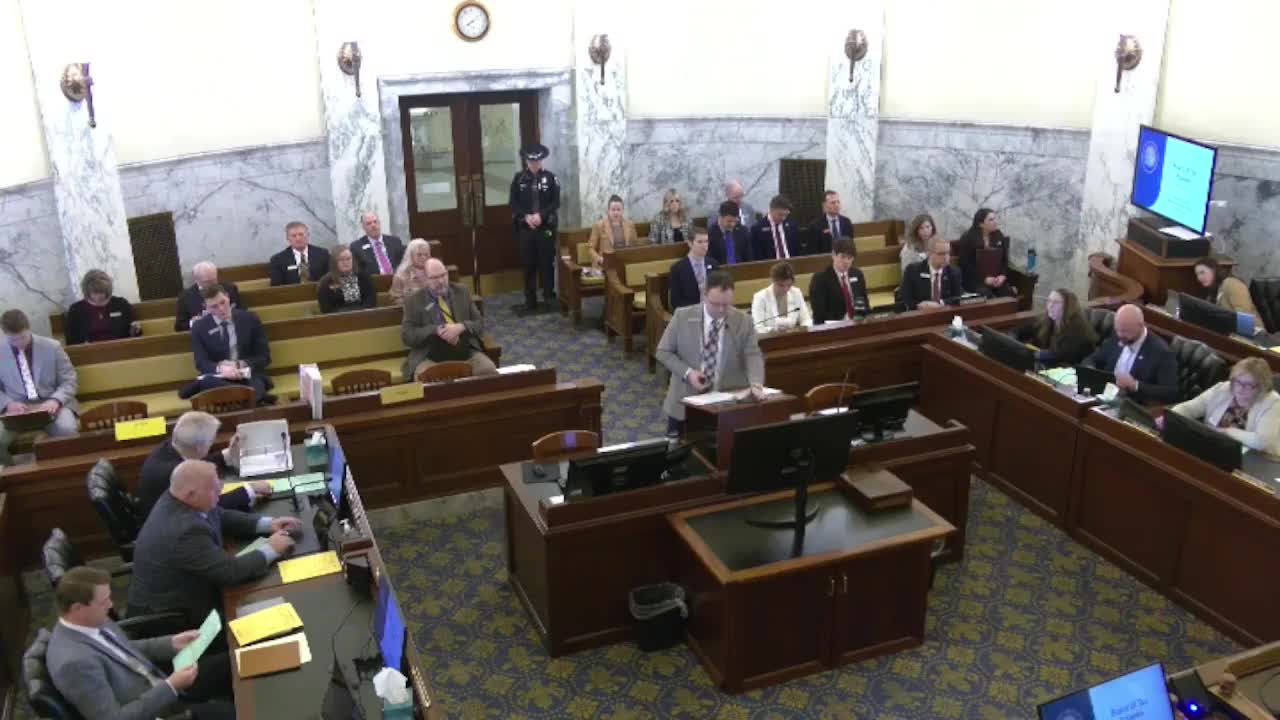
Christopher LaHozet, a budget and policy analyst with the Legislative Services Office, presented the Board of Tax Appeals' budget request and explained the agency's role: the three-member, quasi-judicial board hears appeals from the Idaho State Tax Commission and county boards of equalization under Idaho Code section 63-3801.
Why it matters: the board asked for $29,200 in ongoing personnel-related funds to raise the per diem paid to each board member from $300 to $400 per day. The agency said the increase would require legislation to amend Idaho Code section 63-3804.
Director Cindy Pollock said the board functions as a part-time, quasi-judicial body but requires substantial prep and decision time. Pollock described a staffing model limited to 80 funded board days per year; the board schedules hearings across East, North and Central Idaho and conducts discovery, hearings and post-hearing deliberations. The board typically handles about 300 cases per year on which it is funded; caseloads can spike (the director cited a past year with 600 appeals from a single county) and occasionally require supplemental board time.
Pollock and analysts said roughly 80 percent of the agency's expenditures go to personnel, about 12 percent to operating costs and a small capital outlay. The director said a 10-year average shows appellants obtain a favorable modification or result in about 39 percent of appeals. Committee members questioned whether the per diem already covered preparation time; Pollock said the board's internal model bills preparation and decision time hourly within the 80-day funding limit and that training a new board member takes more than a year, including a two-week course at the judicial college and on-the-job mentoring.
Representative Tanner and other members pressed whether the agency routinely reverts unspent appropriation; Pollock said the agency is cost-conscious and did revert funds in FY2024 (personnel $50,400; operating $28,000; capital $2,200). Pollock said the requested $29,200 is intended to raise the paid rate rather than expand board days and that any unused funds would revert per usual appropriation law.
No formal committee action was taken on the request during the hearing; the presentation was followed by questions from both chambers' members.