Get Full Government Meeting Transcripts, Videos, & Alerts Forever!
Get email alerts on the Community Engagement topic
No spam. Unsubscribe anytime.
Fifth graders urge Garfield County to tackle litter and vaping; commissioners offer support and next steps
Summary
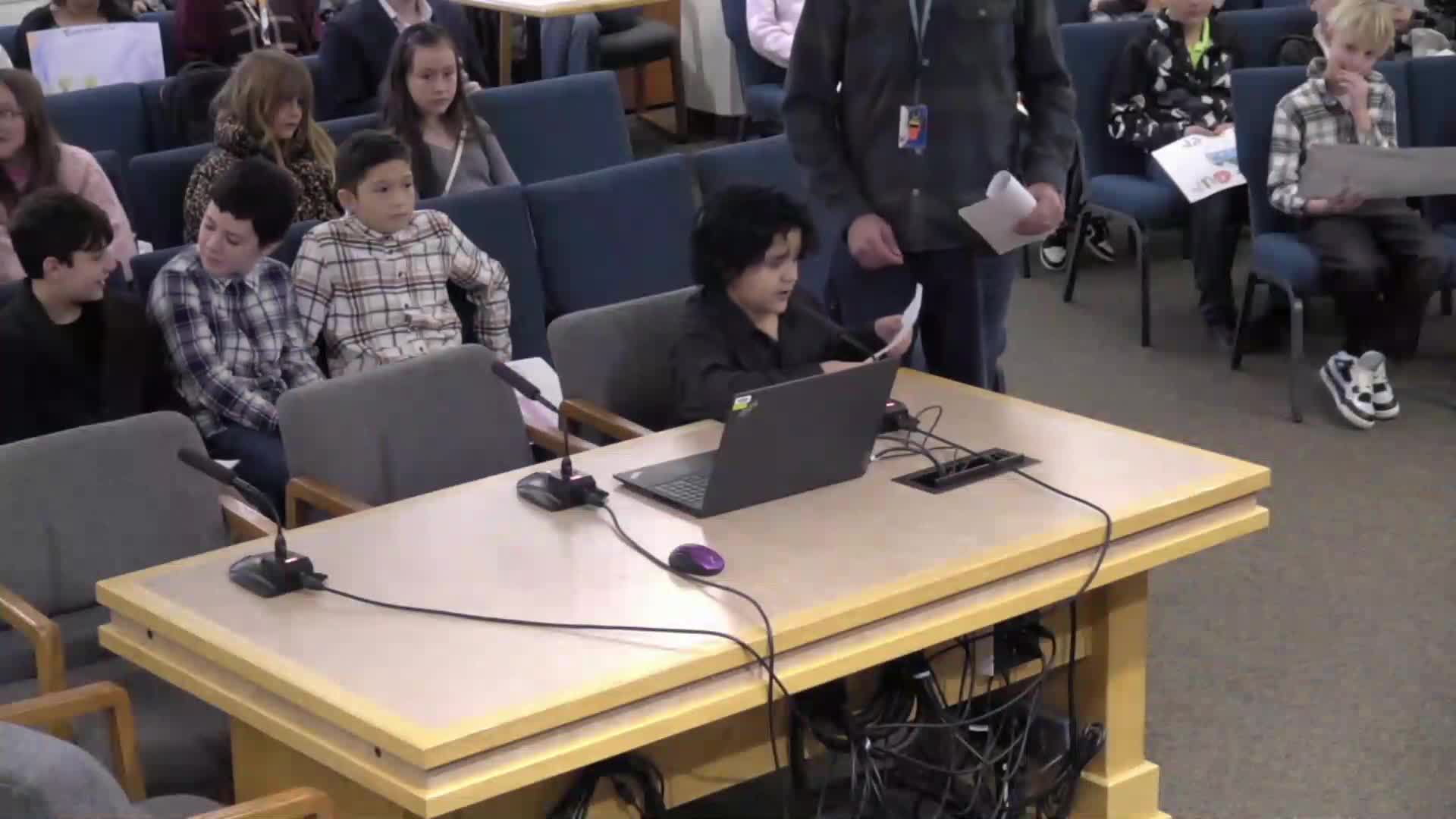
Fifth‑grade students from 2 Rivers Community School told Garfield County commissioners that litter damages wildlife and that vaping is dangerous, and they urged the county to help with bear‑resistant trash containers, school outreach and radio public‑service announcements.
Fifth‑grade students from 2 Rivers Community School presented to the Garfield County Board of County Commissioners on litter and vaping, urging local action on trash prevention, bear‑proof containers and anti‑vaping education.
Alex Tapia, who introduced the students, said the group planned to talk about issues important to “members of the Garfield County community.” Students described how litter can harm wildlife, attract bears and damage habitats, and they offered three local proposals: provide wildlife‑resistant trash containers, visit other schools to teach about litter, and run a fundraiser to pay for radio outreach. On vaping, students warned about nicotine and other ingredients, recounted hospitalizations and deaths cited in their presentation, and proposed policy and education responses including raising the minimum price and running prevention messaging.
Commissioner Sampson praised the students’ presentations and suggested practical follow‑ups: he proposed sponsoring radio public‑service announcements that would let the students speak on air and offered to seek modest county support for recording time at KMTS, the local station. He told the students, “I would be willing to work with Gabe,” referring to a local station contact named in the meeting. Commissioner Will and other commissioners echoed praise for the students’ preparation and commended the schools and teachers.
Students’ specific suggestions were presented as recommendations and claims from the classroom: they said litter decreases property values, imperils wildlife, and can carry to oceans; they claimed worldwide annual trash production and cited local vaping statistics during their talk. These assertions were made from the students’ prepared remarks and were not substantiated in the meeting by independent county data.
County officials noted existing local tools and limits. Commissioner Will observed that municipalities such as Glenwood Springs and Carbondale have taxes or ordinances related to vaping and that the Garfield County public‑health department has raised the question of whether an unincorporated‑area tax should be considered. Commissioners also suggested safe ways for students to engage in neighborhood cleanups (noting Colorado Department of Transportation restrictions on highway cleanup by young children) and encouraged the class to pursue radio PSAs and school outreach.
The presentation closed with commissioners offering practical next steps: help from the county to contact local media, possible modest county funding for recording public‑service announcements, and suggestions about student‑led school outreach and future participation in public meetings.
Speakers quoted in this article were identified during the meeting.