Get Full Government Meeting Transcripts, Videos, & Alerts Forever!
Get email alerts on the Down Payment Assistance topic
No spam. Unsubscribe anytime.
Gaithersburg staff propose state partnership to expand down-payment assistance, warn of HUD drawdown deadline
Summary
City housing staff proposed sending $375,000 in CDBG funds to the Maryland Mortgage Program to broaden and streamline the Gaithersburg down-payment assistance program, change eligibility rules and increase maximum assistance for lower-income buyers; staff warned funds must be drawn down by May 2 to avoid HUD penalties.
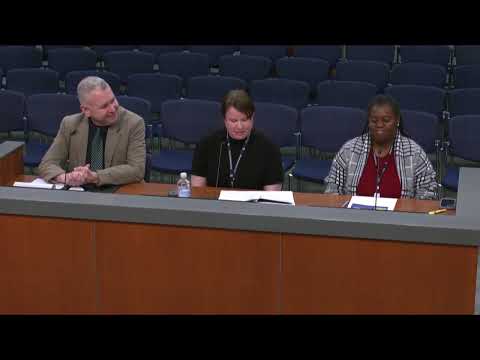
Maureen Walker, the Gaithersburg Division of Housing coordinator, told the mayor and city council on Feb. 10 that staff are proposing a partnership with the Maryland Mortgage Program (MMP) to administer the city’s down-payment assistance program and increase outreach to potential first-time buyers.
The change would direct $375,000 in Community Development Block Grant (CDBG) funds — drawn from fiscal years 2022, 2023 and 2024 allocations — to MMP, alter how assistance is calculated (by income rather than by zone), raise the maximum award for households at or below 80% of area median income (AMI) to $40,000, and reduce the local “first-time buyer” lookback period from five years to three years to match state guidelines. Brittney Marinello, Housing and Community Development Division manager, told the council the partnership would eliminate local administrative fees on the CDBG portion so “the whole 100% of the funding goes directly to the recipient.”
Why it matters: staff said the changes aim to increase program uptake after a steady decline in Galp applications (from 37 loans in FY2020 to six in the current fiscal year) and to accelerate federal drawdowns so the city remains in compliance with HUD requirements. Marinello cautioned that, because the funds are CDBG, the city must draw down and place the money with MMP in time to avoid a HUD penalty: “There is a con. And because it's CDBG funding, that means that we have to draw down the funds, on time before May 2 in order to not receive a penalty.”
Details of the proposal and program background follow. Galp (Gaithersburg Homebuyer Assistance Loan Program) was launched in February 2005, converted from a grant to a 0% deferred loan in February 2008, and provides closing-cost and down-payment assistance to households that buy inside Gaithersburg city limits. Under current staff proposals, CDBG-funded awards would target households up to 80% AMI and be administered through MMP; city Housing Initiative Funds (HIF) and city operating funds would continue to serve households between 80% and 120% AMI and would be processed by city staff.
Staff said the MMP partnership would change the program’s zoning-based award tiers (opportunity zone vs. standard zone) to an income-based structure, with the stated examples of $40,000 for up to 80% AMI and up to $25,000 for 81–120% AMI. Marinello said MMP also offers approved-lender lists, targeted zip-code advertising, and the ability to stack other state or county assistance with the city award, which staff expect will increase participation.
Council questions and public comment. Council members asked about risks, reporting and timing. Marinello said a draft memorandum of understanding (MOU) with MMP is already under development and that the city would receive quarterly reports from MMP to document draws and compliance. Council members asked for mid-year progress reporting; staff agreed to provide updates sooner than the one-year evaluation the city plans to do to assess the partnership. In public comment, David Mullins (Gateway Apartments) urged staff to include tenant associations as outreach partners for landlord- and property-related programs.
Next steps and limitations. Staff said they will move forward with a draft MOU and that the partnership would begin with the stated $375,000 CDBG contribution; they emphasized that the MOU will specify that awards are limited to purchases within Gaithersburg city limits and that the city will use HUD’s published AMI figures (stated in the MOU). Staff also said they will evaluate whether to shift additional city funds to the program after an initial year of operation. No formal council vote was recorded during the work session; staff proposals and questions were discussed and staff indicated intent to proceed with the MOU and required drawdown timing.
Ending note: staff framed the approach as a way to get existing CDBG dollars to eligible buyers more quickly, increase outreach through state capacity, and reduce the city’s administrative burden while keeping oversight and eligibility limitations in the MOU.