Get Full Government Meeting Transcripts, Videos, & Alerts Forever!
Get email alerts on the Homestead Exemption topic
No spam. Unsubscribe anytime.
Atlanta announces decision to opt out of state homestead exemption; residents raise notice and equity concerns
Summary
The City of Atlanta announced it will opt out of the statewide homestead-exemption program established by House Bill 581, city finance officials said at a public hearing Tuesday, drawing public questions about notice, equity and alternatives.
The City of Atlanta announced it will opt out of the statewide homestead-exemption established by House Bill 581, City finance officials told a public hearing Tuesday evening.
Chief Financial Officer Mohammed Balas of the City of Atlanta Department of Finance said the city’s existing floating homestead exemption, adopted in 2019 through House Bill 820, caps annual taxable-value growth for qualified owner-occupied homes at 2.6 percent and that city leaders believe that structure better suits Atlanta than the state’s CPI‑linked approach. “The City of Atlanta is announcing its decision to opt out of the statewide homestead exemption,” Balas said during the presentation.
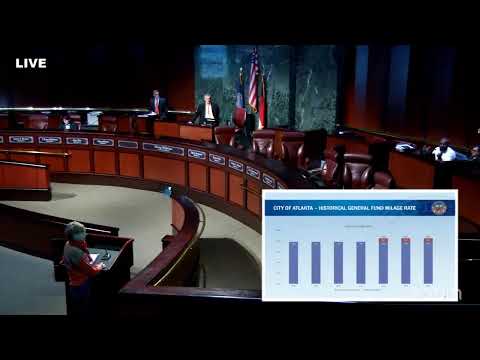
Balas said the city must notify the state of its intent to opt out by March 1 and reminded residents that homestead exemptions are administered at the county level and require an application. “You have till April 1,” Balas said when asked about the application deadline. He also explained the city’s millage rate has been steady since 2019 except for a 2023 increase tied to a court-ordered restructuring of solid-waste charging that shifted certain fees into the general fund.
Why it matters: The decision affects how much homeowner taxable values can rise year to year and how local tax burdens are allocated among the city, county and Atlanta Public Schools (APS). Balas said APS accounts for about half of a typical Atlanta residential tax bill, with the city and county making up roughly 25 percent each. He also noted that some counties have different caps (Fulton County’s cap was described as 3 percent), and that overlapping state and local floating exemptions could complicate budgeting and require millage adjustments in years with volatile inflation.
During the public-comment portion, several residents questioned the timing and notice of the hearing and urged alternatives to a straight opt-out. “The first time I heard about this hearing was last Friday because a neighbor found it on Nextdoor,” said Miss Alexander, who said most homeowners in her neighborhood had not been told. Nathaniel Dyer suggested tiered, income-based exemptions and targeted protections for seniors and longtime homeowners: “There can be a tiered homestead exemption, where you make adjustments, to where it's income based,” he said.
Deborah Lynch Clark, a resident since 1984, read the city’s official statement and asked for three specific examples of how the city’s language on “nuanced and equitable policies” would be carried out in practice. Balas responded that the city encourages residents to apply for existing exemptions — including senior, veteran and widow exemptions — and that the city and county are coordinating communications to get more information to homeowners. He said the state option would have tied the exemption to the consumer-price index and that Atlanta’s 2.6 percent cap has, in his view, provided more predictable growth for homeowners.
Residents also raised concerns that many homes are held in limited liability companies and questioned whether an exemption accrues to investors rather than neighborhood residents. Commenters urged the city to consider measures that would specifically help lower-income homeowners and long-term residents and to require more direct outreach about how to apply for exemptions.
Officials emphasized two implementation points residents asked about: exemptions must be applied for at the county level, and the city cannot take advantage of the state’s municipal sales-tax increase option because Atlanta already levies a municipal option sales tax. Balas said overlaying two floating exemptions could complicate budgeting and require millage-rate changes in years with high inflation.
No formal city-council vote on the matter was recorded at the hearing. City staff presented the decision and took public comment; Balas said staff will notify the state by the March 1 deadline. Several speakers asked the council to pause or to provide more outreach before finalizing options; those requests were recorded as public comment, not as formal council directions at this meeting.
Looking ahead: City officials said they will push coordinated communications with Fulton County about exemption applications and plan outreach materials explaining eligible exemptions and application steps. Residents who said they had not received notice requested mailed notices or other direct outreach to ensure broader participation in future hearings.