House subcommittee faults VA community care oversight as contractors, providers debate fixes
Loading...
Summary
A House Veterans' Affairs Subcommittee hearing heard GAO and OIG findings that VA lacks consistent oversight of its Community Care Program, while VA officials and third‑party administrators defended their roles and described planned reforms and contract delays.
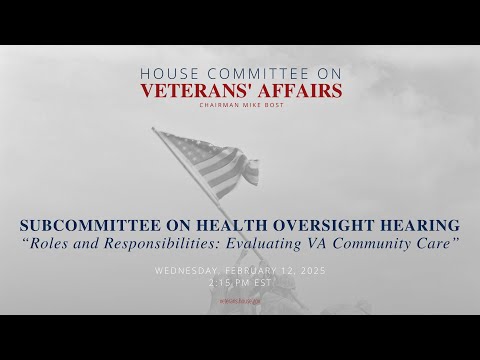
Chairwoman Miller Meeks convened a House Veterans' Affairs Subcommittee on Health oversight hearing on VA community care on Oct. 12, 2025, focusing on delays in referrals, gaps in medical‑record exchange, and weaknesses in contractor oversight. The Government Accountability Office (GAO) and the VA Office of Inspector General (OIG) told the panel that longstanding problems persist despite prior recommendations, while VA officials and third‑party administrators described steps underway and defended their performance.
The hearing followed GAO and OIG reviews that, committee members were told, show inconsistent scheduling, incomplete tracking of network adequacy and unresolved audit recommendations. “Veterans should never have to fight through a maze of bureaucracy to get the healthcare they deserve,” Chairwoman Miller Meeks said in opening remarks, citing veteran reports of canceled appointments, delayed referrals and missed authorizations.
Why it matters: Community care now accounts for roughly 40% of VA patient encounters nationwide, witnesses said, and VA is on track to obligate about $42 billion on community referrals in fiscal 2025. Lawmakers and auditors said that scale makes effective oversight essential to ensure timely, coordinated and high‑quality care for veterans.
Most important facts
- GAO witness Sharon Silas told the subcommittee that GAO has made 27 recommendations since 2018 to improve the Veterans Community Care Program; as of February 2025, 17 of those recommendations remained open. Silas warned that VA still lacks a standard that measures when a veteran actually receives care from a community provider rather than only when an appointment is scheduled.
- OIG principal deputy assistant inspector general Julie Kroviak testified that OIG has issued more than 50 reports since 2020 documenting problems including delays in referrals and incomplete or late uploads of community provider medical records into VA electronic health records.
- VA Chief Operating Officer Steven Braverman acknowledged the scale of referrals since the Mission Act but said the department is implementing corrective actions, including work to strengthen referral coordination and document scanning into veterans' electronic records. He said VA officials plan to take lessons learned into the next generation of contractor requirements.
- Third‑party administrators TriWest and Optum defended their operations. TriWest President and CEO Dave McIntyre highlighted rapid claims‑payment performance and said TriWest supports collaboration with VA to improve scheduling and record exchange. OptumServe President and CEO Ed Weinberg described frequent engagement with VA medical centers and pilots to speed medical‑record return.
Substantive concerns and examples
Auditors and clinicians repeatedly pointed to three recurring problems: delayed authorizations, failures to transfer community provider documents into VA records promptly, and inconsistent measurement of access. Dr. Scott Krueger, a community oncologist who treats veterans, said authorizations and documentation delays can be clinically harmful: he described an elderly cancer patient who received a single authorized visit but could not get home health or rehabilitation services approved and "so far, she still hasn't had any care."
Committee members also pressed VA officials about staffing and contracting. Ranking Member Brownlee and others flagged recent statements from the VA that the department will delay awarding next‑generation community care contracts and that contract awards may slip to 2027 while VA refines requirements.
Scheduling and technology pilots
Witnesses stressed scheduling as a bottleneck. Representative members and a vendor, WellHive, described an external provider scheduling (EPS) tool that shows real‑time community availability and has reduced scheduling waits by roughly one third at pilot sites. Chris Fraggi of WellHive said EPS sites book up to four times as many appointments per day as manual scheduling and cited local examples where waits fell by 46–52%. Vendors and some members urged broader EPS rollout and stronger VA direction to adopt it.
Contracting, payments and network adequacy
Members pressed TPAs about reimbursement, double payments and quality assessment. TriWest said it pays most provider claims within days and supports contract changes that would allow 12‑month claim submission windows (current rules can force rejections at six months). Optum said it follows VA payment rates. Representative Takano raised questions about Medicare Advantage overlap for veterans in commercial plans and requested data on dual payments; the TPAs agreed to provide follow‑up information.
GAO and OIG recommendations and next steps
GAO and OIG witnesses urged codified performance metrics for community care (including measures tied to women's health and specialty services), consistent network‑adequacy methodology, and a standard that measures when veterans actually receive community care. Ms. Silas said GAO will continue monitoring VA progress and has additional audits planned, including a review of medical‑document exchange with community providers.
What the VA said it will do
Dr. Braverman said VA is implementing action plans to address OIG recommendations, strengthen oversight councils at VISNs and improve document scanning and referral coordination. VA officials repeatedly emphasized the department's view that community care is "VA care," intended to complement — not replace — VA direct care.
Outlook
Lawmakers left the hearing with unsettled questions about the appropriate balance between VA direct care and community referrals, how best to write enforceable contractual requirements for third‑party administrators, and how to scale proven scheduling and records‑exchange pilots. Chairman Bost said he and cosponsors have introduced the bipartisan "Access Act" to codify access standards and additional choices for veterans; he and other members indicated further hearings and follow‑up requests for data will continue.
Ending
The subcommittee heard repeated calls for clearer standards, better technology adoption and firmer contractor oversight. GAO and OIG signaled continued audit work. VA officials said corrective steps are underway but acknowledged more work remains before the department awards the next generation of community care contracts.