Get Full Government Meeting Transcripts, Videos, & Alerts Forever!
Get email alerts on the Higher Education Enrollment Titleix topic
No spam. Unsubscribe anytime.
LSU reports record enrollments and research growth; lawmakers press university on Title IX, DEI review and recruitment of top Louisiana students
Summary
President William F. Tate told the committee LSU has set enrollment and research records and retains a majority of in‑state graduates, while lawmakers pressed the university about Title IX caseloads, the Board of Supervisors DEI review, scholarship consistency for high‑achieving in‑state students and research security.
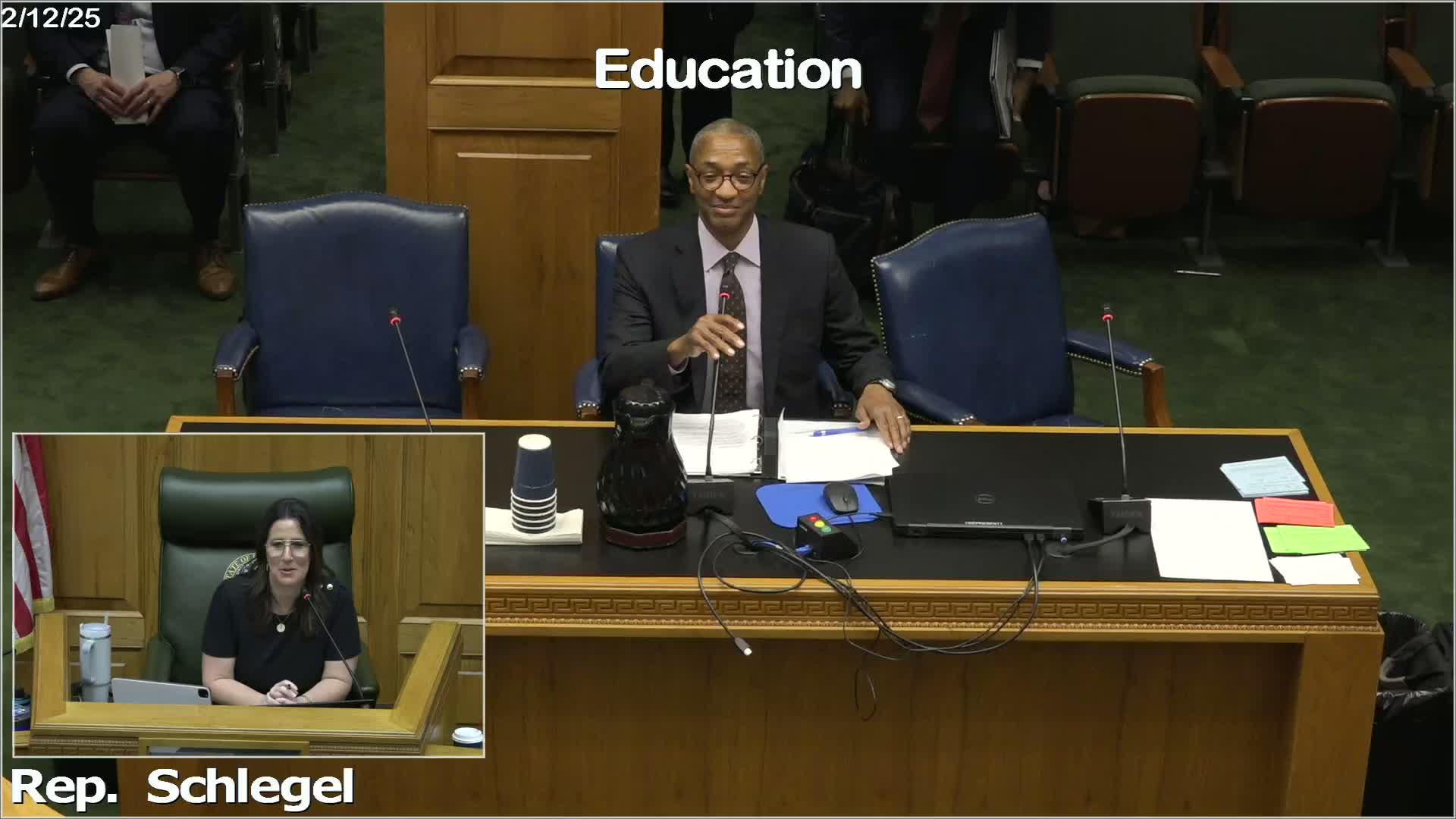
Louisiana State University President William F. Tate and senior LSU officials briefed the House Education Committee on Feb. 12 on strategic planning, enrollment, research and Title IX staffing, and answered lawmakers’ questions about retention of high‑achieving Louisiana students, DEI program reporting and research security.
The update matters because LSU is the state flagship and its enrollment, scholarship and research strategies influence statewide talent retention, workforce development and public funding priorities.
Tate said state analysis shows LSU and the state system enroll the bulk of high‑achieving Louisiana students: “Of those students who remain in Louisiana, 36% of them enroll at LSU,” he told the committee. He reported systemwide milestones including a record total enrollment across LSU campuses of more than 66,700 students and a record‑setting flagship freshman class of about 7,900 students. Tate said 65% of Louisiana residents who graduate from LSU remain in the state and that 86% of degrees awarded last year were in high‑demand fields identified by the Louisiana Workforce Commission. He highlighted research growth — a historic high of $488 million in research activity and a cited $1.3 billion economic impact — and singled out cybersecurity, biomedical, agriculture and energy as strategic research priorities.
Danny Barrow, LSU vice president for enrollment and student success, said LSU has reduced the time from admission to award notification (from more than 100 days previously to about 60 days) and is expanding in‑state and out‑of‑state recruitment, including targeted markets such as Texas and Florida. Barrow said LSU’s “Scholarship First” framework and expanded donor‑funded scholarships are intended to improve competitiveness against out‑of‑state offers.
Representative Schlegel and other lawmakers asked why LSU does not adopt a predictable automatic scholarship threshold for top in‑state students (a common practice at some competing out‑of‑state institutions). Barrow said LSU has shortened notification timelines and increased donor‑funded aid for auxiliary costs but that the admissions and scholarship process remains individualized; Tate and staff said the university is committed to further reducing notification time and to expanding on‑campus recruitment and best‑in‑class visit programs to improve yield.
Lawmakers pressed Tate about Title IX, DEI programs and a Board of Supervisors resolution adopted in October 2024 that directed a comprehensive review of programs and offices that use diversity terminology. Tate said the Board’s directive is being followed and that LSU will provide preliminary material to the Board at its next meeting; he offered to make that material available to the committee. He and Todd Manuel, vice president for Engagement, Civil Rights and Title IX, discussed Title IX staffing and operations: Manuel reported an 11‑person Title IX team, 56 confidential advisors across campus, a reported 92% training completion rate among employees in 2024 and provision of 269 supportive measures to 72 students on the main campus in a recent 12‑month reporting period. Manuel said the office received 250 reports on the main campus from Oct. 1, 2023 to Sept. 30, 2024; of those, 13 resulted in formal complaints, one went through a full investigation with a finding of fault, two were resolved by informal agreements that resulted in three‑year suspensions and one resulted in a one‑year probation.
Several lawmakers questioned apparent discrepancies between different reports and public materials about programs labeled DEI, and asked for a clearer, comprehensive accounting. Tate said the university will provide the Board‑requested materials and that a university review is under way; he added LSU has recently strengthened research‑security and compliance capacity, including hiring an associate vice president for research compliance to lead research‑security work.
On research security, Sean Courtney (associate vice president for research compliance) and Robert Twilley (vice president for research and economic development) described a new research‑security office and compliance processes; Tate said federal partners and intelligence officials engage with university leadership on research security and export‑control concerns. Representative Owen and others pressed for continuing public transparency on scholarship disbursements to out‑of‑state and foreign students; Tate and staff described how out‑of‑state tuition revenue and donor scholarships are used to support broader scholarship and recruitment strategies and agreed to share additional detail with the committee.
Ending: Tate and LSU staff agreed to provide the committee with the Board‑requested materials and additional financial and admissions detail; the committee did not take formal action at the hearing.