Get Full Government Meeting Transcripts, Videos, & Alerts Forever!
Get email alerts on the K12 Accountability Testing topic
No spam. Unsubscribe anytime.
K‑12 study group flags testing burden, high‑dosage tutoring logistics and third‑grade retention concerns
Summary
Representatives from the HR 281 K‑12 study group reported findings including perceived excess testing, concerns about DIBELS and DIBELS as an assessment rather than screener, implementation strain from high‑dosage tutoring mandates and calls to reexamine third‑grade retention timing under Act 422 (2023).
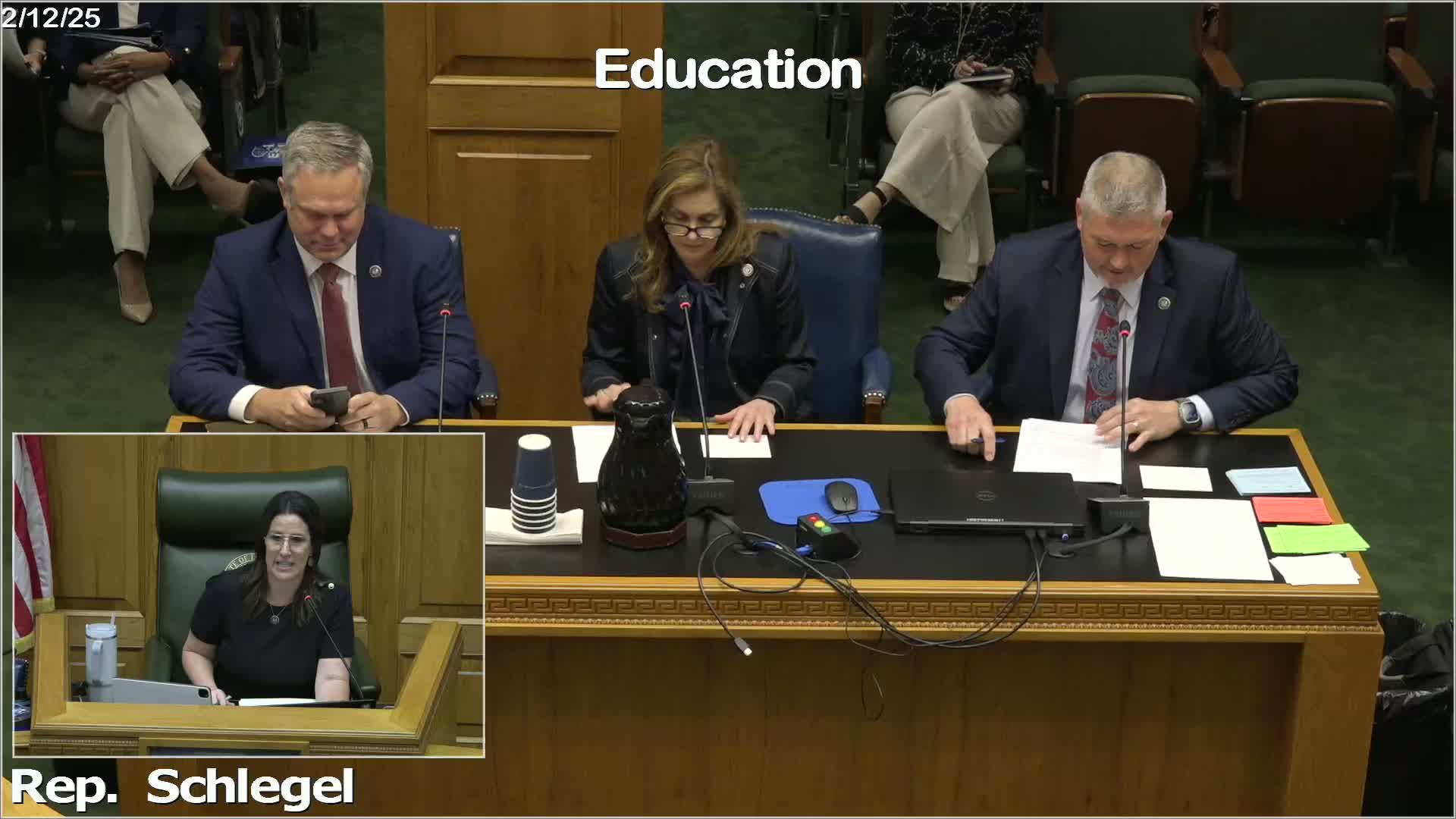
The House Education Committee on Feb. 12 received findings from the K‑12 education study group established by House Resolution 281 (2024). Representatives Roger Wilder and Bamberg summarized the group’s top findings and said the members plan further stakeholder meetings to pursue actionable changes.
The report matters because it addresses how state testing, remedial interventions and accountability rules affect classroom instruction, teacher workload and student outcomes across districts.
Representative Wilder, who chaired the study group, told the committee the group held four public meetings and documented several recurring concerns. Those included what the group described as an excessive number of standardized tests in Louisiana — Wilder cited 32 tests in state practice versus a federal minimum of 17 — and frequent testimony that teachers are spending substantial time on testing rather than instruction, summarized by the question heard at meetings: “Are we teachers or are we testers?”
Wilder and other study‑group members flagged implementation issues tied to Act 422 of 2023, which enacted new third‑grade retention and related accountability provisions. Several participants told the group the retention policy can arrive “too late” for some students and that moving the accountability point earlier — for example, to first grade — was suggested by some parents and educators. The group also recorded concerns about the emotional impact of retention later in elementary school.
The study group discussed DIBELS, a reading screener that several witnesses said is now being treated as an assessment rather than a simple early warning tool, and high‑dosage tutoring (HDT). Members reported HDT mandates that require small tutoring group ratios (often cited as 4:1) and heavy administrative burden, and they raised questions about vendor quality and outsourced tutoring models used to meet required minutes. Representative Wilder gave one example he said a principal shared: a remotely delivered intervention session in which the adult seen on camera was smoking.
Lawmakers noted that some districts have successfully used local staff to meet HDT targets without extra funding, while others lack qualified tutors and rely on vendors. Representative Millery and others urged increased and more reliable funding; the committee heard that a $30,000,000 appropriation for HDT was provided in the prior year but many members urged that figure be increased and targeted to demonstrated need.
Wilder and Bamberg said the study group’s next step is to convene key stakeholders for follow‑up — district superintendents, BESE, Department of Education staff and classroom teachers — with the aim of identifying changes that can be implemented collaboratively rather than by unilateral rule‑making. No formal committee action was taken.
Ending: Wilder and Bamberg asked lawmakers and education stakeholders to collaborate on recommended adjustments and to keep the study group active to translate findings into implementable changes.