Get Full Government Meeting Transcripts, Videos, & Alerts Forever!
Get email alerts on the Teacher Recruitment topic
No spam. Unsubscribe anytime.
Board of Regents and LDOE report gains in teacher pipeline but urge continued work
Summary
Commissioner Kim Hunter Reid and task-force members reported enrollment and program growth across pre-educator, para-to-teacher and mentor programs but said retention and specialty shortages remain areas for continued effort.
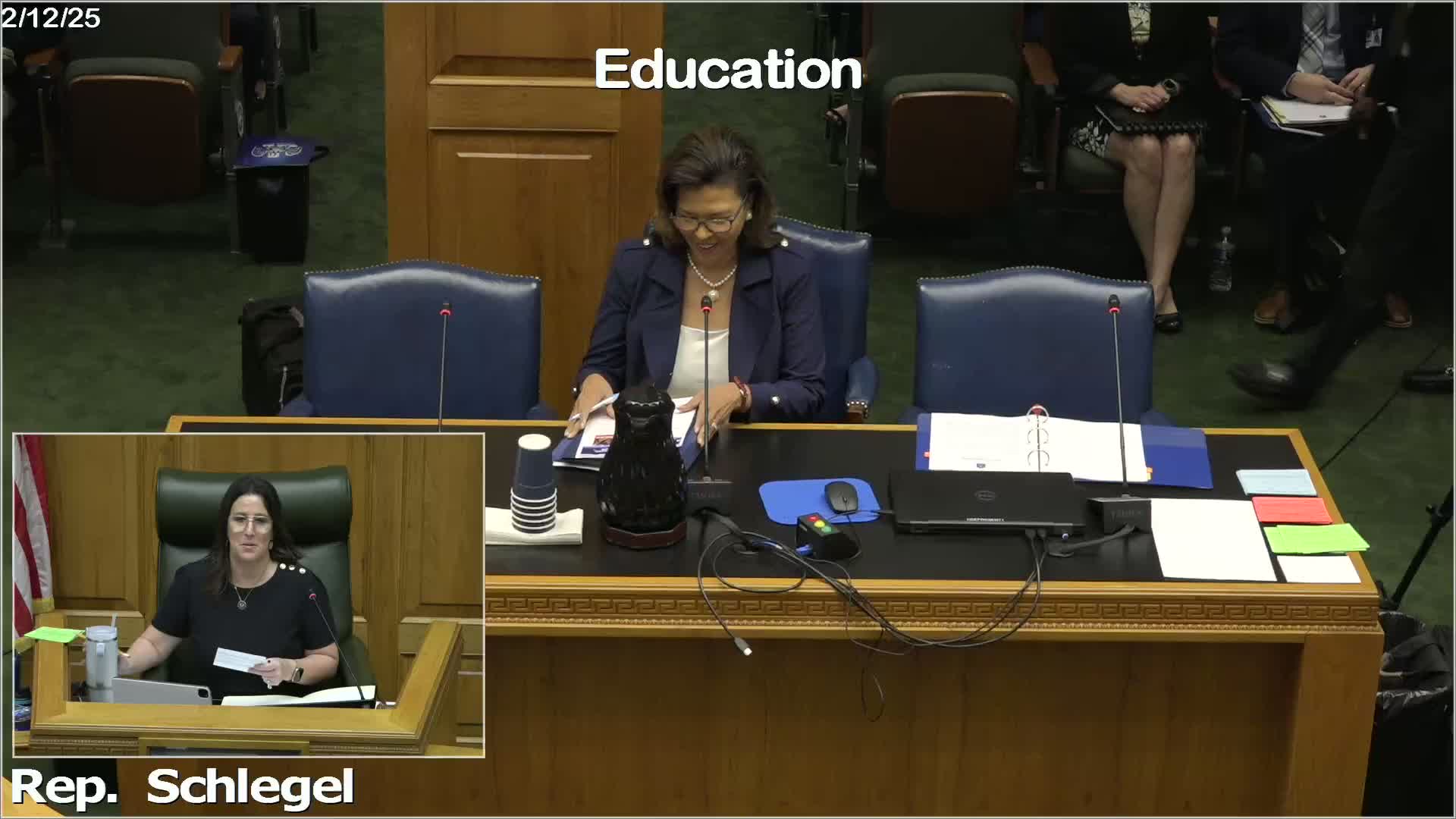
The House Education Committee on Feb. 12 received an update from Kim Hunter Reid, Commissioner of Higher Education, and Louisiana Department of Education staff on the Teacher Recruitment, Recovery and Retention Task Force’s 2024 report, which the presenters said shows enrollment and program gains while noting the work is ongoing.
The report matters because the legislature and state agencies have invested in pay increases, scholarships and pathway programs intended to address teacher shortages that affect classroom capacity and student support statewide.
Reid told the committee the task force’s work, chaired at the Board of Regents and co-chaired by Barry Irwin of Leaders for a Better Louisiana, has focused on growing “homegrown” teachers. She said the state’s initiatives include a GoTeach scholarship funded in 2024, efforts to ease certification for out‑of‑state teachers, and programs to expand pre‑educator pathways in high schools, paraprofessional-to-teacher pipelines and mentor teacher ranks.
Department of Education deputy assistant superintendent Art Joffreon and other staff highlighted several data points from the handout the committee received: the report lists a statewide teacher headcount of 52,208 for 2024; 89 high schools offer a pre‑educator pathway with about 1,700 students enrolled; roughly 597 school employees were enrolled in a para‑to‑teacher model in 2024; and an aspiring‑principal fellowship showed 88% of cohort participants in school‑leader positions in its second cohort. Committee members emphasized that those figures include specialized positions such as librarians and interventionists, which affect simple student‑to‑teacher ratio calculations.
Lawmakers praised the collaborative, multi-year nature of the task force. Representative Freiberg and Representative Carver both thanked Reid, Regents staff and Department of Education staff for the work and said the package of changes — scholarships, certification streamlining, pay increases and mentoring — has produced measurable progress. Representative Amade and others asked whether higher‑education teacher preparation programs still leave gaps in curriculum that affect teachers’ day‑one readiness; Reid and Joffreon said partnerships between districts and colleges of education have strengthened and that the task force will continue to examine curricular alignment and specialty shortages such as math and special education.
Committee members also asked about demographic alignment between the teacher workforce and student body. Reid said teachers do not yet mirror student demographics and that the Department of Education has an explicit goal to increase minority teacher representation; staff told the committee a statewide workforce report with additional demographic detail will be released to the BESE committee in March or April.
The presentation concluded without a formal committee vote. Reid and staff said the work will continue as agencies and the legislature begin implementing recommendations in the report.
Lede excerpt provenance: Commissioner Kim Hunter Reid provided the update; Department of Education staff including Art Joffreon answered follow‑up questions. Ending: Committee members asked staff to follow up with additional workforce and demographic data as the task force and agencies move to implementation.