Get Full Government Meeting Transcripts, Videos, & Alerts Forever!
Get email alerts on the Land Use topic
No spam. Unsubscribe anytime.
Indio planning commission denies Maverick fueling station project after debate over traffic and environmental justice
Summary
The City of Indio Planning Commission voted 3–2 to deny four resolutions approving a tenant parcel map, conditional use permit and related environmental clearance for a Maverick fueling station at the northeast corner of Avenue 45 and Golf Center Parkway, citing traffic, proximity to sensitive receptors and environmental‑justice concerns.
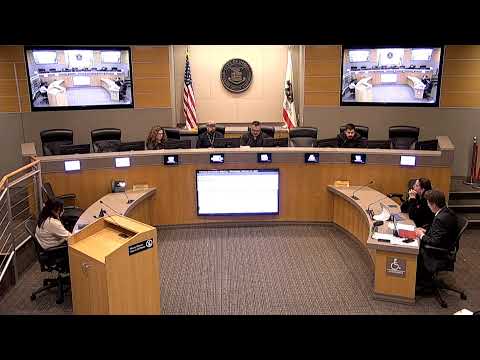
The City of Indio Planning Commission voted 3–2 on March 12, 2025 (public hearing) to deny four resolutions that would have approved a tenant parcel map, conditional use permit and an initial study with a mitigated negative declaration for a proposed Maverick fueling station at the northeast corner of Avenue 45 and Golf Center Parkway.
The commission’s denial came after staff and the applicant described the project and environmental review, and after an environmental consultant explained the traffic and vehicle‑miles‑traveled (VMT) analysis that supported the mitigated negative declaration. Planning staff summarized the application as a package including a tentative parcel map, planning review, a conditional use permit and an initial study/MND; the subdivision would split an 8.62‑acre lot into a 3.37‑acre parcel for the fueling station and a 5.26‑acre parcel for future development.
Assistant Planner Jose Luis Jada presented the project to the commission and described key elements: a 6,000‑square‑foot convenience store, a fueling canopy of roughly 7,200 square feet, 10 fuel pumps providing 20 fueling positions plus additional diesel/commercial fueling positions outside the canopy, and 38 parking spaces (including accessible spaces). Jada noted the site is zoned heavy industrial and that fueling stations are allowed with a conditional use permit. He also confirmed the project’s canopy maximum height at 19 feet, 3 inches and that the site is within the City’s workplace and employment general plan designation.
Kevin Dice, site development manager for Maverick, said the company operates 24/7 convenience stores and intends to offer food service, restrooms open to the public and a beer and wine license application for the site. Dice described site protections: concrete paving under canopies, double‑encased fuel piping, Veeder‑Root monitoring for leaks, sand‑oil separators for storm runoff, a masonry trash enclosure and video surveillance. He told the commission the company will provide two ADA‑accessible EV chargers and will “plumb the site” to add up to four more chargers later.
Christina Willis, president of Willis Environmental Planning and the project’s environmental project manager, summarized the Initial Study and Mitigated Negative Declaration process. Willis said the team analyzed all CEQA resource areas including air quality, greenhouse gas, noise, cultural and paleontological resources and traffic. She explained that CEQA’s traffic metric shifted under SB 743 to VMT from level of service and that the project’s traffic consultant used Riverside County’s Transportation Analysis Guidelines (the city has not adopted its own VMT guidelines) to screen the project out of VMT impact thresholds as a small project and as local‑serving retail. Willis also reported that tribal consultation occurred with the Agua Caliente Band of Cahuilla Indians and that monitoring during construction by a qualified archaeologist and a tribal representative had been included as mitigation.
Several commissioners and members of the public focused their comments on VMT, environmental justice and concentration of fueling stations. Commissioners noted the site’s proximity to a high school and to low‑income housing, and several described the census tract as disadvantaged as identified in public comment and referenced tools such as CalEnviroScreen. Commissioners asked whether the CEQA screening and air‑quality analyses fully captured cumulative diesel particulate exposure and localized health risks; Willis said air‑quality and health‑risk analyses were run using South Coast Air Quality Management District procedures and that projected annual greenhouse gas emissions were below South Coast thresholds.
Commissioners also questioned demand for a new fueling station given existing nearby gas stations (a 7‑Eleven across the street and additional stations nearby), upcoming local construction (bridge work and new housing), and traffic impacts on Golf Center Parkway and surrounding arterials. Staff and the applicant said the project includes intersection improvements and that the applicant will pay 25 percent toward signal improvements and will provide lane improvements at the adjacent intersection as required by the traffic study.
After deliberations that repeatedly cited concerns about traffic, proximity to sensitive receptors, and environmental‑justice considerations, a commissioner moved to deny the four resolutions (nos. 2103, 2104, 2105 and 2106). The motion passed on a roll‑call vote, three in favor, two opposed. Chairperson Fajardo announced a 15‑day appeal period to the City Council.
Votes at a glance
- Resolutions 2103, 2104, 2105, 2106 (tenant parcel map; planning review; conditional use permit; Initial Study/Mitigated Negative Declaration): Motion to deny the package carried 3–2. Yes: Commissioner Ortiz; Vice chairperson (recorded as Rodriguez Ejeda in roll call); Chairperson Fajardo. No: Commissioner Santos; Commissioner Frans. Motion maker and seconder not specified in the public record excerpt provided.
What happened next
Commissioners asked staff to return with follow‑up items including: (1) a briefing from Economic Development on the city’s demand/gap analysis for fueling stations and the math behind the $20 million demand figure staff referenced; (2) options and costs for developing city VMT guidelines instead of relying on Riverside County guidance; (3) consideration of environmental justice or expanded health‑equity analysis tied to the general plan’s health inequity policies; and (4) status of the storage‑facility moratorium and its expiration timeline. Staff said it would investigate consultant costs and bring back more detailed analyses.
Why it matters
The commission’s denial rejects a high‑visibility commercial project that the applicant characterized as providing local jobs, convenience retail and infrastructure upgrades (EV chargers, intersection payments and site design measures). Commissioners’ objections centered on cumulative impacts in a census tract described as disadvantaged, nearby sensitive receptors (a high school and low‑income housing), traffic and the limits of current local guidance for VMT and environmental justice. Planning staff and the consultant maintained that, under current county guidance and the project’s mitigation measures, CEQA thresholds were met with a mitigated negative declaration.
The denial does not permanently bar the project; staff noted a 15‑day appeal period to the City Council. Commissioners also directed staff to return with additional technical and policy information that could inform future decisions about similar projects in neighborhoods staff and commissioners identified as potentially vulnerable.