Get Full Government Meeting Transcripts, Videos, & Alerts Forever!
Get email alerts on the Local Government Audits topic
No spam. Unsubscribe anytime.
Committee advances bill to raise local government audit threshold to $300,000
Summary
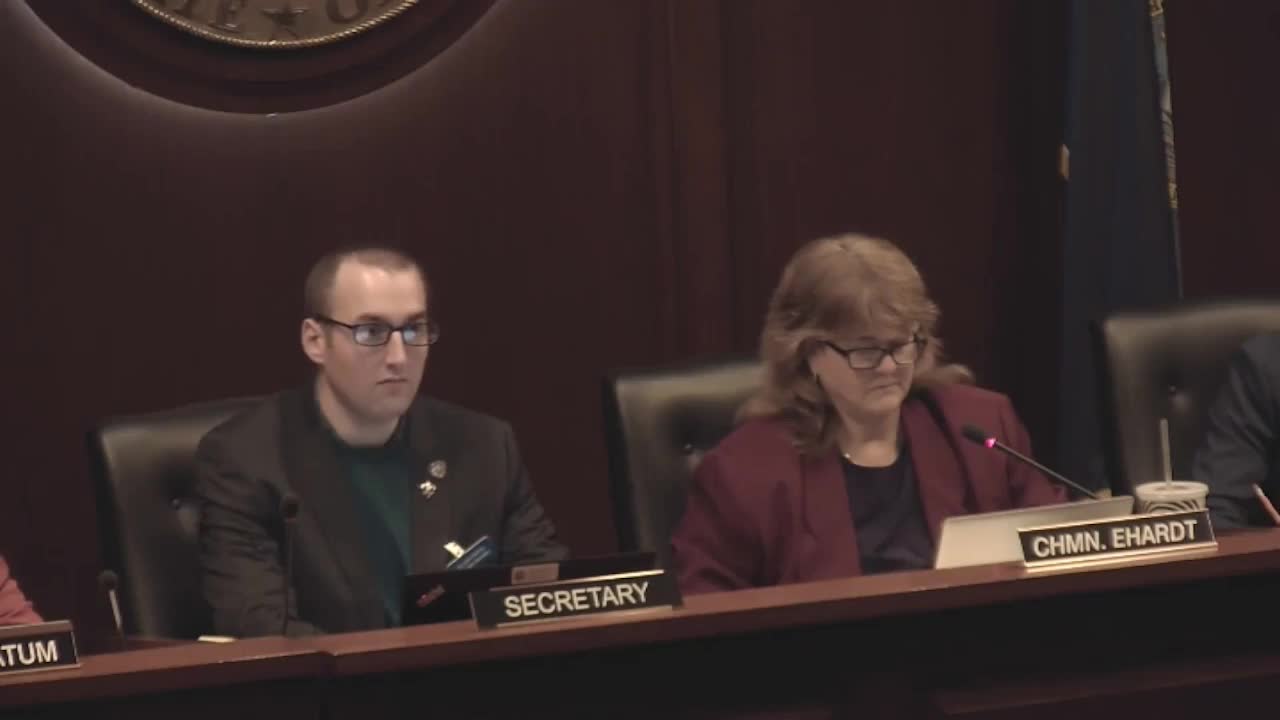
The Local Government Committee voted to send House Bill 142 to the floor with a due-pass recommendation. Sponsor Doug Pickett said the bill adjusts dollar thresholds that trigger required audits for local governments to reflect inflation; an Association of Idaho Cities representative expressed support and noted past inflationary increases.
State Representative Doug Pickett, who represents District 27 (Cassia, Oneida and Minidoka counties), told the Local Government Committee that House Bill 142 would raise the dollar thresholds that require formal audits by local government entities.
"This 1 deals with the, budget levels that would require an audit by local government entities," Pickett said, and described the change as a ‘‘housekeeping’’ adjustment to maintain the thresholds’ real-dollar value amid inflation. Under current statute, he said, a governing body with expenditures from all sources exceeding $250,000 must have a full audit; HB 142 would raise that threshold to $300,000.
The bill also preserves an option for smaller districts whose expenditures are in a midrange to move to biennial audits. As described by Pickett, entities with expenditures currently between $150,000 and $250,000 can opt for an audit every other year, but under the bill a midrange trigger would change so that if an entity’s budget in any year exceeds a specified intermediate level it would require a full audit; Pickett described that intermediate figure in committee testimony when explaining how the bill modifies the existing bracketing.
Jonathan Wheatley, testifying for the Association of Idaho Cities, said the association supports the bill and noted inflation has increased costs for local governments. "Inflation over basically since 2019 until now has been 23.45%. In the area of accounting, it's been 35%," Wheatley said, adding that raising thresholds can reduce the administrative burden on small taxing districts while leaving audited dollars broadly unchanged in some states.
Representative Healy moved that the committee send House Bill 142 to the floor with a due-pass recommendation. The committee approved the motion by voice vote; no roll-call tally was recorded in the hearing.
The bill now moves to the floor for further consideration.