Get Full Government Meeting Transcripts, Videos, & Alerts Forever!
Get email alerts on the Medicaid Expansion topic
No spam. Unsubscribe anytime.
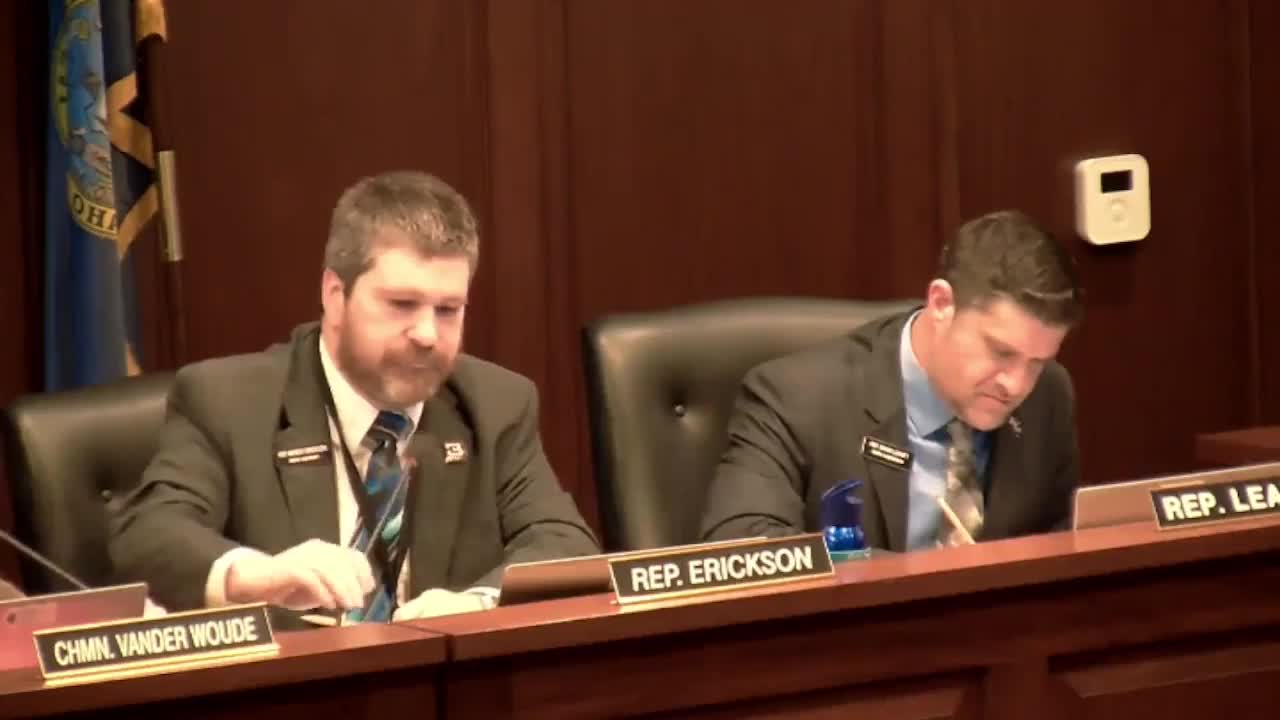
House committee advances bill to change Medicaid expansion; sponsor says waivers will preserve coverage
Summary
House Health and Welfare Committee on Feb. 12 moved House Bill 138 to the full House with a do-pass recommendation after lengthy testimony and debate.
House Health and Welfare Committee on Feb. 12 moved House Bill 138 to the full House with a do-pass recommendation after lengthy testimony from health providers, advocates and the bill’s sponsor, Representative Jordan Redmond.
Representative Jordan Redmond, sponsor of HB 138, told the committee the bill is intended to preserve Medicaid expansion while imposing caps, work or community-engagement requirements and other "safeguards" that he said would reduce improper payments and long-term cost growth. "This bill is taking Medicaid expansion, putting accountability measures in place, and cutting waste to make sure that the state is being the best stewards as we can be for taxpayer funds," Redmond said.
Why it matters: Committee members and public witnesses framed the debate around cost, access and the practicality of getting federal waivers. Supporters of the bill argued Idaho must rein in what they called unsustainable enrollment and spending growth; opponents, including physicians, hospital representatives and patient advocates, said the proposal would undo coverage for many Idahoans, harm rural hospitals and increase downstream costs.
Key facts and committee action - The committee ultimately voted to send HB 138 to the full House with a "do pass" recommendation on a roll-call vote of 8–7. That vote followed an earlier, failed committee motion to hold the bill in committee (7–8). The final motion and vote send the bill forward rather than killing it in committee. - Redmond and others expect the Department of Health and Welfare to pursue federal waivers described in the bill (discussed in testimony as Section 1115 and Section 1332-style waivers). The bill conditions continued expansion on the state obtaining a set of these waivers and on state-level changes including enrollment caps and time limits for certain able-bodied adults.
What supporters said - Representative Redmond said the bill does not repeal expansion but would require waivers and state-side limits — for example, a proposed cap that would limit able-bodied adults to the lesser of 50,000 people or the number of elderly and disabled enrollees, and a 36-month time limit for some able-bodied adults. He asserted the state can negotiate waivers and that some other states have imposed similar rules. - Witnesses who supported reform emphasized alleged improper-payment rates and rapid program growth. Mark Johnson of Idaho (public commenter) and representatives of some policy groups framed the measure as fiscal stewardship.
What opponents said - Dozens of health-care providers, hospital officials and patient advocates urged the committee to reject HB 138 or to table it for further work. Brandon Mickelson, program director at ISU Medicine Residency, told the committee, "My plea to each of you today is to vote no on health bill 138," and said repeal would raise costs for hospitals and harm rural care access. Peter Crane, a family physician in Montpelier, said many expansion enrollees are working Idahoans who would lose coverage and face far higher costs. - Brian Whitlock, president of the Idaho Hospital Association, said hospitals opposed HB 138 but supported the motion to table so stakeholders could negotiate; he later testified to the committee that the tax and upper-payment-limit (UPL) mechanism currently helps cover the state match for expansion. - Patient and advocacy groups — AARP Idaho, Idaho Voices for Children, the League of Women Voters of Idaho, mental-health and disability advocates and others — said repeal or the proposed limits would increase mortality, worsen mental-health outcomes and shift costs to counties, hospitals and law enforcement.
Open questions and committee concerns - Several committee members repeatedly asked about the legal viability of the waivers, whether the federal government would approve the mix of waivers the bill contemplates, and what contingency planning exists if waivers are denied. Representative Fernum and Representative Levitt highlighted that some waivers similar to those proposed were rejected in other states or under prior federal administrations. - Cost estimates for waiver application, implementation and ongoing administration were discussed. Redmond said he added $3 million in the fiscal note for implementation; other committee members and witnesses referenced a Department of Health and Welfare estimate closer to $3.8 million in one-time costs and roughly $3 million ongoing with additional FTEs to administer waivers and reporting requirements.
Votes at a glance - Motion to hold/lay HB 138 on the table: made by Representative Wheeler; the committee later considered substitute and amended motions. A motion to hold in committee subject to the chair failed on a roll call (7 ayes, 8 noes). - Final motion to send HB 138 to the floor with a do-pass recommendation: passed by roll call, 8 ayes, 7 noes. The committee record shows the bill will next be considered by the full House.
What comes next: Because the committee recommended the bill pass, HB 138 will move to the full House calendar for debate and a floor vote. The Department of Health and Welfare was referenced repeatedly as the implementing agency should waivers be sought; committee members asked the department to continue analysis and to provide follow-up information.
Ending: Committee members and dozens of public witnesses agreed on the need to address program growth and improper payments, but they sharply disagreed about the committee’s approach. The committee’s recommendation reflects that split: the bill will be debated by the full House, where members will weigh the waiver strategy, fiscal assumptions and the possible effects on hospitals and vulnerable Idahoans.