Get Full Government Meeting Transcripts, Videos, & Alerts Forever!
Get email alerts on the Agricultural Research Extension topic
No spam. Unsubscribe anytime.
JFAC hears University of Idaho agricultural research, extension budgets; leaders cite new facilities, faculty requests and digital-access grants
Summary
The Joint Finance-Appropriations Committee reviewed Idaho's Agricultural Research and Extension Service and the University of Idaho College of Agricultural and Life Sciences during its Feb. 10 session, where college leaders described staffing levels, recent capital investments and FY2026 requests for faculty and building maintenance.
The Joint Finance-Appropriations Committee reviewed Idaho's Agricultural Research and Extension Service and the University of Idaho College of Agricultural and Life Sciences (CALS) during its Feb. 10 session, where college leaders described staffing levels, recent capital investments and FY2026 requests for faculty and building maintenance.
Kevin Campbell of the Legislative Services Office presented the budget overview and detailed the service's statewide footprint: extension presence in 42 of Idaho's 44 counties and three recognized tribal communities, ten research and extension centers with access to more than 14,000 acres for research, and a five-year personnel average of roughly 341 full-time equivalents. He said the service typically spends near 100% of appropriations, with personnel making up the majority of expenditures.
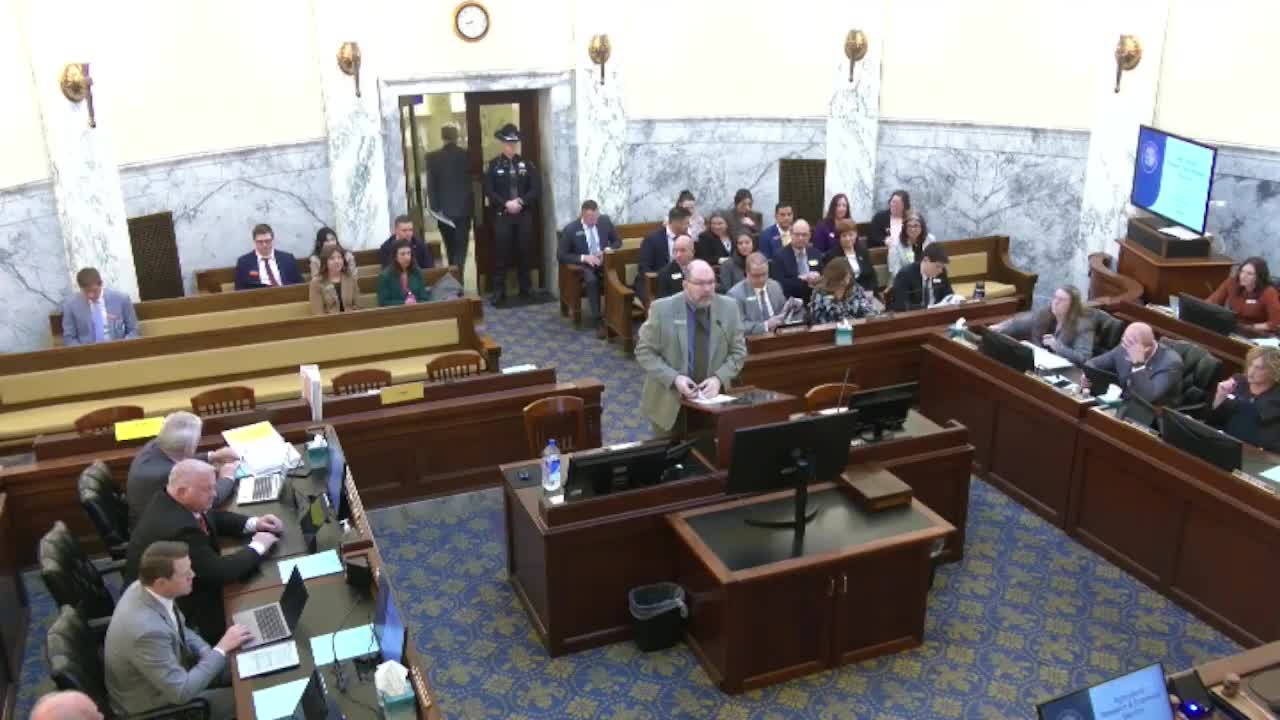
Dean Michael Perella, dean of the College of Agricultural and Life Sciences, introduced his staff and reviewed recent investments and priorities. He noted the college's role in applied research, breeding and irrigation work, and the recent Idaho Center for Plant and Soil Health at Parma. The college is requesting ongoing FY2026 funding for a viticulture and small-fruits research faculty position ($157,900) and $250,100 for a portion of building maintenance at the Idaho Center for Agriculture, Food and the Environment.
Perella emphasized the college's statewide role: "Idaho agriculture contributes about almost 20% of the total economic output of the state," he said, and described extension's reach in delivering applied research and training. He also summarized extension impact figures cited to the committee: more than 450,000 face-to-face contacts with Idahoans last year and over 75,000 youth engaged in 4-H programming.
Campbell and Perella outlined recent appropriations and federal grant activity. FY2024 and FY2025 appropriations included funding for new faculty positions in plant and animal sciences and agricultural engineering ($394,000) and maintenance for a Parma research laboratory ($232,000). The college also reported $142,000 in ARPA funding for broadband and digital-literacy work tied to Department of Commerce investments; Perella said the college applied for a separate Federal Communications Commission grant that, if awarded, would bring further federal support for digital-access projects to rural communities.
Committee members asked for outcomes and evaluation metrics for extension programs. Perella said extension collects participant feedback and traces reported impacts; he told the committee that extension-trained programs reported a reported savings of $47 million in the most recent year and said the college can provide further breakdowns on program impacts and measures.
Lawmakers also asked about personnel and facilities. Perella said the college has hired early- and mid-career faculty, cited improvements in turnover after FY2024 change-in-employee-compensation appropriations (turnover declined from about 14% to 11%) and credited recent capital investments for upgrading aging research facilities. He noted the Parma facility's replacement of older buildings and emphasized the importance of matching infrastructure to modern laboratory techniques.
Perella announced his planned retirement in June and thanked the legislature for past support; he said continued state appropriations enable the college to leverage external grants and attract faculty. No formal votes were taken on the presentation; committee staff indicated they would follow up if members requested additional data.