Get Full Government Meeting Transcripts, Videos, & Alerts Forever!
Get email alerts on the Career Technical Education topic
No spam. Unsubscribe anytime.
JFAC hears CTE budget briefing; committee told workforce programs face waitlists, $10M request for capacity
Summary
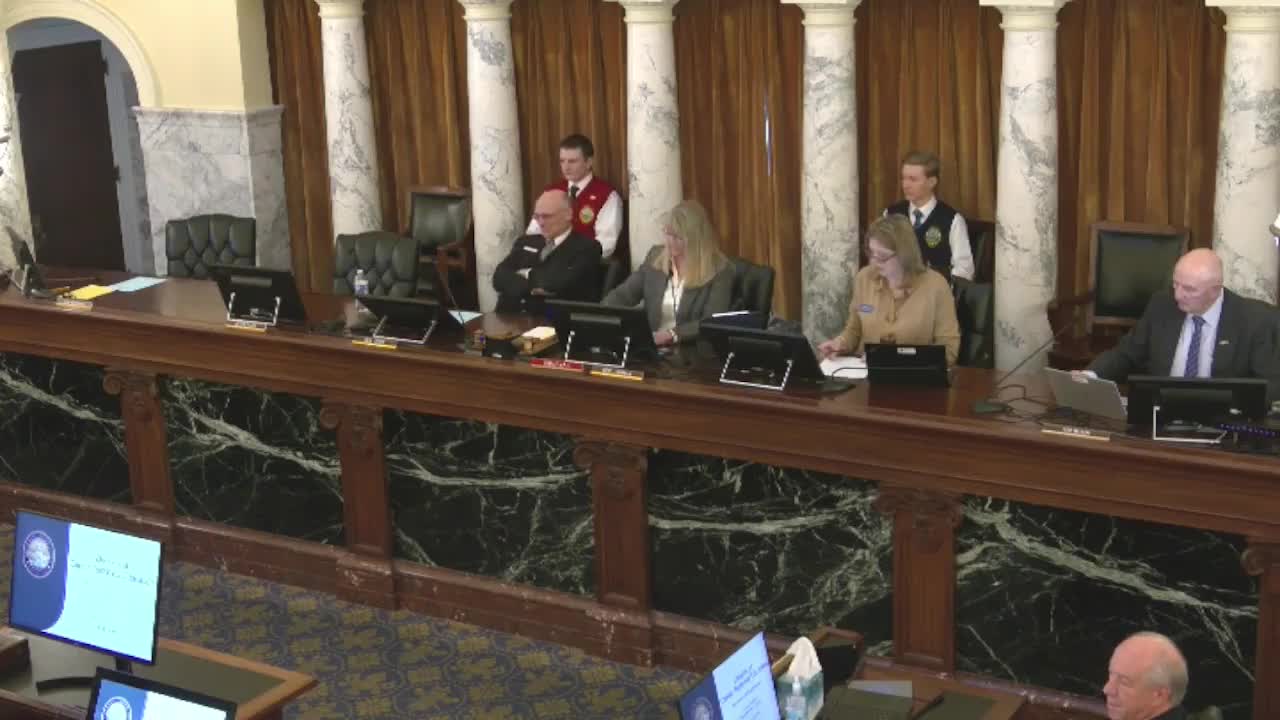
Madam Chair and members of the Joint Finance-Appropriations Committee heard an overview of the Division of Career Technical Education (CTE) budget and FY2026 requests during the committee's Feb. 10 meeting, where analysts and agency leaders said demand for applied-technical programs continues to outpace capacity.
Madam Chair and members of the Joint Finance-Appropriations Committee heard an overview of the Division of Career Technical Education(CTE) budget and FY2026 requests during the committee's Feb. 10 meeting, where analysts and agency leaders said demand for applied-technical programs continues to outpace capacity.
Kevin Campbell, a budget and policy analyst with the Legislative Services Office, presented the base budget and a summary of FY2026 requests for CTE, listing several funds used by the division and itemizing recent appropriations and enhancement requests. Joshua Whitworth, serving as interim state administrator for CTE and executive director for the State Board, answered committee questions about program demand, workforce partnerships and planned use of requested funds.
The overview said CTE operates programs in secondary schools, six technical colleges and adult-education and workforce centers; it relies on multiple funds that have statutory restrictions. Campbell described three funds by name and purpose: the Displaced Homemaker Fund (revenue from a $20 fee on divorces, directed to career training at Centers for New Directions), the Hazardous Materials and Waste Enforcement Fund (revenue from hazardous-materials trip and annual permits, used for firefighter hazmat training) and the Motorcycle Safety Fund (revenues from driver's licenses, motorcycle registrations and safety-program fees, used for motorcycle safety training).
Campbell also summarized recent appropriations and enhancements: ongoing staff and administrative increases (including $509,300 for additional staff and administration and $581,800 for new instructional staff at technical colleges), targeted one-time investments (a $10 million one-time appropriation for secondary CTE programs and $5 million one-time for equipment and postsecondary investments in FY2024) and the governor's recommendation to provide $10 million ongoing to expand capacity in high-demand CTE programs.
Joshua Whitworth told the committee the division is seeing "massive growth of demand" across secondary and postsecondary CTE programs and advised the committee that wait lists remain substantial. "The investment that this body has done for CTE is helping, but because of the giant demand in each of our areas ... we're still seeing more and more wait lists out there," Whitworth said. He said constraints include facilities and the number of qualified instructors: "We kind of look at it as ... we need demand ... a number of faculty ... and then the third tier is the facilities able to handle it."
Committee members asked for specifics. Whitworth said the division can provide a list of oversubscribed postsecondary programs and follow up with details on secondary programs. Several legislators identified welding and nursing as among the most oversubscribed programs; Whitworth said the state would expand seats at existing technical-college programs rather than create new programs from scratch and noted that some programs will require additional ventilation, equipment and faculty.
Lawmakers probed several funding and fund-balance items. Senator Berkey and Representative Tanner questioned a negative reporting balance in the Hazardous Materials and Waste Enforcement Fund; Whitworth said staff would validate the reporting and provide follow-up to the committee. Representative Tanner also asked about the motorcycle safety fund's rising balance; Whitworth said the division would review expenditures and bring recommendations to align fees and program activity.
Committee members asked for detail on the $10 million governor'recommended ongoing appropriation and on a proposed business-industry engagement manager position. Whitworth described the $10 million request as a capacity-building grant program intended to expand seats and faculty in high-demand areas, administered by the CTE division and tied to industry participation: "the grant would require some engagement by industry to participate in that. ... The way we were looking at running that grant was that industry is stepping down and matching that to that program." He said distribution would be driven by regional demand, not an equal split.
Tracy Bent, CTE chief administrative officer, described the adult education and workplace English program as serving adult basic-education students and individuals for whom English is not their first language, including learners at workforce training centers and returning individuals such as those from the Department of Corrections.
No formal motions or votes were recorded during the presentation and question period. Whitworth and analysts promised to supply additional documentation requested by committee members, including a list of oversubscribed programs, a personnel-cost breakdown, and follow-up on fund accounting for the hazmat and motorcycle safety funds.
The committee moved on to the next budget presentation after closing questions.