Get Full Government Meeting Transcripts, Videos, & Alerts Forever!
Get email alerts on the State Finance Endowment Pay topic
No spam. Unsubscribe anytime.
Endowment Fund Investment Board seeks pay increases for two investment staff; governor does not recommend
Summary
The Joint Finance-Appropriations Committee heard a request from the Endowment Fund Investment Board for salary increases for two senior investment staff. Board leaders said the raises are intended to retain experienced staff; the governor's recommendation does not include the compensation increases.
The Joint Finance‑Appropriations Committee heard testimony on the budget and pay requests for the Endowment Fund Investment Board on the morning the panel met.
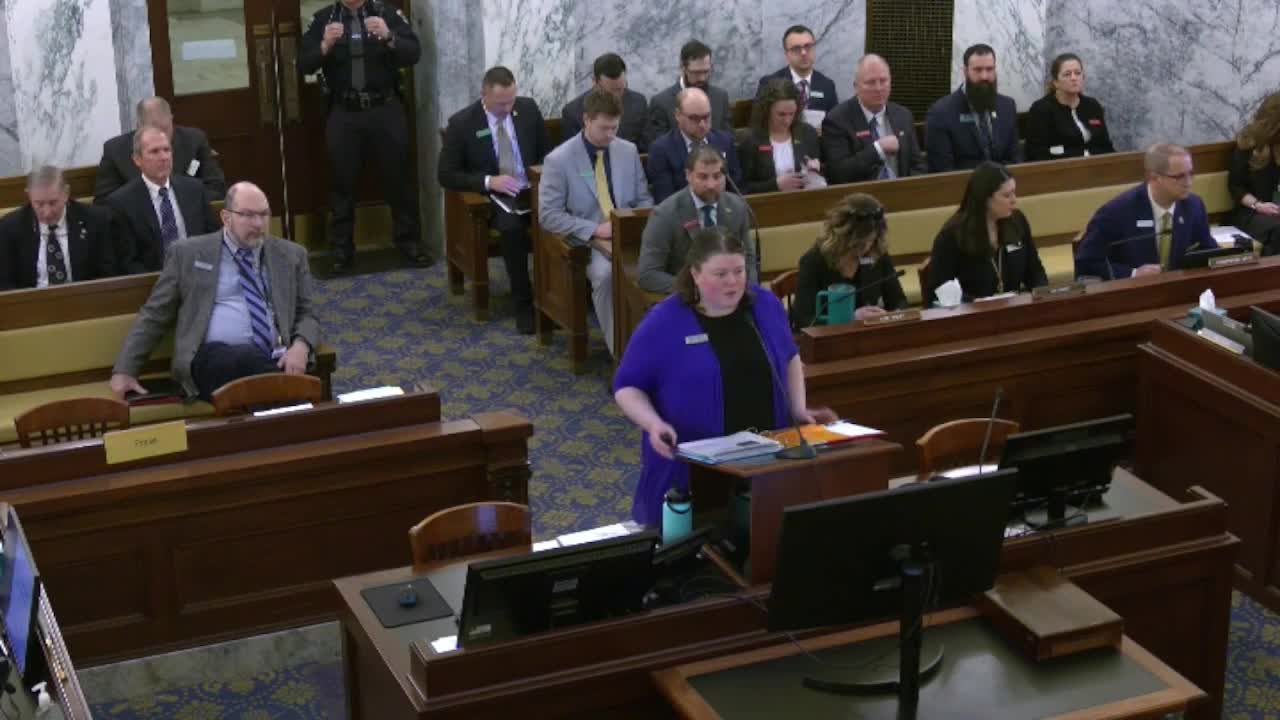
Janet Jessup, a budget and policy analyst with the Legislative Services Office, said the Endowment Fund Investment Board—established in Idaho code—manages the state’s land grant endowments and other statutorily required funds. She told the committee the board’s FY2026 request included a $100,000 compensation enhancement to increase salaries for two staff members; the governor’s recommendation did not include that compensation request.
Thomas Wilford, chairman of the Endowment Fund Investment Board, told the committee the request has a history tied to initial hiring decisions. “When Chris Anton was hired…he was hired at a level that was below what was expected,” Wilford said, adding the board believes replacing senior investment staff would cost more than current pay. Chris Anton, the board’s manager of investments, clarified the board’s current request was intended to increase pay for two long‑time staff: he said the board sought roughly $54,800 for Deputy Chief Investment Officer Chris Halverson and $28,400 for himself.
Anton told the committee the jobs managed by the board are substantially more complex than when some staff were originally hired. He said the office now manages roughly $5 billion in investments across the endowment fund and state insurance fund, and that staff roles have become more complex while pay grades have not kept pace. “He’s been in the same pay grade the whole time,” Anton said of Halverson, arguing the position’s scope now exceeds the existing grade.
Representative Manwaring and Co‑Chair Horman questioned the size of the requested increases, asking whether the board faced turnover risk or was trying to match private market pay. Wilford said the board’s compensation committee and the full board had approved the recommendations and that the board had discussed the matter with the governor’s office and the Division of Human Resources but had not reached final agreement with those offices.
Jessup explained where the endowment board’s operating funds appear in the budget and noted the governor’s recommendation supported other non‑compensation parts of the board’s request (general inflation and technical hardware) but did not include the requested salary increases.
No formal committee action or vote on the compensation request was taken during the hearing. Committee members asked the board chair and staff for additional detail about the pay comparator work and the board’s rationale; staff said they would be available to answer follow‑up questions.
The presentation also summarized the board’s staffing levels and finances: Jessup said the board has four FTPs and historically has filled positions at a high rate, and Anton noted the board reported consistent investment returns and long‑term investment income that benefits state beneficiaries.
The committee will consider the board’s enhancement request as part of broader budget deliberations; the governor’s recommendation currently omits the requested compensation increases.