Get Full Government Meeting Transcripts, Videos, & Alerts Forever!
Get email alerts on the Administrative Board Pay topic
No spam. Unsubscribe anytime.
Board of Tax Appeals seeks $29,200 to raise per diem from $300 to $400; director says board works up to 80 days
Summary
The Board of Tax Appeals requested $29,200 in ongoing general fund authority to raise board member per diems from $300 to $400 per day; director Cindy Pollock and analysts described workload, caseload averages and statutory authority.
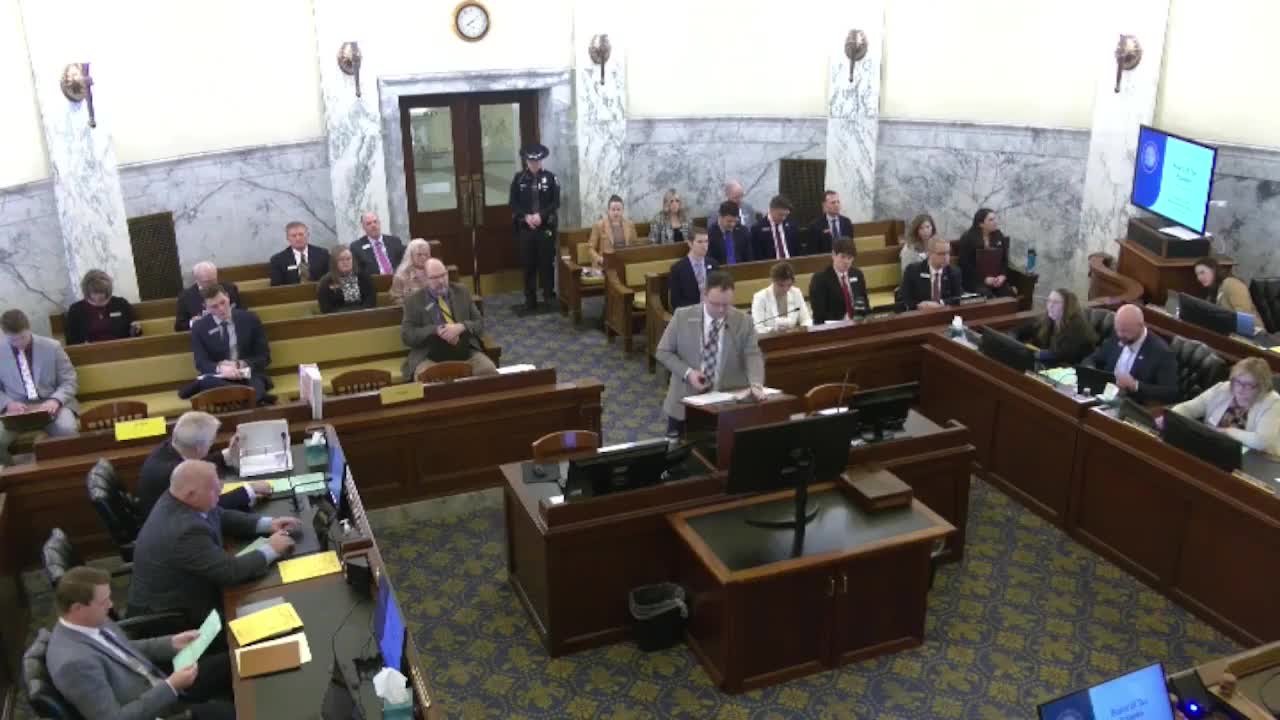
Christopher LaHoset, a budget and policy analyst with the Legislative Services Office, and Cindy Pollock, director of the Board of Tax Appeals, briefed JFAC on the agency’s FY2026 enhancement request to increase the per diem for the three board members from $300 to $400 per day.
LaHoset said the request totals $29,200 in ongoing general fund for personnel costs tied to the per diem change and noted the per diem increase would require legislation to amend Idaho Code section 63-3804. “The 3 board members act as administrative law judges who preside over public tax appeals hearings across the state,” LaHoset said, and the agency calculated the current $300 per diem equals about $37.50 per hour on an 80-day-per-year model; $400 a day would be about $50 per hour according to the agency’s estimate.
Director Cindy Pollock described the board’s workload and caseload. Pollock told the committee the board is typically funded for about 300 cases per year but caseloads can spike — she cited a past year when Bannock County produced roughly 600 appeals after a local catastrophe. Pollock said the board has four full-time positions in the agency and uses three board members located in different regions to hear cases across the state. “The board is only allowed to work 80 days. They’re funded for 80 days,” Pollock said, explaining the board schedules hearings, conducts preparatory review and then takes time to deliberate and write findings and conclusions.
Committee members asked whether per diem covers preparatory work. Pollock said board members break prep and decision time down hourly within their 80-day model. Representative Tanner and other members pressed on why the agency requests an increase while the agency also reports reverting unspent funds in some years; Pollock explained reversions reflect unused board time or travel money in years with fewer hearings, while the per diem increase affects the compensated rate when the members are used.
LaHoset noted the agency’s authorization is in Idaho Code section 63-3801, which establishes the board and its authority. The panel did not take formal action on the request during the hearing; members questioned workload, training and whether the budget currently contains funds to cover the increase in years with substantial reversions.
No vote or formal appropriation was recorded in the transcript. The committee engaged in follow-up questioning about training requirements, comparisons to other quasi‑judicial bodies and the agency’s ability to revert unused funds when caseloads fall.