Get Full Government Meeting Transcripts, Videos, & Alerts Forever!
Get email alerts on the Health Workforce Medical Residencies topic
No spam. Unsubscribe anytime.
Lawmakers hear residency expansion pitch as Idaho grows physician training capacity under 10-year plan
Summary
Legislators on JFAC heard presentations from residency program leaders and analysts on efforts to expand internal medicine, family medicine and psychiatry residencies across Idaho. Speakers described a three‑way funding partnership, per‑resident costs, retention rates and immediate service benefits residents provide while training.
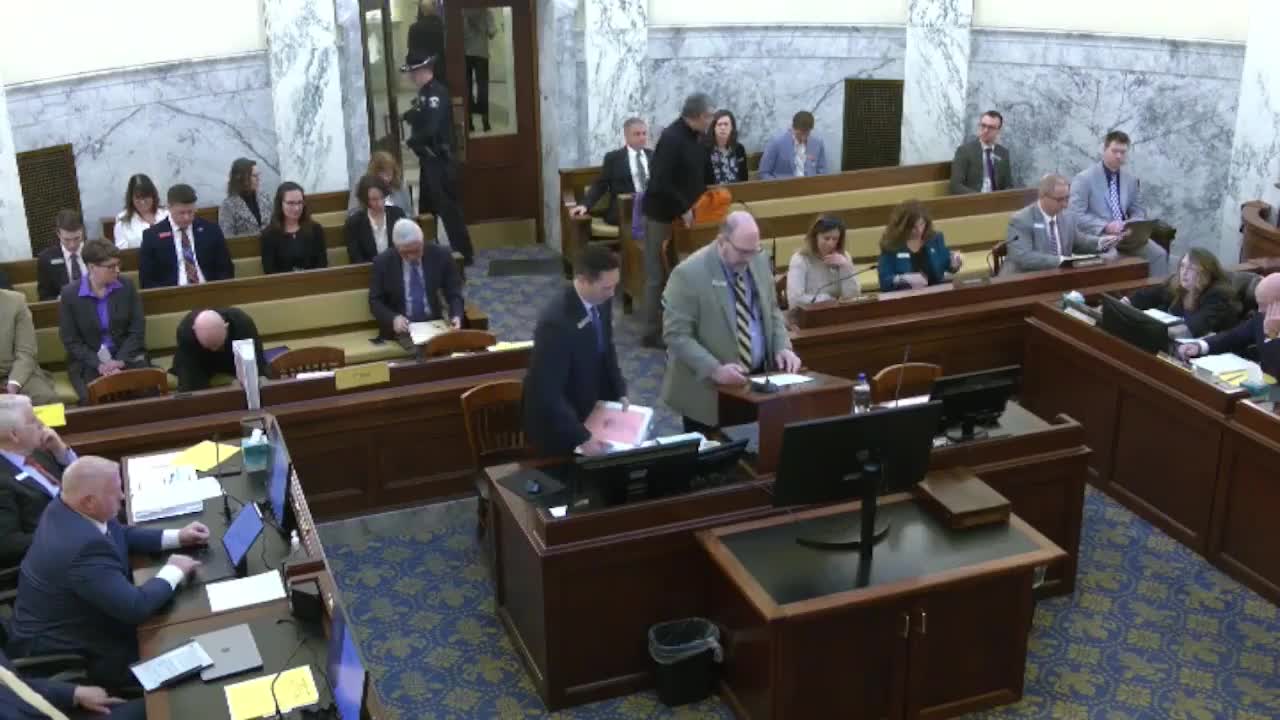
Legislators on the Joint Finance-Appropriations Committee on Monday heard that expansions of Idaho’s medical residency programs are producing more physicians and immediate clinical capacity while seeking continued state funding to sustain growth.
Kevin Campbell, a Legislative Services Office budget analyst, opened the residency portion of the hearing with an overview of how residencies operate and the state’s recent investments. “To create a doctor takes at a minimum, three additional years longer for some specialties,” Campbell said, explaining that residencies pay salaries, training costs and supervising physicians and that the state frequently partners with hospitals and universities to support those costs.
Why it matters: Idaho remains below many states on physicians per capita. Committee discussion focused on whether state support for residency slots and loan-repayment incentives is the most effective near- and long-term strategy to increase the physician workforce, particularly in rural areas and in specialties such as psychiatry.
What presenters told the committee - Three-way partnership and per-resident costs: Program directors and analysts described the common funding model in Idaho: sponsoring institutions, health systems and the state each cover roughly one-third of the per-resident cost. Kevin Campbell and program directors said a 2026 per-resident estimate is about $210,000 per year (up from roughly $180,000 in 2017–18). Program directors urged the committee to consider whether the state’s third should increase to reflect current costs. - Program scale and requests: - Eastern Idaho Medical Residency (EIMR): Analyst Kevin Campbell said the program has about 56 residents and requested $240,000 for four additional psychiatry residents, which would bring EIMR’s total psychiatry complement to 12. Psychiatrist Matthew Larson, EIMR’s psychiatry program director, said psychiatry positions are in high demand and that residents provide substantial clinical service during training: “It takes 3 and a half months to get into me. It takes about a year to get into a psychologist for testing for a kid,” Larson said, arguing that training physicians in-state increases access while also increasing retention. - Boise Internal Medicine: The program has 41 residents. Campbell said the program consistently spends its appropriations and asked for $60,000 ongoing for one additional resident in FY2026. - Family Medicine Residency (FMR): Family medicine programs across the state include Full Circle Health (Boise, Nampa, Caldwell, Twin Falls/Jerome), Idaho State University (Pocatello, Rexburg, Rupert) and Kootenai (Coeur d’Alene). FMR comprises about 130 residents statewide; the program requested funding for multiple new positions, including $420,000 ongoing for six new residents and one fellowship tied to St. Alphonsus Nampa and Mountain States Institute, and other smaller requests to support Eastern Idaho placements. - Retention and immediate service benefit: Campbell cited an American Medical Association figure that 55% of Idaho residency graduates stay in Idaho; program directors said primary care residencies’ retention rates are often higher (family medicine programs reporting up to about 65%). Directors emphasized that residents are also active clinicians during training, increasing local capacity immediately. “Even if no one stayed in the state afterwards, you still have 16 additional doctors practicing psychiatry in Idaho Falls and the surrounding areas just from my program,” said Dr. Matthew Larson.
Questions and context Committee members asked how to evaluate return on investment versus scholarships, residency slots and loan-repayment programs. Director Alex Adams and program directors said the approaches are complementary: residencies address the training bottleneck (the number of residency slots limits how many medical graduates can practice), while loan-repayment and rural-incentive programs help recruit and retain physicians after training.
Several program directors said Idaho’s residency expansion is already moving the state up from the bottom tier nationally. “With the 10-year expansion, funding wise we were woefully behind,” said Dr. Brandon Mickelson, a family medicine program director. “With the work that has happened in this room … we have moved to where in this region we are above or equivalent to any other state.”
Concluding note: presenters asked the committee to continue support for the multi-year plan to stabilize existing slots and allow new programs (including child psychiatry and sports-medicine fellowship slots) to start when funding is secured. No formal vote occurred during the hearing.