Get Full Government Meeting Transcripts, Videos, & Alerts Forever!
Get email alerts on the Renewable Energy topic
No spam. Unsubscribe anytime.
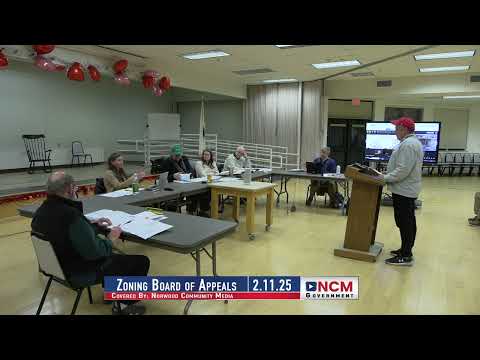
Norwood board approves 3.3 MW solar array on capped Winter Street landfill with conditions
Summary
The Town of Norwood Zoning Board of Appeals on Feb. 11 approved a special‑permit application to build a 3.3‑MW DC solar photovoltaic array on the capped Winter Street landfill, with conditions including return to the board for substantive construction changes and building‑inspector oversight on any fill or plan deviations.
The Board of Appeals of the Town of Norwood voted Feb. 11 to grant a special permit for a solar photovoltaic facility on the Winter Street landfill, approving a fenced, ground‑ballasted array that the applicant says will produce about 3.3 megawatts DC and supply electricity under a 25‑year power‑purchase agreement to the Norwood Municipal Light Department.
Atlantic Design Engineers’ Brendan Riali and Asa Smith presented the proposal on behalf of TES Winter Street Solar 23 LLC. The project site comprises four parcels totaling roughly 39.3 acres; the proposed fenced array would occupy about 9.93 acres on the capped solid‑waste area. Presenters said the array uses ground‑ballasted racking (concrete blocks) to avoid penetrating the landfill cap, requires no tree clearing or grading, and will interconnect to the grid using existing overhead lines north of the landfill. CDM Smith is the ongoing operations/monitoring contractor for the capped landfill, and project materials note that parts of the property are inside a FEMA AE flood zone and that wetlands and woodlands border the site.
Tom Hammond, representing Tangent Energy Solutions (the developer/operator), said the project won a light‑department RFP, has an executed PPA with the Norwood Municipal Light Department and that the light department will purchase all energy and retain the solar renewable energy credits. Hammond said the system would provide roughly 3% of the light department’s yearly distribution energy. He confirmed the PPA and a lease with the town have been executed; the lease contains indemnification language and post‑construction obligations. The applicant said the panels the developer plans to install carry warranties for the 25‑year contracted term and that annual degradation is modeled at roughly 0.5% per year.
Board members and staff pressed the applicant on construction impacts and oversight. The developer said typical construction will run about six to eight months, will use local licensed labor and will limit heavy traffic to the construction period. A pre‑construction meeting with town staff and inspections by MassDEP (as part of the landfill’s post‑closure permit) were described as part of oversight. The developer confirmed continuous remote monitoring of the array and security cameras, and said routine maintenance (including mowing) will be scheduled; the design includes a 7‑foot security fence with wildlife gaps.
Several residents voiced questions about ownership of the energy, public access to the landfill trails, stormwater/runoff and whether the project would preclude other uses such as a future trails overlook. Resident Toni Esco asked whether the light department is the sole purchaser (the applicant confirmed the PPA sells all energy to Norwood Light) and whether the Board of Selectmen or the light commissioners approved the contract (presenters said the RFP and contract process involved the light department and the board of selectmen approved the contract). Presenters said MassDEP will inspect construction as part of the post‑closure permit and that the lease contains indemnification provisions; they offered to provide lease language to town staff for review.
Planning staff, the building commissioner and board members added conditions and oversight points during and after the hearing. The board recorded several conditions in its motion: the applicant must return to the Zoning Board of Appeals for any modifications to the approved construction documents or substantial changes to the plans; the building commissioner will review proposed amounts of fill or other deviations and may require the applicant to return to the board; a pre‑construction meeting will be required with town staff, and local inspections and permitting (including MassDEP oversight tied to the landfill post‑closure use permit) must be satisfied before energization.
The board voted to approve the special permit as presented. The motion was moved by Matt and seconded by Shannon; recorded votes were Al — yes, Shannon — yes, Rachel — yes, Matt — yes. The board’s approval included the conditions noted above and a requirement that the applicant return for any non‑minor changes to construction plans.