Get Full Government Meeting Transcripts, Videos, & Alerts Forever!
Get email alerts on the Gambling Regulation topic
No spam. Unsubscribe anytime.
Legislative committee briefed on how gambling is regulated in Maine
Summary
The Joint Standing Committee on Veterans and Legal Affairs received an overview of Maine gambling law, including which state agencies oversee lottery, charitable gaming, sports wagering and commercial casinos, and limits on which entities may offer certain games.
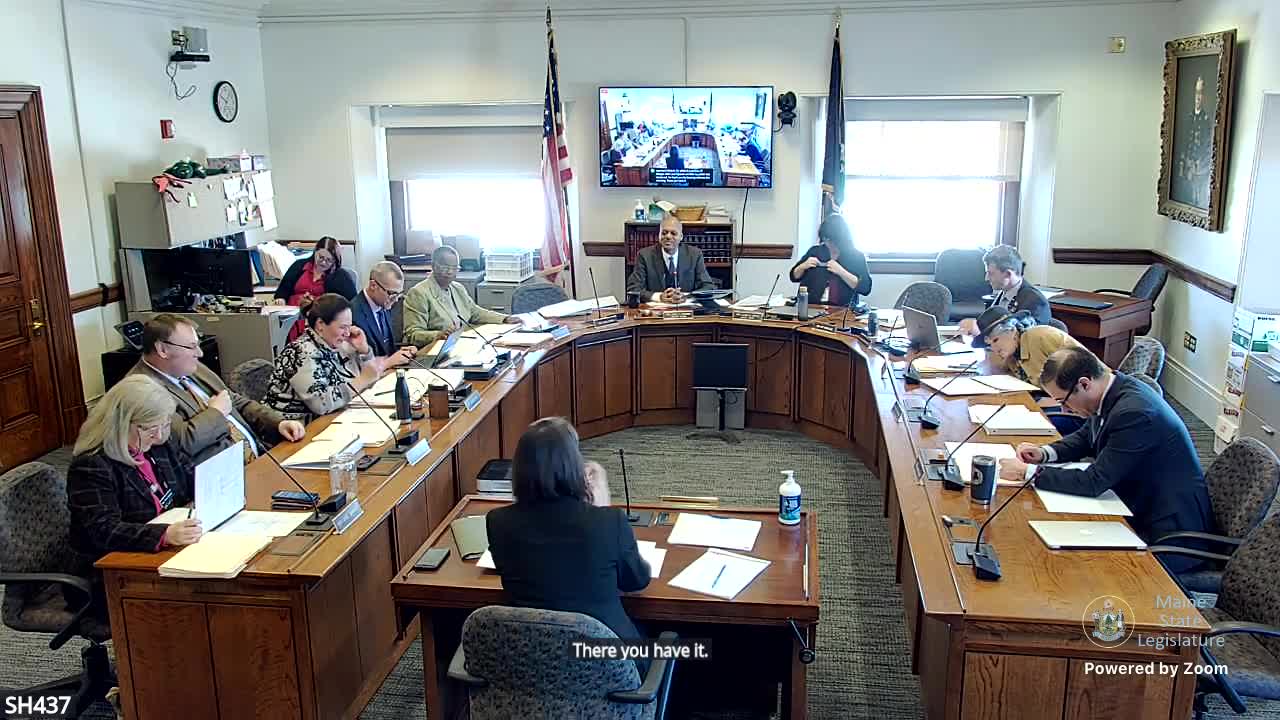
Members of the Maine Legislature’s Joint Standing Committee on Veterans and Legal Affairs heard a staff briefing on the state’s gambling regulatory framework during a committee meeting.
The committee’s lead analyst, Rachel Olsen, told members the state’s regulatory structure is divided among several agencies and entities and provided a policy binder for legislators to use as a reference. “Related to gaming or gambling, as it’s also known, in the state of Maine,” Olsen said as she began the overview.
Olsen said the Department of Administrative and Financial Services (DAFS) houses the Bureau of Alcoholic Beverages and Lottery Operations, which operates the state lottery and participates in the Tri‑State Lotto Compact. She said the Department of Public Safety oversees the Gambling Control Board and the Gambling Control Unit; “by statute, the executive director of the Gambling Control Board is also the director of the Gambling Control Unit,” Olsen said.
Olsen described the Gambling Control Unit as responsible for charitable gaming, which she said includes “games of chance” such as bingo. She noted a statutory distinction for higher‑stakes bingo and certain wagering: only federally recognized Indian tribes in the state are eligible to conduct high‑stakes bingo and to operate authorized sports wagering platforms, including both facility‑based and mobile wagering. Olsen also identified fantasy sports as a mobile‑based betting category overseen within the same regulatory framework.
Olsen said the Gambling Control Board is the body that oversees the state’s commercial casinos and identified two commercial casino properties discussed in the briefing: Oxford Casino and Hotel and Hollywood Casino Hotel and Raceway in Bangor. Committee members were told Milt Champion, the executive director of the Gambling Control Board, was present at the meeting.
Craig Hickman, who introduced the analyst to the committee, described Olsen’s materials as a reference package for lawmakers and noted the binder will be added to during the session. Olsen asked members to keep the binder in the room or return it so it can be supplemented with additional materials.
The briefing clarified the broad categories of gaming that the committee may see in bills or hearings: state lottery operations, charitable gaming (including bingo), sports wagering (facility and mobile), fantasy sports, and commercial casino regulation. No formal votes or motions on policy changes were recorded during the portion of the transcript provided.