Get Full Government Meeting Transcripts, Videos, & Alerts Forever!
Get email alerts on the Education Restroom Policies topic
No spam. Unsubscribe anytime.
Committee advances bill to require sex-segregated multi‑occupant restrooms in residential education programs
Summary
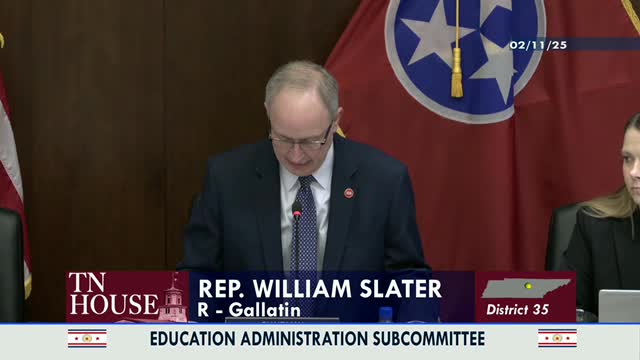
The Education Administration subcommittee advanced House Bill 64 on a 5-1 vote. The bill would require sex segregation of multi‑occupant restrooms and showers at residential educational programs that house minors.
The Education Administration subcommittee advanced House Bill 64 on a 5-1 vote, moving the measure to the full committee. The bill, sponsored by Representative Bulso, would require multi‑occupant restrooms and shower facilities in residential educational programs involving minors to be segregated by sex.
Representative Bulso told the subcommittee the bill grew out of a constituent complaint about a summer residential program in which parents declined a request to assign their daughter a “transgender” roommate and later learned boys identifying as girls were allowed to use the same shower and restroom facilities. Bulso said the amendment added language clarifying the rule applies to “multi‑occupancy” facilities and does not affect single‑user restrooms; the amendment’s drafting code is 003452.
The measure drew public opposition from Bean Chapman, who identified themself as a policy analyst with Disease Equality Project and urged members to vote no. Chapman said the bill would endanger transgender, nonbinary and intersex students and staff and described the proposal as rooted in a misunderstanding of biological diversity. “These laws are based on an understanding of the normal diversity in human biology,” Chapman said, and added that transgender and nonbinary people face high lifetime risks of assault.
Committee members questioned the scope of the bill. Representative Cipiche and others asked whether the term “residential educational program” was defined narrowly or would cover a wide range of facilities, including private universities, day cares, mental health facilities and juvenile detention centers. Bulso said the term was intended to cover programs where minors spend the night and noted the bill cites Title 49 chapters 6, 7 and 50 so it would apply across elementary, secondary and postsecondary residential programs serving minors. Bulso said the intent was to protect girls’ privacy and security and that the bill would not require construction of new facilities, only that multi‑occupant restrooms and showers remain segregated by sex; single‑user restrooms could be designated for unisex use.
Members also raised questions about whether private institutions would face an unfunded mandate. Bulso replied that many private educational institutions already maintain sex‑segregated bathrooms and that the bill was not intended to require new construction. Members requested additional time to vet language and fiscal implications, but Bulso said he did not believe further drafting was necessary.
The clerk recorded a committee vote of five yeas and one nay; the bill, as amended with drafting code 003452, was forwarded to the full Education Administration committee.
What’s next: House Bill 64 will be scheduled for consideration by the full Education Administration committee; no date was given in the hearing transcript.