Get Full Government Meeting Transcripts, Videos, & Alerts Forever!
Get email alerts on the Food Security topic
No spam. Unsubscribe anytime.
Second Harvest Food Bank of Northeast Tennessee urges larger state investment as demand spikes after Hurricane Helene
Summary
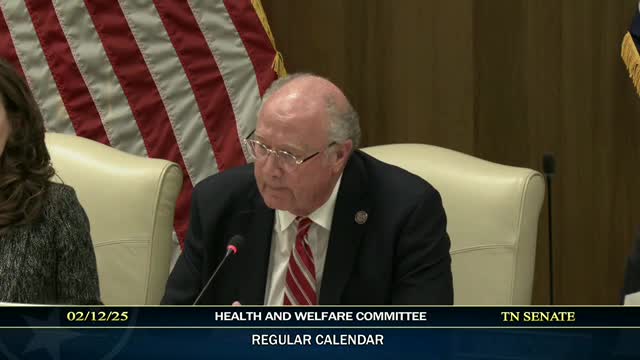
Second Harvest Food Bank of Northeast Tennessee told the Senate Health and Welfare Committee it served a 20% spike in October after Hurricane Helene and urged the state to consider increasing funding beyond the current $1 million distributed among six statewide food banks.
The Senate Health and Welfare Committee heard testimony from Rhonda Chaffin, executive director of the Second Harvest Food Bank of Northeast Tennessee, and staff about rising food insecurity in the region and a request for increased state support. Chaffin told the committee, “We assist up to 43,000 individuals just in Northeast Tennessee, through 400 distribution points monthly.”
Why this matters: Committee members and food-bank leaders said food costs have risen while donations have fallen, and disaster recovery from Hurricane Helene has increased short-term and projected long-term demand. Committee leaders compared Tennessee’s current $1 million allocation for six statewide food banks to higher per-state investments elsewhere.
What the food bank reported: Rhonda Chaffin said the Northeast Tennessee food bank serves eight counties and that the regional demand rose sharply after Hurricane Helene (09/27/2024). She said the food bank provided food and water to 8,600 individuals in the immediate disaster response and expects to distribute roughly 20% more food over the following six to 12 months, an increase the food bank estimated would require an additional 3,000,000 pounds of food to meet demand. Chaffin described regular programs that include weekend backpack food for children, summer feeding and after-school meal programs, mobile pantries and senior home deliveries; she also said the food bank logged about 26,000 volunteer hours in a recent year.
Committee discussion and data sources: Chairman Crow listed comparative funding in other states and noted that some states use TANF or larger general-fund appropriations; he asked the food-bank representatives to describe funding sources and needs. In response to a question from Senator Hensley, the witnesses said the Feeding America “Map the Meal Gap,” which uses USDA and Census inputs and self-reported food-security questions, is the source for the meal-gap figures shown in committee materials.
What they asked for: Second Harvest’s development director (Christian Reedy) and Chaffin urged the committee to consider expanding state funding, including exploring TANF or general-fund options and using state-level dollars to support wraparound services (such as financial literacy, health navigation and case management) that the food bank uses alongside food distribution.
Ending: Committee members thanked the witnesses and said they would keep the funding gap in mind as the session continues.