Get Full Government Meeting Transcripts, Videos, & Alerts Forever!
Get email alerts on the Military Education Benefits topic
No spam. Unsubscribe anytime.
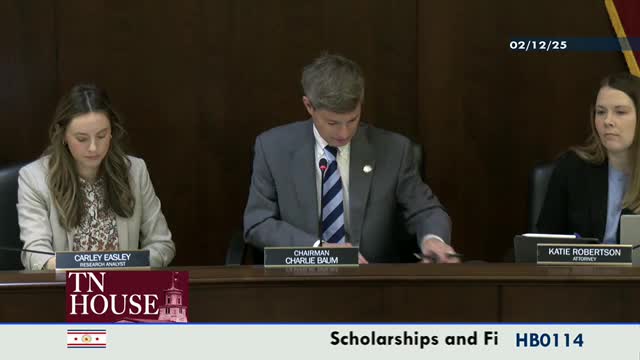
Higher Education Subcommittee adopts amendment clarifying Guard tuition benefit, advances bill unanimously
Summary
The committee adopted a clarifying amendment to legislation that defines how the Department of Military pays tuition for National Guard members, expands allowable credit hours, shortens the reimbursement window and clarifies covered fees; the full amended bill passed the subcommittee 6-0.
A House higher education subcommittee on Wednesday adopted a clarifying amendment to the Strong Act and voted the amended bill out of committee unanimously.
The amendment (barcode 3428) makes explicit that the Department of Military will pay “100% of the maximum resident in-state tuition” and that the program will operate on a last-dollar basis after other state and federal programs. The committee then approved the amended measure by voice vote and later recorded a 6–0 committee vote to advance the bill.
The clarification was offered as an amendment before debate on the bill. Leader Lambert, who presented the amendment, described it as “a clarifying amendment. It clarifies who pays whom and how much. The Department of Military shall pay 100% of the maximum resident in state tuition. And it makes clear that this program pays last dollar.”
The bill as explained to the committee makes four principal changes to the existing Strong Act: it removes the statute’s sunset (the current program was scheduled to sunset June 30, 2025), it increases the maximum allowable credit hours covered from 20 to 30, it shortens the deadline for members to request tuition reimbursement from 90 days to 45 days, and it defines “mandatory fees” (lab fees, parking fees, technology fees, library fees, among others) to clarify which non-tuition charges the benefit will cover.
A sponsor explained the resident cap is intended to limit what is paid for private institutions: "This establishes what will be paid to that private institution or that TCAT, the maximum resident in state tuition," the sponsor said, noting an example that a student at a private institution would receive only the resident in-state tuition equivalent used by public institutions.
Committee members asked whether the bill limits benefits only to public institutions; presenters replied that the language is intended to set the reimbursement cap (resident in-state rate) regardless of whether the member attends a public, private, or technical college.
Presenters provided program use data: 24 TCATs and community colleges, seven state universities, 22 private colleges and universities, and four historically Black colleges and universities have participated. Usage examples cited included 95 students from MTSU on the Army side and 75 on the Air side; separate counts for master’s-level participants were described by the sponsor.
Sponsors noted the governor’s proposed budget includes $4,084,000 to continue funding the Strong Act; the bill itself contains no new sunset but still requires funding to continue operations.
The committee approved the clarifying amendment and then advanced the amended bill by a 6–0 vote. The committee did not record individual member roll-call votes in the transcript; the clerk reported the tally as “6 aye and 0 nays.”
The bill will move to the full education committee for further consideration.