Get Full Government Meeting Transcripts, Videos, & Alerts Forever!
Get email alerts on the Lemon Law Reform topic
No spam. Unsubscribe anytime.
Senate Judiciary advances SB 26, a cleanup to California’s lemon law, over consumer objections
Summary
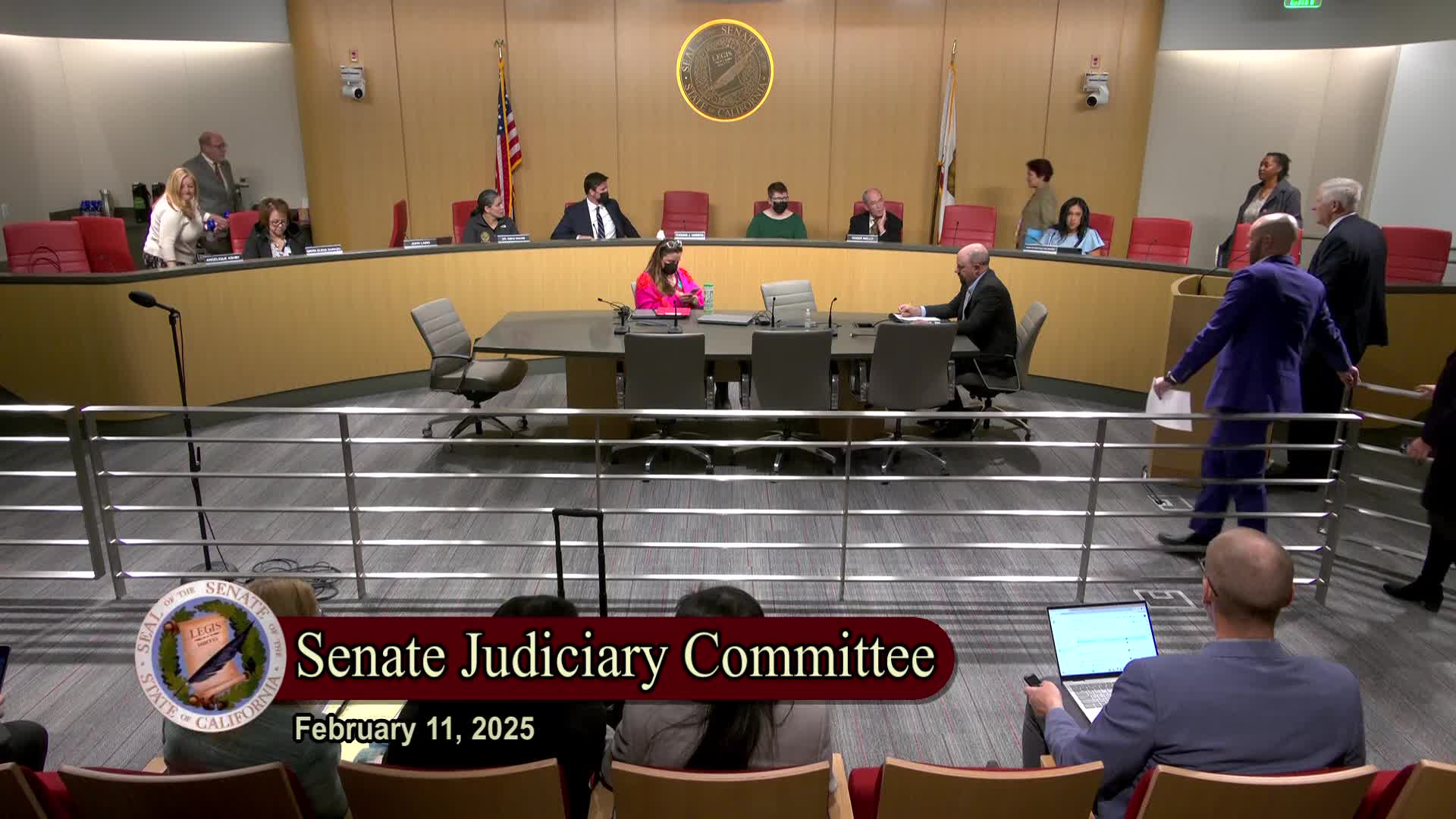
The Senate Committee on Judiciary advanced SB 26, a cleanup to the Song‑Beverly Consumer Warranty Act, by a 10–1 vote and sent the bill to Senate Business, Professions and Economic Development.
The Senate Committee on Judiciary advanced SB 26, a cleanup measure tied to the Song‑Beverly Consumer Warranty Act (California’s “lemon law”), by a 10–1 vote and sent the bill to the Senate Committee on Business, Professions and Economic Development.
Senator Redberg, who presented SB 26 to the committee, said the bill implements technical changes tied to last year’s AB 1755 and the governor’s signing message and aims to give consumers additional protections while responding to concerns raised by manufacturers and state officials. “It’s known commonly as the Lehi Law,” Redberg said, describing the measure as a cleanup of recent reforms to the lemon‑law statutes.
The bill drew sharp divisions at the hearing over two central changes: a new requirement that a consumer who has an active lemon‑law claim notify a subsequent buyer, and a process by which manufacturers can choose whether to operate under the post‑AB 1755 procedures or continue under the older law.
Nut graf: Supporters framed SB 26 as a narrow fix to implementation issues in AB 1755 that must take effect before AB 1755’s compliance date; opponents said the draft creates new obstacles for consumers and injects confusing opt‑in/opt‑out choices that could reduce accountability and access to relief.
Support and arguments Nancy Drabble, chief executive officer of Consumer Attorneys of California, told the committee the bill is “a follow‑up to AB 1755 of last year” and that, in her view, the measure preserves strong consumer protections while offering procedural improvements. “From the substantive standpoint, those are the two items in this bill. One is the opt‑out provision, and the second is the new positive consumer notification that’s in the bill,” Drabble said.
Representatives of automobile manufacturers and trade groups testified in support. Matt Klopfenstein of Summit Advocacy, appearing for Volkswagen Group and a coalition of automakers, described SB 26 as a narrow, urgency cleanup that must take effect before AB 1755’s April 1 effective date. He told the committee the bill “provides an opt‑in process for 1755” and said manufacturers that affirmatively opt in would be locked into that framework for five years to promote consistency; he concluded by requesting an “I” vote.
Other automaker representatives stated their organizations’ support on the record, including representatives identifying themselves as appearing on behalf of General Motors, Honda, BMW, Rivian, Tesla, Stellantis, Toyota, Lucid and Kia.
Opposition and concerns Roger Kironos, managing partner at Knight Law Group, and other consumer advocates testified in opposition or raised serious concerns. Kironos focused on the bill’s notice provision (identified in the hearing as Section 871.24, subdivision (i) in the draft) and warned it could place new burdens on consumers while failing to protect subsequent buyers. “This provision, unfortunately, doesn't do that because there is no express obligation on that dealership to tell the buyer,” he said, arguing that the result would be to pull dealerships into litigation and to expose consumers to confusing consequences years after an initial claim.
Other opposition testimony echoed related issues: a witness describing themself as from Consumer for Auto Reliability and Safety argued the bill reduces access to the lemon law in substantive ways (for example, by shortening some limitation periods discussed in last year’s debate), and Armee Khodani of Prestige Legal Solutions said she was already seeing practical problems on the ground since AB 1755 passed—requests from manufacturers for open‑ended extensions and unpaid pre‑litigation checks.
Committee discussion and drafting issues Committee members pressed the author and witnesses on several technical and policy concerns. Senator Wahab asked the author to identify specific amendments she would accept; among the ideas pressed were (1) making manufacturers the party responsible for providing notice (for example, by notifying DMV records similarly to how branding occurs after a buyback) and (2) limiting any consumer‑notice obligation to private‑party sales. The author said the bill reflected a stakeholder compromise prompted by the governor’s signing message and described it as an urgency measure intended to take effect before AB 1755’s compliance date.
Witnesses and several committee members also flagged drafting inconsistencies for correction. Kironos drew attention to language that uses the single word “new” in several places where the Song‑Beverly Act has long used the defined phrase “new motor vehicle,” and counsel at the hearing acknowledged that the committee analysis recommended substituting the longer, established phrase for clarity and consistency.
Decision and next steps After discussion, the committee voted to move SB 26 to the Senate Committee on Business, Professions and Economic Development. The roll call recorded ten affirmative votes and one negative vote; the clerk announced the result as “10 to 1.” Senator Ashby cast the lone no vote; senators recorded voting aye included Umberg, Nilo, Allen, Caballero, Durazo, Laird, Stern, Valadares, Weber Pearson and Weiner. The committee did not adopt additional amendments on the floor at the hearing.
Votes at a glance • SB 26 — Passed to Senate Business, Professions and Economic Development (committee referral); vote: 10 ayes, 1 no.
Why it matters SB 26 addresses procedural and notice issues that stakeholders say must be clarified before AB 1755’s new procedures take effect. Supporters say the measure balances consumer protections with implementability for manufacturers; opponents contend the draft will create new consumer burdens, inconsistent application across manufacturers, and drafting problems that could undermine access to relief. Committee members and witnesses suggested additional technical cleanups likely will be required if the bill advances.
Provenance: hearing record The committee hearing transcript supplied the statements and votes summarized here. The author and witnesses introduced the topic at the start of the SB 26 presentation and the transcript records the last committee action as the roll call adoption and announcement that the bill passed 10–1.