Get Full Government Meeting Transcripts, Videos, & Alerts Forever!
Get email alerts on the Price Transparency Healthcare topic
No spam. Unsubscribe anytime.
Committee advances 'Patient's Right to Save' bill to let patients seek cash discounts and apply savings to deductibles
Summary
Senate Study Bill 1029, dubbed the Patient's Right to Save Act, was advanced after adoption of an amendment that narrowed exemptions and removed a requirement to post all cash prices publicly; sponsors said the bill creates incentives for price-shopping but acknowledged questions about provider impacts and outstanding lobbyist positions.
Senate Study Bill 1029, the "Patient's Right to Save Act," which would require providers to disclose cash discount rates and allow patients to apply qualifying cash payments toward insurer deductibles, passed the committee as amended and will move to the Senate calendar.
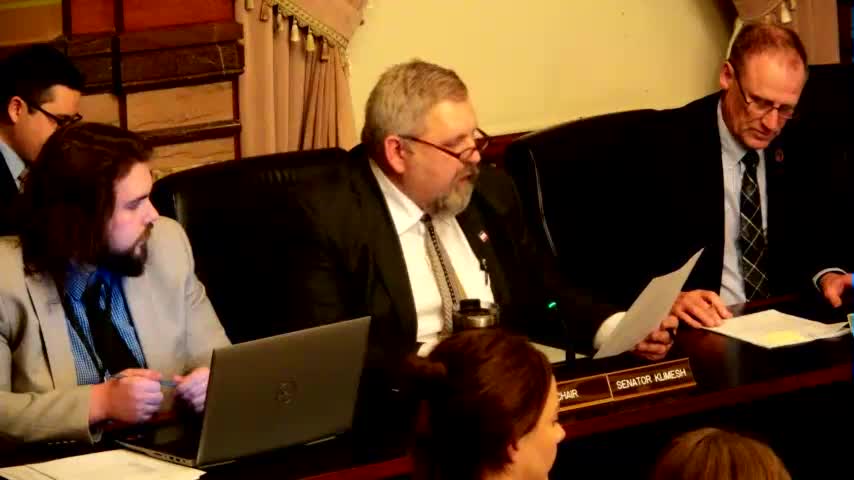
Sponsor Senator Klimish said the bill "incentivizes patients to make price transparency work by rewarding patients who shop for lower cost, higher quality care," and described three main elements: disclosed cash discounts, deductible credit for lower-cost cash care, and permitting patients to share insurance savings post-deductible. The committee adopted amendment 185, which narrows the bill by excluding Iowa Medicaid (Iowa HHS), Medicare Part D, and multiple employer welfare arrangements from the definition of "health carrier," clarifies that discount disclosures apply to specific services rather than all services, removes the requirement that providers post all discounted cash prices on a publicly accessible website and instead requires providers to review cash prices annually, and clarifies notice and receipt requirements.
Committee members pressed the sponsor on whether health-care providers had moved from opposition to neutrality after the amendment. Senator Peterson asked whether providers had shifted their positions; Klimish said the amendment was crafted to address concerns and hoped it would move some providers to neutral but that she "had not checked where their current classifications were." Senator Peterson and others urged continued outreach to providers to avoid imposing undue burdens on a workforce already described as thin in parts of the state.
Klimish also described how the bill would operate for patients: providers would disclose a cash discounted price for a specific service, and if the cash price is less than the insurance-covered price a patient could apply that payment toward the deductible subject to the insurer's rules. "A patient should have the ability to come in, ask for a cash discounted price, pay that cash discounted price, and have transparency in the marketplace," Klimish said.
The bill was advanced to the Senate calendar as a committee bill under the committee's rule of 40. The transcript does not show a recorded roll-call tally for the committee advancement; the sponsor said the committee expects to hear lobbying positions on the floor and to continue discussions with providers.