Get Full Government Meeting Transcripts, Videos, & Alerts Forever!
Get email alerts on the Legislative Procedure topic
No spam. Unsubscribe anytime.
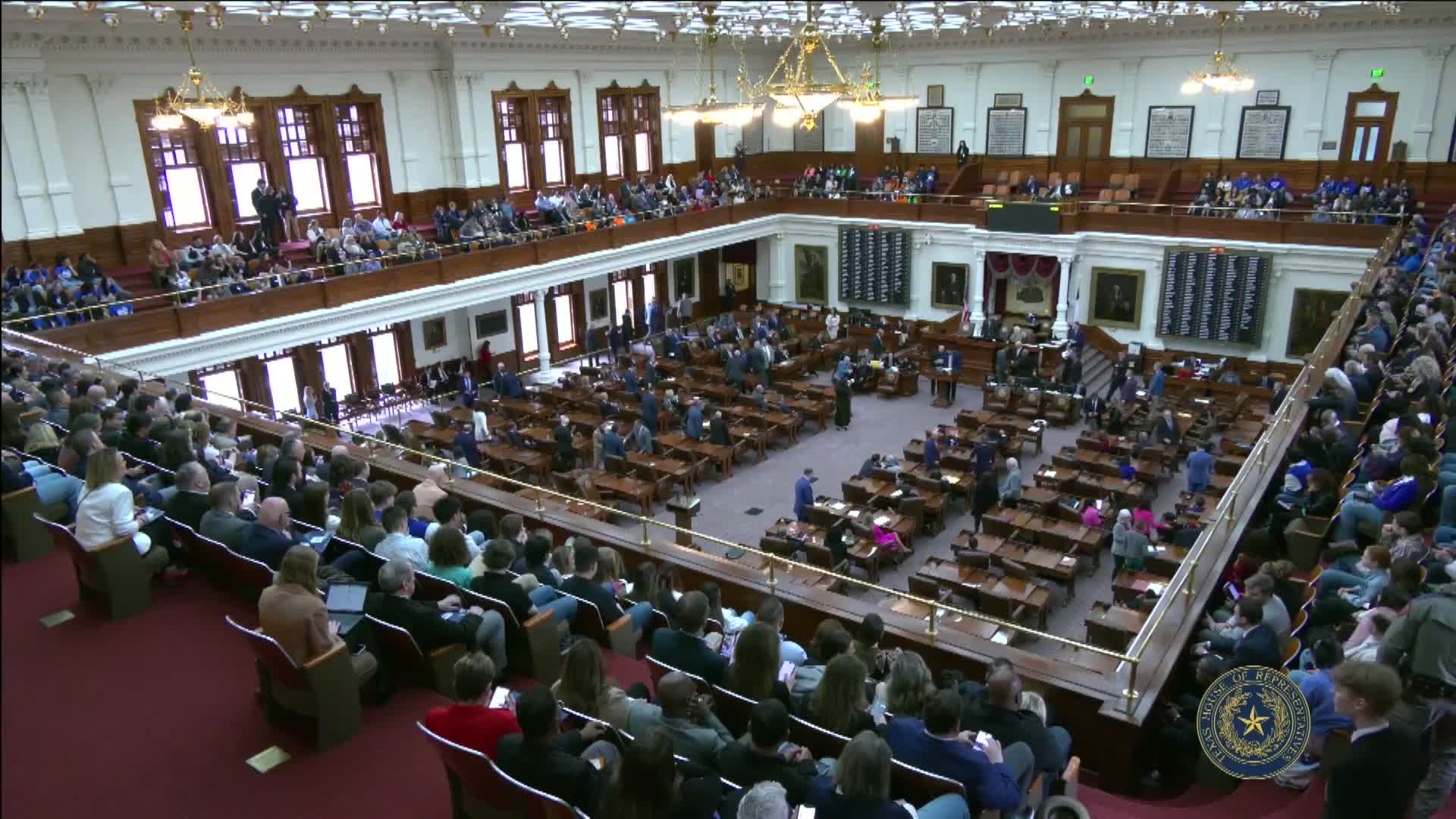
Texas House adopts resolution to allow Feb. 13–18 adjournment after heated floor debate
Summary
The Texas House on Feb. 12 adopted Senate Concurrent Resolution 14, permitting both chambers to adjourn for more than three days from Feb. 13 to Feb. 18, 2025. The recorded vote was 27 ayes, 21 nays after extended opposition on the House floor about suspending work during the legislative session.
The Texas House of Representatives on Feb. 12 adopted SCR 14, a Senate concurrent resolution authorizing the Legislature to adjourn for more than three days from Feb. 13 through Feb. 18, 2025, following a recorded vote of 27 ayes and 21 nays.
Representative Dustin Hunter, who explained the resolution on the floor, described it as a concurrence with an action already adopted by the Senate. “This is a senate concurrent resolution adopted by the senate yesterday in accordance with the senate’s planned work schedule for this week and next week,” Hunter said while moving adoption. He told members it authorizes the House and Senate to adjourn from Thursday until the following Tuesday.
The measure drew sustained opposition from Representative Tony Harrison, who called the resolution “profoundly unserious.” Harrison urged colleagues not to suspend the constitutional 60‑day prohibition on work for extended breaks and said the House had not been doing enough to pass legislation. “This is, by the way, especially embarrassing given that President Trump and his administration are working 20 hours a day,” Harrison said on the floor during his remarks opposing the adjournment. He criticized the chamber’s pace, saying individual members can work while adjourned but cannot pass bills alone and pressed leadership to allow earlier floor consideration of priority measures such as school choice and property tax reforms.
During back‑and‑forth on the dais, members questioned Harrison about the legislative process and precedent. Representative Hopper asked whether there was precedent for taking up matters before the first 60 days elapse, and Harrison replied that it was common historically to suspend the 60‑day prohibition so the House could act sooner. Harrison also referenced emergency items designated by the governor and urged colleagues to place a property‑tax bill on the floor: “Governor Abbott specifically asked us to take up a bill that I’ve been championing for two years that would make property tax increases illegal unless they were approved by voters,” he said.
After debate, the clerk conducted a constitutionally required record vote. The roll call printed portions of the vote on the floor, with Representative Lee, Representative Hunter, Representative Cortez and Representative King among those recorded voting “aye” in the on‑the‑floor sequence. The presiding officer announced the final tally as 27 ayes and 21 nays and declared the resolution adopted. Speaker Dade Phelan Craddock then moved to add all members’ names to the resolution; the chair reported no objection and ordered it so.
The vote allows the two chambers to adjourn for the specified interval. Members resumed other ceremonial business after the vote and later the House adjourned until 9 a.m. Thursday.