Get Full Government Meeting Transcripts, Videos, & Alerts Forever!
Get email alerts on the Higher Education Funding topic
No spam. Unsubscribe anytime.
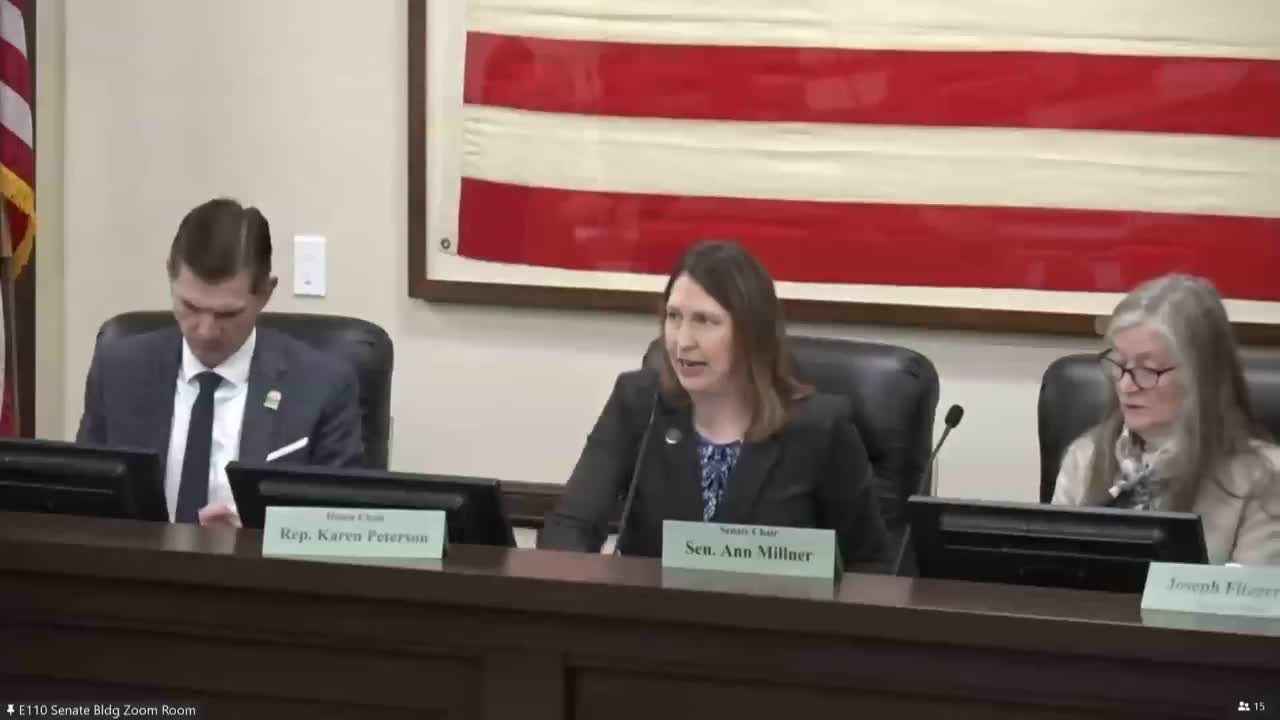
Utah higher-education subcommittee adopts package of budget motions, adds intent language for two pilot items
Summary
The Higher Education Appropriations Subcommittee on Feb. 12 unanimously approved a set of housekeeping budget motions (motions 2–6), adopted the chairs' proposed reductions and increases (tab 5) with intent language for two items, and asked for outcome data on a pilot program and an incarcerated-youth program.
The Higher Education Appropriations Subcommittee unanimously approved several budget housekeeping motions and the chairs’ proposed adjustments during its Feb. 12 meeting.
The committee voted to adopt motions 2 through 6 — covering internal reallocations, adjustments to dedicated credits tied to tuition collections, a vehicle expansion request with intent language for institutional purchasing, an accountability budget plan for 2025–2029, and a rule about creating new appropriation units for programs that receive ongoing funding — after Representative Walter moved the grouped motion. The committee then voted to adopt the chairs’ proposed reductions and increases (tab 5 of the voting packet), a motion offered by Senator Milner that included intent language for two items the chairs asked to be tracked.
Those intent provisions require returning outcome data on a pilot program and on an incarcerated-youth program that has requested appropriations before; the committee said the funding for those items will be one-time and recipients will be asked to report outcomes. Senator Milner said the chairs attempted to follow the higher-education board’s priorities while balancing House and Senate positions: “We have spent, I think, with both, the house house members and senate members, and we were able to pull together as chairs, try to balance the the priorities of both our bodies.”
Representative Hayes asked whether a reduced appropriation for the Space and Defense Research Institute would still allow the project to move forward. Committee staff responded that each recipient whose request was scaled was contacted and said their program was scalable; the committee recorded that reduced funding would still accomplish part of the projects’ objectives.
Votes at a glance
- Minutes approval (Feb. 10): Moved by Representative Hawkins; outcome: approved unanimously (individual votes not recorded in the transcript). Referenced as the meeting’s first action.
- Motions 2–6 (grouped): Moved by Representative Walter; outcome: approved unanimously. Motions as read on the record: adopt USHE (requested) internal reallocations (tab 1); adopt proposed adjustments to dedicated credits related to actual tuition collections as one-time in FY2025 and ongoing in FY2026 (tab 2); adopt USHE vehicle expansion request and direct staff to include intent language authorizing institutions to purchase requested vehicles (tab 3); approve the accountability budget plan for 2025–2029 (tab 4); require that any new program receiving ongoing funding be added as a new appropriation unit in the institution’s special projects line item (tab 4/packet language).
- Chairs’ proposed reductions and increases (tab 5): Moved by Senator Milner; outcome: approved unanimously. Included intent language for two items to obtain outcome data (one pilot program and an incarcerated-youth program).
- Motion to adjourn: Moved by Senator Milner; outcome: approved unanimously.
The meeting packet referenced multiple tabs throughout the discussion; committee members emphasized that some funding awards were one-time because ongoing funds were not available. The chairs said they used available reallocations to fund some one-time items but that ongoing funding requests remained limited. Committee members and staff expressed appreciation for presenters and staff coordination during the session.
The transcript records the motions and unanimous voice votes but does not list an itemized roll-call tally in the public record excerpt provided; committee members spoke in favor and said the motions passed unanimously.