Get Full Government Meeting Transcripts, Videos, & Alerts Forever!
Get email alerts on the Food Waste Composting Policy topic
No spam. Unsubscribe anytime.
Assembly delays expansion of food donation and food-scraps recycling program by one year
Summary
A chapter amendment will push back phased inclusion dates and a 50-mile rule for New York’s food donation and food-scraps recycling program; the Assembly passed the amendment after debate about facility access and costs to small businesses.
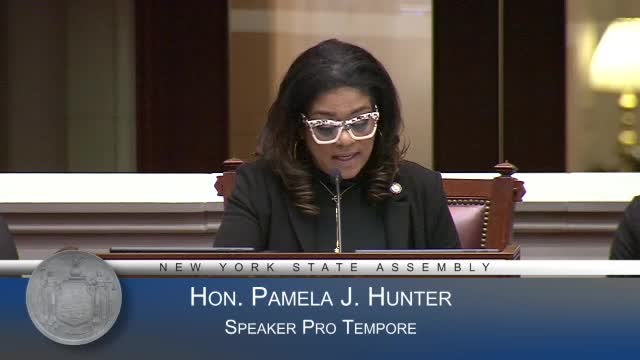
The New York State Assembly on the floor passed a chapter amendment delaying the scheduled expansion of the state’s food donation and food scraps recycling program enacted in 2024.
Sponsor Assemblymember Shimsky said the amendment delays, by one year, several implementation milestones established in chapter 552 of the laws of 2024. Under the chapter amendment, inclusion of businesses generating 1 ton of food scraps per week would be delayed until January 2027; inclusion of businesses generating half a ton per week would be delayed until January 2029; and the 50-mile distance rule for food-scraps recycling would be delayed until January 2027.
Members questioned the sponsor about details of implementation, including the number and location of composting facilities in New York, whether funding from the Environmental Protection Fund (EPF) has been distributed, and whether state agencies or schools would be required to begin earlier than private businesses. The sponsor said the amendment only changes implementation dates and that DEC’s methodology for calculating waste amounts did not change. She confirmed the most recent publicly available count of facilities that accept composting material was 44 and noted EPF funds have been made available for education and compliance assistance.
Several members expressed concern that even with a one-year delay the state lacks adequate facility capacity and that the cost and distance burdens could fall heavily on small businesses, particularly in rural districts. Assemblymember Simpson and others pressed for details on facility growth and on whether DEC has regulatory authority to fill gaps; the sponsor said she could not predict how many additional facilities would open within a year.
The clerk recorded the vote: ayes, 107; noes, 41. The bill passed.