Get Full Government Meeting Transcripts, Videos, & Alerts Forever!
Get email alerts on the Community Services topic
No spam. Unsubscribe anytime.
Boys & Girls Club reports ARPA‑funded expansion, learning‑recovery work and new Ames facility timeline
Summary
The Boys & Girls Club reported Feb. 11 that ARPA (ASSET) money and fundraising will support a new Ames facility expected to open this summer and expand daily capacity; staff also described student learning‑recovery results and demographics from 2024.
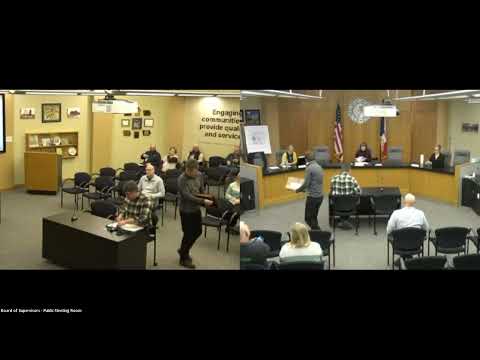
Ryan, representing the Boys & Girls Club, told the Story County Board of Supervisors on Feb. 11 that the organization received ASSET funding and other grants to sustain operations and expand programming, and that construction on a new Ames club is nearing completion.
Ryan said the Boys & Girls Club received $245,000 from ASSET in 2025, of which Story County provided $29,300; for 2026 the total award is expected to be $260,625 with Story County’s portion increasing to $35,536. He said the club expects to open a new Ames facility in June (staff later said they were planning a June 9 opening for summer programming) and to serve about 65 children per day at that new site once it opens.
The 2024 participation data Ryan provided: 252 unduplicated members countywide; an average daily attendance of 68 in Ames (196 unique Ames youths) and 30 in Nevada (56 unique youths); the club provided more than 14,000 meals to members and distributed nearly 14,000 meals for families to cook at home. Demographic breakdowns reported included 57% white, 14% Black, 10% Hispanic, 10% two or more races and 7% Asian; 32% of members came from single‑parent households and 46% of families reported household income under $50,000.
On academic supports, Ryan said programs funded by grants included computer‑based instruction (Imagine Learning) and that pretesting showed learning gaps: 13% of K–2 students were 1–2 grade levels behind in reading; 66% of 3rd–5th graders were 1–2 grade levels behind; and the club’s tested 6th–7th graders were 1–2 grade levels behind. Ryan said the club hired additional fundraising staff and expects to rely on event fundraising, grants and endowments to replace expiring ARPA funds; the club’s gala was expected to raise roughly $283,000, he said.
Supervisor questions focused on funding continuity after ARPA funds expire and the anticipated ribbon‑cutting schedule. Ryan said the organization is expanding its grant capacity and fundraising staff and hoped to replace ARPA funding with a mix of grants and donor support; he said a final ribbon‑cutting date was not set but the city transfer of the building was trending toward early May and the club planned to open for summer programming in June.
Why it matters: the Boys & Girls Club serves after‑school and summer care for children across Story County; funding and a new facility will affect capacity for school‑age care and nutritional supports during out‑of‑school time.
Provenance: presentation and Q&A with supervisors occurred during the agency reports portion of the Feb. 11 meeting.