Get AI Briefings, Transcripts & Alerts on Local & National Government Meetings — Forever.
Committee advances bill to require ADEQ rules on biosolids use on agricultural state trust lands after split testimony
Loading...
Summary
Senate Bill 12-12, which would require ADEQ rulemaking for land application of biosolids and limit state land commissioner denial of fertilizer/biosolid use absent ADEQ findings, received a due-pass recommendation after divided testimony from farmers, Yuma County and environmental groups.
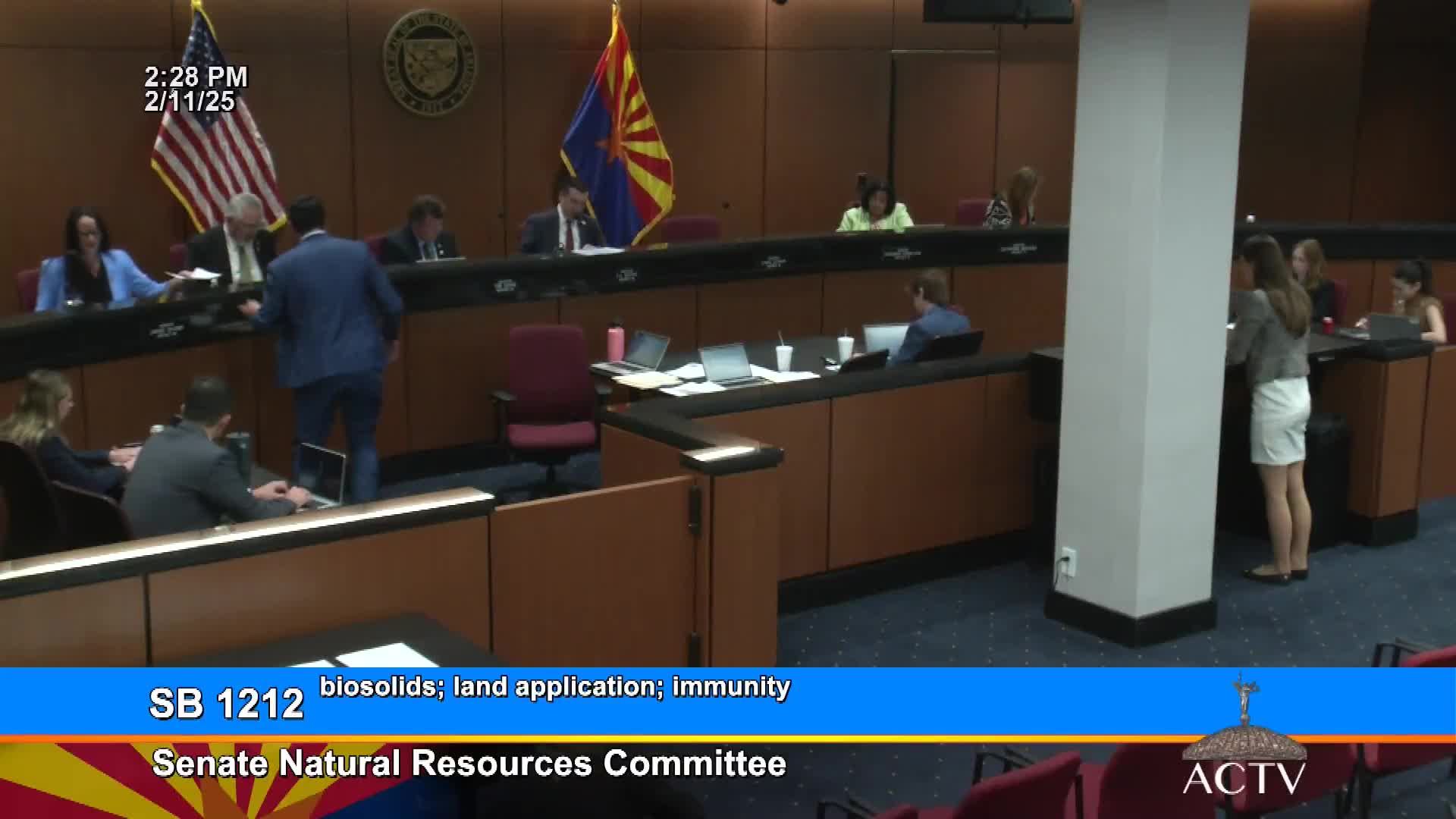
Senate Bill 12-12, heard Feb. 10, 2025 by the Arizona Senate Natural Resources Committee, would require the director of the Arizona Department of Environmental Quality (ADEQ) to adopt rules regulating application of biosolids to agricultural lands and would constrain the state land commissioner's ability to deny use of fertilizers, biosolids, or soil amendments as a condition of renewing state land leases unless ADEQ has found a violation of specified statutory requirements.
Why the committee considered it
Proponents, including Mike Gardner representing AgTech (a Yuma farm operator), told the committee biosolids are a longstanding agricultural soil amendment, called them safe when used under federal and state rules and said they convert otherwise sandy, low-productivity soils into productive farmland. Gardner cited a 19-year University of Arizona study (as presented to the committee) that he said found biosolids safe and effective when used according to guidelines.
Opponents and concerns
Sierra Club Grand Canyon Chapter Director Sandy Barr testified in opposition, stating biosolids are sewage sludge that can contain persistent contaminants including PFAS and that the bill's language limiting the land commissioner's discretion could prevent site-specific restrictions that protect nearby water or public health. Alexis Sestorf, representing Yuma County, said the county was neutral but asked the sponsor to address community complaints (strong odors, flies, air and water quality concerns), liability-immunity language in the bill, clarification of roles for an Agricultural Best Management Practices Committee, and a dedicated ADEQ staffer to oversee biosolids statewide.
ADEQ and stakeholder process
Krista Osterberg, ADEQ's chief legislative liaison, told the committee ADEQ is neutral and has been participating in stakeholder meetings. She said Arizona's biosolids regulation is currently derived primarily from the federal Clean Water Act and sometimes intersects with solid-waste rules; ADEQ said it would consider additional air-quality regulations if needed but urged avoiding overbroad statewide rules where site-specific measures might suffice.
Committee action and vote
Senator Dunn moved that SB 12-12 receive a due-pass recommendation. Following comment and brief discussion the clerk recorded a committee vote of 5 ayes and 3 nays, and the committee gave SB 12-12 a due pass recommendation.
Why it matters
The bill would centralize rulemaking with ADEQ for biosolids land application on agricultural trust lands and limit a land commissioner's ability to deny use absent a statutory finding. Proponents said that could streamline agricultural use and economic value on trust lands; opponents warned it could reduce local site-specific protections for water and communities, particularly in areas such as Yuma County where complaints about odor and pests have been raised.
Speakers (from transcript)
Senator Dunn (sponsor); Mike Gardner (AgTech, Yuma farm representative); Sandy Barr (Director, Sierra Club Grand Canyon Chapter); Alexis Sestorf (Yuma County representative); Krista Osterberg (Chief Legislative Liaison, ADEQ).
Clarifying details and evidence
- A University of Arizona study length cited by Mike Gardner: 19 years (presented by witness as supporting safe use under study conditions).
- County concerns cited by Alexis Sestorf: local complaints of strong odors, flies, and water and air quality impacts in Yuma County.
- ADEQ position: neutral; existing biosolids authority derives primarily from the Clean Water Act; ADEQ available technical path for stakeholder rulemaking.
Ending
The committee's due-pass recommendation sends SB 12-12 forward for further consideration. The transcript records clear stakeholder division: agricultural users and proponents urging regulated use and efficiency, and environmental and local-government witnesses urging stronger site-specific protections and clearer ADEQ rulemaking safeguards.