Get Full Government Meeting Transcripts, Videos, & Alerts Forever!
Get email alerts on the Committee Votes Roundup topic
No spam. Unsubscribe anytime.
Natural Resources committee gives ‘due pass’ recommendations on multiple bills including biosolids, helium and grid security
Summary
At its Feb. 10, 2025 meeting the Arizona Senate Natural Resources Committee gave due-pass recommendations to a slate of bills covering biosolids, power-grid rules, helium well exemptions, irrigation grants, cosmetic animal-testing bans and other items. Several bills drew divided votes and extended public testimony.
The Arizona Senate Natural Resources Committee on Feb. 10, 2025 issued due-pass recommendations on a package of bills after public testimony and debate on environmental, water and energy issues.
The committee recommended due pass on bills concerning biosolids and fertilizer rules on state trust land (Senate Bill 12-12), electric grid replacement and dispatchable-generation standards (SB 13-09), an aquifer-permit exemption for certain helium wells (SB 14-44), an appropriation for the On Farm Irrigation Efficiency Fund (SB 14-48), measures on electric grid security and related authority (SB 15-01, as amended), transfers of unbuilt assured-water-supply certificates (SB 15-21) and restrictions on municipal turf/landscape requirements in active management areas (SB 15-23). The committee also considered bills on veterinary malpractice damages (SB 10-30) and a ban on cosmetic animal testing (SB 10-31).
Votes at a glance
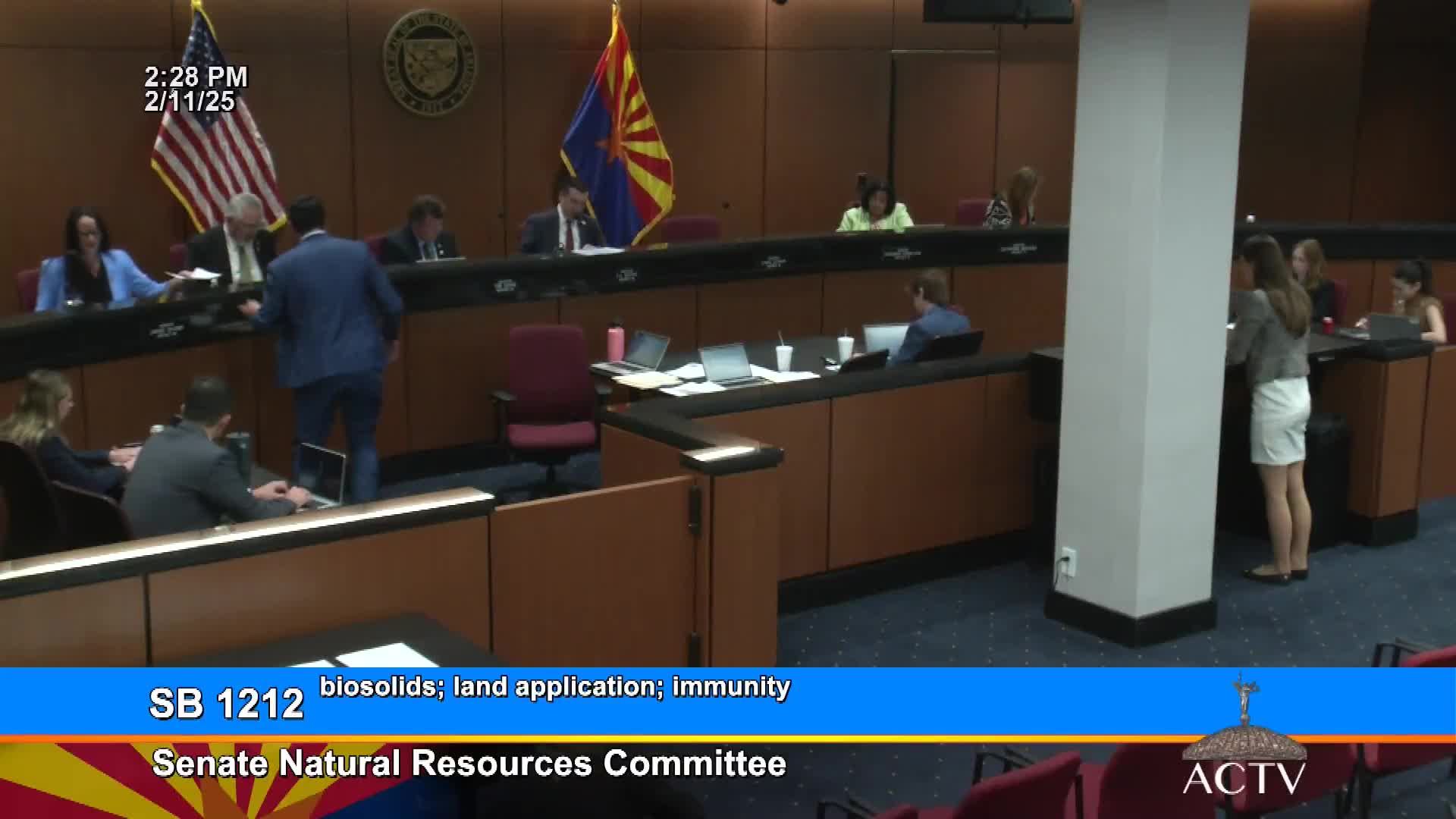
- SB 12-12 (biosolids; ADEQ rulemaking; state trust lands): Motion: due pass recommendation. Vote recorded by the clerk: 5 ayes, 3 nays, 0 not voting. Outcome: committee gave SB 12-12 a due pass recommendation. (Sponsor: Senator Dunn.)
- SB 13-09 (Arizona Corporation Commission; replacement generation must be dispatchable/load-following): Motion: due pass recommendation. Vote recorded: 5 ayes, 3 nays, 0 not voting. Outcome: due pass recommendation.
- SB 14-44 (exempt certain helium exploration/production wells from aquifer protection permit where no contaminant discharge): Motion: due pass recommendation. Vote recorded: 5 ayes, 2 nays. Outcome: due pass recommendation.
- SB 10-30 (damages for veterinary malpractice for injury/death of domestic animals; amendment adopted): Motion: amendment adopted; final disposition recorded in committee transcript but roll-call totals were not clearly specified in the transcript excerpt; committee action recorded as taken. Outcome: committee action (amendment adopted; motion for due pass carried to roll call). Vote tally: not specified in committee record excerpt.
- SB 10-31 (prohibit sale in Arizona of cosmetics developed using post-enactment animal testing): Motion: due pass recommendation. Vote recorded: 4 ayes, 2 nays, (other members not voting). Outcome: due pass recommendation.
- SB 14-48 (appropriation: $10,000,000 to On Farm Irrigation Efficiency Fund FY2026): Motion: due pass recommendation. Vote recorded: 6 ayes, 0 nays, 2 not voting. Outcome: due pass recommendation.
- SB 15-01 (annual grid security review at ACC; amended to add EMP language and change requirements): Motion: amendment adopted; final motion as amended: due pass recommendation. Vote recorded: 5 ayes, 2 nays, 1 not voting. Outcome: due pass recommendation as amended.
- SB 15-21 (allow sale/aggregation/transfer of an unbuilt certificate of assured water supply within the same subbasin under conditions): Motion: due pass recommendation. Vote recorded: 5 ayes, 2 nays, 1 not voting. Outcome: due pass recommendation.
- SB 15-23 (prohibit certain municipal turf/plant/open-space/sidewalk requirements in AMAs with safe-yield goals; emergency measure): Motion: due pass recommendation. Vote recorded: 5 ayes, 2 nays, 1 not voting. Outcome: due pass recommendation.
What happened in committee and why it matters
Many of the bills generated focused testimony and split votes. SB 12-12 prompted testimony from farmers who said biosolids are safe and useful and from Sierra Club and county representatives who warned about PFAS and local site-specific risks and urged stronger local authority. SB 14-44 drew detailed technical testimony from industry representatives describing helium extraction methods and from Sierra Club and municipal water associations raising concerns about weakening Arizona’s aquifer-protection framework. SB 15-01 prompted extensive public comment from data-center and industry representatives seeking energy-choice provisions (competition for generation) and from witnesses urging stronger grid security and cybersecurity review; the committee adopted an amendment to narrow the original bill’s language and to add specific language about electromagnetic-pulse risks and annual reviews.
Several motions were made by committee members during the hearing (most commonly to give bills a due pass recommendation). Where the transcript recorded roll-call tallies, those numbers are shown above; where the clerk’s roll call or member votes were unclear in the transcript excerpt, the tally is shown as not specified.
Speakers (selected)
Senator Dunn (sponsor of multiple bills), Senator Farnsworth (sponsor listed for grid bill), Sandy Barr (Director, Sierra Club Grand Canyon chapter), Mike Gardner (AgTech/farmer, Yuma), Alexis Sestorf (Yuma County representative), Krista Osterberg (Chief Legislative Liaison, ADEQ), Laura Magnus and Robert Rolfing (Desert Mountain Energy), Trent Womberg (Arizona Department of Water Resources), Jordan Secato (Laws for Paws), Karen Michael (Animal Defense League/Humane Voters of Arizona), multiple other industry and municipal representatives and private citizens provided testimony.
Context and next steps
A committee “due pass” recommendation sends a bill to the next step in the legislative process (usually the Senate floor or another committee as required). Several bills drew clear divisions between industry proponents who argued for less regulatory delay and environmental or municipal witnesses who warned of public-health, water or long-term planning risks. Where committee members signaled support subject to future amendments, further changes could be made on the Senate floor or in follow-up committee work.
Ending note
The committee adjourned after completing the evening’s agenda. The bills recommended “due pass” will proceed in the legislative process, where additional amendments and debate are possible.