Get Full Government Meeting Transcripts, Videos, & Alerts Forever!
Get email alerts on the Legal And Ethics topic
No spam. Unsubscribe anytime.
Solicitor briefs council on limits of public comment after resident files federal complaint
Summary
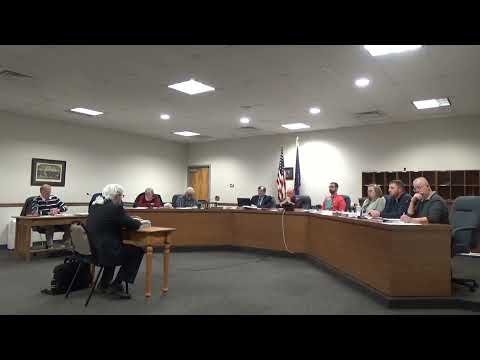
Council solicitor explained legal standards for public-comment limits and read a statement from the borough’s regular solicitor after a resident said he would file or had filed a complaint naming council members.
The borough solicitor briefed New Freedom Borough Council on court rulings that permit councils to limit public comment to matters germane to the meeting and to enforce decorum, and read a prepared statement from the borough’s regular solicitor addressing an ongoing suit filed by a resident.
At the start of public comments, resident Devin Taylor said he would file an amended complaint in federal court alleging multiple state statutes and open-meetings violations; he delivered a copy of his amended complaint for the record. Taylor named individual council members and listed alleged violations of several Pennsylvania statutes and other references he intended to include in court filings.
The solicitor told the council that federal appellate guidance treats municipal business meetings as a limited public forum: governments may require comments be germane to matters before the council and may impose reasonable time and decorum restrictions. The solicitor also advised that Title 18 (Pennsylvania Crimes Code), Title 53 (municipalities code) and Title 65 (public records/minutes) are Pennsylvania statutes and that Title 5 of the U.S. Code governs federal agencies, not municipal meetings. He explained that if Taylor files only state-law claims without a viable federal claim, a federal court could decline to exercise jurisdiction over the state claims.
The solicitor also summarized the borough’s posture: the borough has counsel assigned by its insurance carrier to defend the named council members; the district attorney previously declined to prosecute private criminal complaints Taylor filed, citing lack of evidence; and the borough does not intend further comment while litigation is pending. The solicitor warned that recovering litigation costs from a plaintiff after defense is costly and often impractical.
Councilors discussed options for handling disruptive public comments, including issuing a point of order, asking a speaker to stop, or removing a disorderly attendee; the solicitor said profanity and personal attacks that are not germane to the agenda may be regulated. The solicitor recommended exercising judgment on a case-by-case basis to preserve meeting decorum while protecting First Amendment rights.
Ending: Councilors accepted the solicitor’s guidance and the borough’s regular solicitor’s statement was placed in the record. The council directed the manager and solicitor’s office to coordinate with the borough’s insurer and assigned counsel regarding defense of the complaint.