Get Full Government Meeting Transcripts, Videos, & Alerts Forever!
Get email alerts on the Research Funding topic
No spam. Unsubscribe anytime.
House floor erupts in debate over NIH indirect cost cap, with members split on research funding and overhead limits
Summary
Delegates exchanged sharply different views on a recent NIH policy limiting indirect costs, with one delegate calling federal action and state leaders indifferent and others defending limits on overhead and urging action to protect research funding for Virginia institutions.
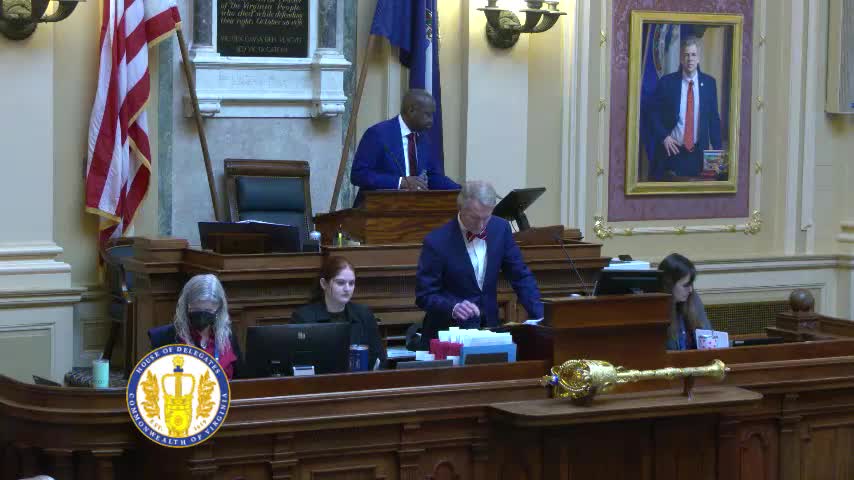
The Virginia House of Delegates heard sharp floor exchanges on Feb. 14 over the federal policy that caps indirect costs on National Institutes of Health grants and its potential effects on Virginia research institutions.
The debate began during members' points of personal privilege and drew multiple responses from across the aisle, reflecting a split over whether the policy represents a harmful cut to research funding or a necessary limit on overhead spending.
Delegate Fagan (Delegate, Virginia Beach) criticized the federal action and faulted state leaders for not intervening, saying, “The Trump administration's reckless decision to cap indirect cost for the National Institutes of Health has slashed billions from life-saving research,” and asked publicly, “who you with?” He said the cuts threaten research at Virginia institutions and claimed the state’s governor and attorney general had been “silent” rather than joining other states in legal action.
In response, Delegate McNamara (Delegate) defended a policy limiting indirect costs, noting the cap being discussed was 15 percent. McNamara said, “We are with the researchers. We are with the people with the rare disease. We are not for the overhead,” and argued that grant funds should be spent on research rather than high indirect cost rates.
Delegate Simon (Delegate, Fairfax) pressed the executive branch’s response, noting that “22 other state attorneys general filed lawsuits” challenging the federal action and won, and said Virginia could have joined and benefited financially without doing additional legal work.
Other members amplified the partisan divide. A member on the other side of the aisle said the result of the cap would be to “slash billions” and to “leave VCU's Massey Cancer Center with a massive funding gap,” while supporters of overhead limits cited examples of private foundations that cap indirect costs at or below the 15 percent level.
Why it matters: Virginia hosts major biomedical research centers and academic institutions that rely on NIH funding. Changes to grant indirect-cost policies can affect research capacity, staffing and the broader biomedical workforce in the state.
What was not decided: The floor debate recorded members' positions but did not produce a formal vote or resolution to compel the governor or attorney general to act. Delegates urged legislative and executive leaders to consider next steps, including whether the state should join multi-state litigation or pursue other remedies.
Speakers and key lines: “The cuts threaten UVA Health, Virginia Tech’s competitiveness and VCU’s Massey Cancer Center,” — Delegate Fagan. “We are with the researchers. We are with the people with the rare disease. We are not for the overhead,” — Delegate McNamara. “All you had to do is join the suit… and we could have saved hundreds of millions of dollars for Virginia taxpayers,” — Delegate Simon.
Next steps: The topic is likely to resurface in committee and informal legislative discussions; affected institutions and the attorney general’s office would be the relevant actors for any legal response or requests for state action.