Get Full Government Meeting Transcripts, Videos, & Alerts Forever!
Get email alerts on the Animal Welfare Wildlife Captive topic
No spam. Unsubscribe anytime.
Committee advances bill banning premature separation and hybridization of captive mammalian wildlife
Summary
A Senate subcommittee reported a substitute to SB 1125 that would prohibit premature separation of captive-born mammalian wildlife and ban intentional hybridization, with exemptions for accredited zoological facilities and permitted wildlife rehabilitators; the measure passed the committee 6–4.
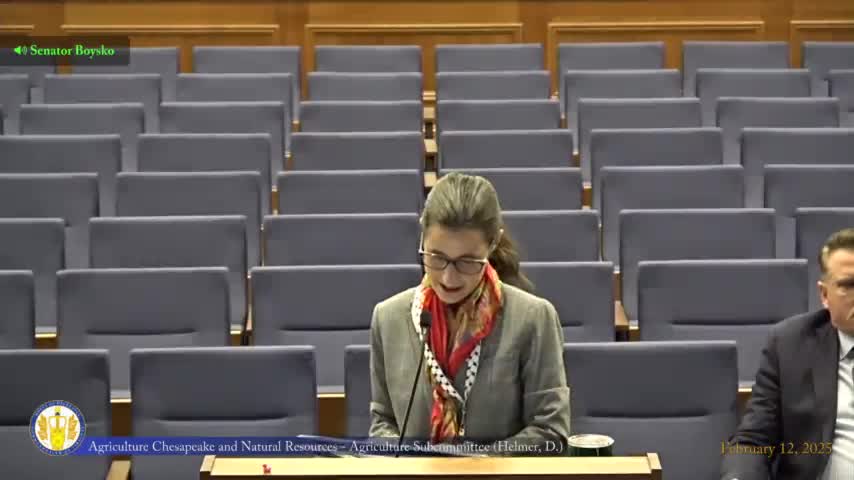
Senator Boyce on behalf of the patron told the subcommittee that a substitute to SB 1125 would prohibit ‘‘premature separation of the mammalian wildlife only’’ born in captivity and would also ban intentional hybridization of different mammal species.
The substitute narrows the bill to animals ‘‘born in captivity,’’ excludes birds, reptiles and fish, and creates exemptions for accredited zoological facilities and permitted wildlife rehabilitators acting under Department of Wildlife Resources permit conditions. The substitute also allows medically necessary separation if supported by a written order from a veterinarian licensed in the Commonwealth.
Why it matters: supporters said the bill targets commercial ‘‘bad actors’’ who separate infant exotic mammals for profit, and would prevent harms that accredited facilities already avoid. Daphna Nakhmanovich of People for the Ethical Treatment of Animals (PETA) told the committee that records of certificates of veterinary inspection show dozens of captive-born mammals shipped to an auction cited repeatedly by federal inspectors; she described the auction as an example of the practices the bill aims to stop.
Supporters and opponents: The bill drew organized support from animal-welfare groups, including PETA, the Virginia Veterinary Medical Association, the Humane Society of the United States, the Association of Zoos and Aquariums, and sanctuary groups. Testimony in opposition came from several exhibitors and industry associations that said the bill was overbroad or would penalize responsible, USDA-licensed exhibitors.
Leesburg Animal Park president Shirley Johnson, who said her facility is a USDA Class C exhibitor but not AZA-accredited, told the committee her park contracts with veterinarians and relies on staff expertise. "I really have trouble seeing the reason for this bill," she said, arguing the bill could be government overreach and that hand-rearing sometimes is medically or behaviorally necessary.
Senator Boyce and committee counsel described the substitute as narrower than the original draft: it limits coverage to mammals "born in captivity," separates medical-necessity exceptions, and removes provisions about housing. Senator Boyce emphasized the bill is intended to target unaccredited facilities that breed or separate infants for commercial sale.
Vote and next steps: The committee voted to report SB 1125 with the substitute on a roll call of 6–4.
The passage in subcommittee sends the bill to the next stage of the legislative process; the committee record does not include subsequent floor action.