Get Full Government Meeting Transcripts, Videos, & Alerts Forever!
Get email alerts on the Data Centers And Infrastructure topic
No spam. Unsubscribe anytime.
House rejects amendment to require private funding for data-center impact study
Summary
Delegates debated whether a legislatively-mandated study of data-center impacts should be contingent on private industry funding. An amendment making the study contingent on industry payment was defeated after members raised concerns about bias, constitutional authority and the study—s fiscal note.
House members considered a proposal to make the state—s planned data-center impact analysis contingent on funding from private industry. The study, referenced in the floor language as having an estimated fiscal note of more than $500,000, would examine energy, water and other impacts from data centers.
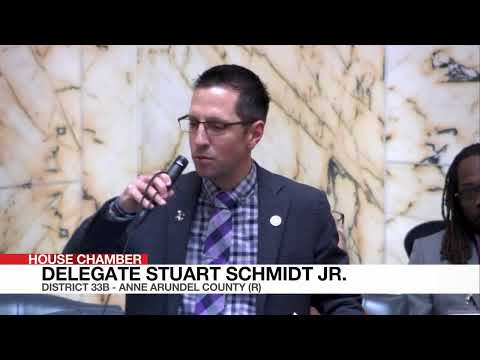
A delegate who offered the amendment said taxpayers should not shoulder planning costs for private industry and asked that the study and report be funded by the data-center companies. "We shouldn't put this on the backs of taxpayers," the sponsor said, asking the House to make the study contingent on private funding.
The bill sponsor and committee chair urged rejection of the amendment. Opponents argued a privately funded study would be biased in favor of industry and that the legislature could not constitutionally force private entities to pay for a state study. The committee chair also emphasized the state's need to assess energy and water-demand impacts neutrally, noting concerns about transmission capacity, cooling water, and long-range forecasting for chip energy use.
Another delegate pressed the point that developers typically pay for traffic or infrastructure studies, saying local governments often require such studies as part of development review; that speaker urged industry funding to avoid exposing taxpayers to potential bad investments.
After floor debate, the clerk recorded a roll-call on the amendment with the clerk reporting "There being 92 votes in the negative, the amendment fails." The underlying bill (Council Bill 270) as amended retained state funding for the study and was ordered printed for third reading.