Get Full Government Meeting Transcripts, Videos, & Alerts Forever!
Get email alerts on the K12 Health Curriculum topic
No spam. Unsubscribe anytime.
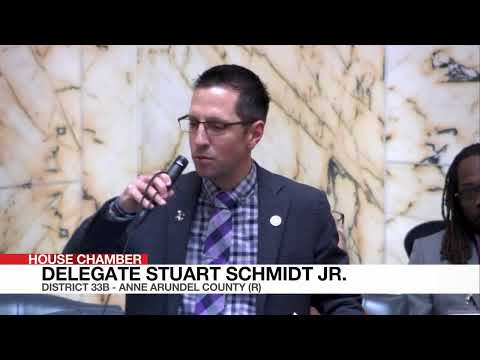
House rejects amendment to expand parental opt-outs from health curriculum topics
Summary
Delegates debated an amendment to allow parents to opt students out of lessons on gender identity and sexual orientation in Maryland—s comprehensive health education framework. The amendment, offered by a delegate from Carroll County, failed on a roll call after extended debate about student safety, parental rights and court precedent.
A delegate from Carroll County offered an amendment to House Bill 161, which implements the Maryland Comprehensive Health Education Framework, to allow parents to opt their children out of both family life and lessons on gender identity and sexual orientation. The amendment was rejected by the House after extended floor debate and a roll-call vote that left the amendment defeated.
The amendment sponsor, identified in the record as the gentlewoman from Carroll County (amendment sponsor), said the change would let jurisdictions follow local family-life advisory council policies and avoid forcing students to miss other classes: "rather than parsing out both sections of the bill, we would like to be able to continue to follow what we have decided in Carroll County." She cited local opt-in rates that, she said, showed most parents stayed with the state curriculum in her district: "In elementary school it was 50/50. In middle school, 59% stayed with the state curriculum, and in high school, 65%."
The chair of the committee that handled the bill urged colleagues to reject the amendment, saying the Maryland State Department of Education and representatives from every jurisdiction developed the framework to ensure inclusion and student safety: "We keep kids safe by teaching them what is medically and scientifically correct," the committee chair said, arguing that removing instruction about sexual orientation or gender identity would amount to erasing students.
A delegate from Frederick spoke in opposition to the amendment and described personal experiences of harassment and safety concerns, saying, "To say that we can opt out of sexual orientation and gender identity would inherently frustrate the entirety of the health education curriculum... How would we ever teach anything?" Several other delegates spoke both for and against the amendment, raising questions about which lessons allow opt-outs (for example, the record shows certain HIV/AIDS instruction cannot be opted out of) and citing differing local practices.
A member of the floor asked the sponsor about the availability of statewide data on LGBTQ youth safety; the sponsor did not have the numbers on hand during questioning. Another delegate noted recent litigation, saying a 2023 federal district court decision in Montgomery County and a Fourth Circuit ruling addressed parental opt-out rights; according to remarks on the floor, that matter is pending before the U.S. Supreme Court. Speakers on both sides referenced court precedent when arguing about parental rights and school obligations.
After debate, the House proceeded to a roll-call on the adoption of the amendment. The clerk recorded that "There being 92 votes in the negative, the amendment fails." With no further successful amendments, the bill was ordered printed for third reading.
The record shows this debate occurred during consideration of House Bill 161 (primary and secondary education: comprehensive health education framework). The transcript records substantive exchanges about local control, parental opt-outs, court precedent, and student safety; it does not record a final vote on the underlying bill at this session.
Looking ahead, the bill will appear for third reading on a future floor calendar, and any further amendments or votes will be reflected in later session records.