Get Full Government Meeting Transcripts, Videos, & Alerts Forever!
Get email alerts on the Elections Districting topic
No spam. Unsubscribe anytime.
Clovis holds fourth public hearing on transition to district-based elections; demographer reviews three draft maps
Summary
City Clerk and demographer presented draft maps and legal requirements at a fourth public hearing. Council sought public input and set deadlines for map submissions ahead of a March hearing to introduce an ordinance implementing districts.
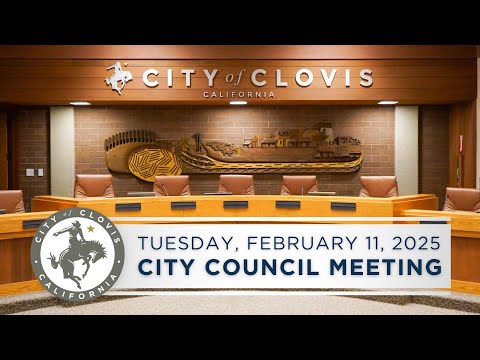
The Clovis City Council held the fourth public hearing on its transition to district-based council elections on Feb. 11, 2025, as the city moves to comply with a demand letter alleging racially polarized voting. City Clerk Brianna Parra told the council the hearing was informational and that the council was seeking direction on a draft map to refine and move forward.
The hearing matter began after a demand letter from the Southwest Voter Education and Registration Project on Aug. 26, 2024, and followed a council resolution adopted Oct. 7, 2024, to transition to districts to avoid litigation. Parra said, "This meeting is informational, meaning no final decision is being made tonight," and reminded council members that the ordinance introduction is scheduled for the March 4 public hearing and the district elections would begin with the November 2026 council election.
Jeff, the city’s demographer from NDC, reviewed three draft plans the city would consider (plans 501, 502 and 503) and explained the legal and technical constraints for map drawing. He told council, "We must follow the Federal Voting Rights Act and we can have no racial gerrymandering," and summarized California priorities such as contiguity, minimizing splits of neighborhoods and communities of interest, and avoiding lines drawn to favor an incumbent or party. He also explained that the plans use 2020 census blocks and that courts allow up to a 10% population variance among districts; the three viable plans shown that evening had variances of 7.11%, 5.92% and 5.41% respectively.
The demographer described differences among the plans in how they place Old Town, the Shaw corridor and neighborhoods south of Shaw, and summarized citizen voting‑age population (CVAP) percentages for several districts in the plans (for example, one plan showed a District 3 CVAP that was roughly 30% Latino and 61% non‑Hispanic white, while another plan showed District 3 at about 40% Latino and 46% non‑Hispanic white). He noted public maps could still be submitted and modified through the deadline.
Public comment focused on neighborhood boundaries and representation. Several speakers asked for clearer, color printed maps and urged that certain neighborhoods be kept whole rather than split across districts. Steven Trevino, who lives on Bullard, said a map he’d seen online placed his neighborhood with an area he views as dissimilar, and urged that "the Stafford addition should be included with Ota" (his stated neighborhood name). Council members discussed whether Old Town should be in a single district or split between two members to ensure service and attention.
City staff reminded the public that the deadline to submit community‑drawn maps is Feb. 21 at 5 p.m. and that the March 4 meeting will be the council’s map selection and the ordinance introduction. Parra and the demographer said the city’s website hosts all maps and the demographic tables that accompany each plan. Council did not select a draft map at the Feb. 11 meeting and the item was filed for receipt, with staff instructed to continue outreach ahead of the March hearing.
The council and staff emphasized next steps: accept public map submissions by Feb. 21, hold the March 4 public hearing to introduce a district‑based elections ordinance, and return for a subsequent confirmation vote at a later meeting. No formal map selection or ordinance action was taken on Feb. 11.