Get Full Government Meeting Transcripts, Videos, & Alerts Forever!
Get email alerts on the Asset Management topic
No spam. Unsubscribe anytime.
Port Orchard rolls out citywide asset-management system for utilities
Summary
City staff described a newly implemented Cartograph (OpenGov) asset-management system that maps water, sewer and stormwater infrastructure, links component-level records and creates recurring maintenance tasks to support forecasting and budgeting.
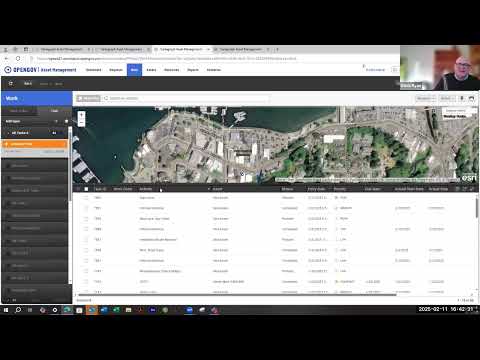
Port Orchard’s Utilities Committee on Feb. 11 reviewed a new asset-management system, Cartograph (branded as OpenGov), that city staff said now holds mapped records and maintenance schedules for the city’s water, sewer and stormwater assets.
City officials said the system will let crews and managers see a single “parent” asset — for example, a sewer lift station — and all component “child” items such as pumps, panels and emergency diesel engines, and then create recurring maintenance tasks or bulk work orders across multiple assets.
“About nine months ago, we made the decision on the system that we were going to purchase. It was the asset management system, Cartograph, also referred to as OpenGov,” said Dennis Ryan, public works director. Ryan and other staff said the utility group expanded the purchase to cover all utilities to realize economies of scale.
Caden Picciardi, public works, demonstrated maps of the storm, water and sewer layers and walked committee members through a lift‑station view that shows linked child assets and a task‑creation button. “This is going to be our storm utility system,” Picciardi said as he showed the map layers. He also demonstrated a bulk edit feature that lets staff create the same work order across pumps at multiple stations at once.
Public works operations utility manager Jeff Haglund described how the system can record manufacturer, model and horsepower details for equipment and support inspections and condition records. “We can create a task” from the asset screen, Haglund said, noting preset options for common maintenance items and a miscellaneous catchall for unusual work.
Officials said the system will also integrate existing citizen service requests (the ClickFix workflow) so that crews receive email notifications when a request relates to their assigned work center, and that the system will capture parks and facilities assets as the program expands beyond utilities. “This process is going to give us the data that you can make data‑driven decisions when it comes to budget,” Ryan said.
Committee members asked about ownership layers for assets at jurisdictional boundaries and about sharing data with neighboring utilities. Haglund said the system supports an attribute layer that can identify whether an asset is public, private or owned by another utility and can display it with a distinct color or symbol.
City staff asked the committee to consider presenting the system to full council in a work study so council members can see the maps and the program’s budgeting implications. Jay Rosapepe, city council member, recommended scheduling a work study so the system can be shown to the full council.
Officials said the program’s rollout took months of data entry and training, with early “sandbox” work beginning in October and a citywide go‑live in January. Staff cautioned that full implementation will be gradual and that the system will highlight deferred maintenance and budget pressures even as it reduces emergency replacements.
The committee did not take formal action at the meeting; staff said they will prepare a fuller presentation for council and continue entering asset data citywide.