Get Full Government Meeting Transcripts, Videos, & Alerts Forever!
Get email alerts on the Kindergarten Readiness And Retention topic
No spam. Unsubscribe anytime.
Committee approves bill allowing an optional second year of kindergarten, aligning screeners with KSA window
Summary
House Bill 240 (committee sub) would authorize schools to retain students for an additional kindergarten year when benchmarks indicate they are not prepared for first grade, extend the universal screener window to 14 days to align with KSA, and preserve IEP protections; the subcommittee passed the measure after extensive debate.
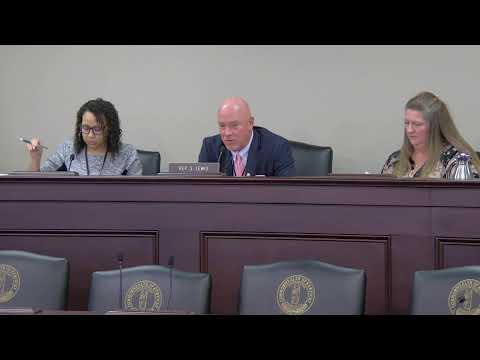
Representative Tim Truitt presented House Bill 240 and the committee sub, describing the proposal as a K–3 early‑literacy measure focused on kindergarten readiness and interventions. Truitt, who said the sub moves the universal screener window from 10 days to 14 to align with KSA testing, said the bill is intended to give schools and teachers authority to provide an additional year of primary kindergarten when a child is not prepared academically or developmentally for first grade. He emphasized the proposal is meant to use existing screening and intervention tools and that IEPs would remain in force.
Truitt described the bill as procedural and classroom focused: the universal screener establishes where students are at the beginning, middle and end of the year and, if benchmarks indicate a child is not ready, schools would be able to hold that child for a second year of kindergarten. He said the sub includes special‑education language to ensure retained students’ IEP goals are not overridden. The sponsor said there are many local universal screeners in use and that the subcommittee adopted language to accommodate different validated instruments.
Committee members asked whether the measure would undermine teacher judgment, how English‑language learners would be treated, and whether retention could prompt parents to homeschool. Truitt and other members replied that teacher and school judgment remains central, that many teachers and interventionists support the approach and that an additional kindergarten year can be especially beneficial for children who need more maturity or language acquisition time. Truitt cited state data showing kindergarten readiness at roughly 30% in 2019 and improvement to about 38.3% in more recent years, and he said focusing on K–3 could improve later third‑grade reading proficiency.
Representative Wilner, Representative Tipton and others spoke in favor; several members sought technical follow‑up on implementation and screening choices. The committee recorded passage of House Bill 240 "with the committee sub attached thereto." The transcript records no fiscal estimate discussion during the subcommittee exchange; members asked for follow‑up conversations on certain implementation details.