Get Full Government Meeting Transcripts, Videos, & Alerts Forever!
Get email alerts on the Parkinsons Disease Registry topic
No spam. Unsubscribe anytime.
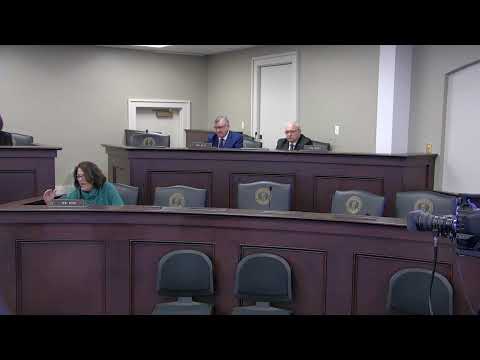
Senate committee hears bill to create Kentucky Parkinson’s disease registry; takes no vote
Summary
Senate Bill 27, presented by Sen. Brandon Storm, would create a Parkinson’s disease research registry overseen by the Cabinet for Health and Family Services. Lawmakers discussed scope, privacy protections and fiscal needs; the committee did not vote and asked for a fiscal estimate and follow-up.
Sen. Brandon Storm (21st District) introduced Senate Bill 27, a proposal to create a Kentucky Parkinson’s disease research registry to be overseen by the Cabinet for Health and Family Services. Storm said the registry would study incidence and prevalence, create an advisory committee of clinical and public-health experts, and require data collection and reporting beginning in 2026.
Storm noted the effort was supported by national partners and referenced a letter from the Michael J. Fox Foundation included in the committee packet. The letter’s figures were recited to the committee: about 1,000,000 Americans live with Parkinson’s disease, roughly 90,000 are diagnosed each year nationally, and national annual costs were cited at $52,000,000,000 with an estimate rising to about $80,000,000,000 by 2037. Storm told the committee that the foundation estimated more than 15,000 Kentuckians are currently diagnosed and that direct and indirect costs in Kentucky total about $725,000,000 per year.
The bill would establish an advisory committee including a neurologist/movement-disorder specialist, primary-care providers, a patient living with Parkinson’s, public-health professionals and researchers; the bill text instructs that committee to develop guidelines for approving researcher access to de-identified registry data. Enrollment would be by opt-out and personal identifying information would not be available for research purposes, Storm said.
A person who identified themself as a patient and advocate described receiving a Parkinson’s diagnosis in 2016 and emphasized limited access to neurologists and movement-disorder specialists in Eastern Kentucky. Senators asked how the registry would support research and whether universities (University of Kentucky, University of Louisville) had been consulted; Storm said those academic centers had been contacted and that registry data would provide a foundation for future research collaborations.
Committee members raised fiscal and implementation questions. A member suggested requesting a fiscal note; the chair said a preliminary informal estimate from the cabinet was roughly $800,000 per biennium but asked for a formal fiscal note. Members also discussed using existing infrastructure (stroke and cancer registries) and health information exchange tools to reduce administrative costs.
The committee did not take a vote on Senate Bill 27; members invited the presenters to return with additional fiscal detail and, if possible, representatives from academic centers and the cabinet to discuss implementation.
Ending
No action was taken on Senate Bill 27 at this hearing. The committee requested a fiscal estimate and asked sponsors to return with additional implementation details and potential academic partners.