Get Full Government Meeting Transcripts, Videos, & Alerts Forever!
Get email alerts on the Medicaid Mco Consolidation topic
No spam. Unsubscribe anytime.
Senate panel advances bill to cap Medicaid managed-care organizations at three
Summary
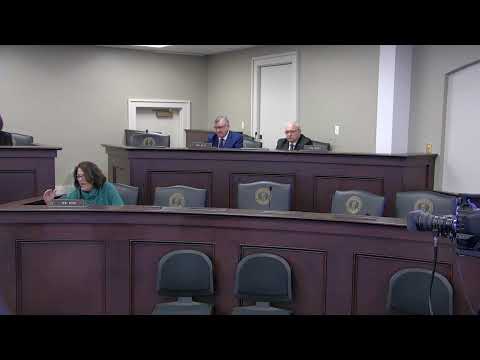
Sen. Steve Meredith, sponsor of Senate Bill 13 and senator for the Fifth District, told the Senate Standing Committee on Health Services that the bill would limit Kentucky’s Medicaid managed-care organizations to three and advance the measure to the full Senate.
Sen. Steve Meredith, sponsor of Senate Bill 13 and senator for the Fifth District, told the Senate Standing Committee on Health Services that the bill would limit Kentucky’s Medicaid managed-care organizations to three and advance the measure to the full Senate. The committee voted to advance the bill favorably by voice vote; the clerk recorded the tally as 10 yes, 0 no.
Meredith said the measure aims to reduce what he described as heavy administrative overhead in U.S. health care and within Kentucky’s Medicaid program. “We’re spending 18% of our gross national product on health care,” Meredith said, and added that administrative costs are “about 30¢ of every dollar just on administration of health care.” He argued fewer MCOs would reduce redundant bureaucracy and administrative time for providers, particularly in rural communities, and could improve network adequacy and access to care.
The bill’s sponsor read examples of provider burdens during his presentation: he cited a provider who “sent a request for an independent review to appeal an audit finding…3 years later, we still do not have a solution. Had to hire an attorney.” Meredith said small rural providers lack the resources large systems use to manage multiple MCO appeals.
Supporters urged consolidation as a way to reduce administrative burden and free clinician time for patients. Meredith said that, with fewer MCOs, a primary-care physician who now spends “easily 2 hours” per day on Medicaid-related administration might reclaim time to see additional patients.
Members pressed for performance data and enforcement tools. Senator Burt asked whether the committee had comparative data on denial rates, turnaround time and network adequacy across MCOs; Meredith acknowledged there are contract performance measures but said enforcement of contract requirements is uneven. Senator Herron asked whether the change would directly affect individual patient care; Meredith said any effect would be indirect—by reducing administrative burden and improving access, not by changing clinical practice.
Meredith cited out-of-state comparisons and enrollment averages to support consolidation. He proposed three MCOs as a compromise between the federal minimum of two and Kentucky’s current number of five (after one insurer’s litigation). He and other members also raised rural access concerns: Meredith noted that about 40% of Kentucky’s population lives in rural areas while only an estimated 17% of primary-care physicians practice there.
The committee recorded the motion to advance the bill; the clerk recorded the final tally as 10-0 in favor. The bill will proceed to the Senate floor for further consideration.
Ending
Senate Bill 13 will be scheduled for the next stage of the legislative process; committee members asked staff and oversight bodies to gather additional enforcement and performance data on MCO contracts and network adequacy ahead of floor debate.