Get Full Government Meeting Transcripts, Videos, & Alerts Forever!
Get email alerts on the Prosecutor Staffing topic
No spam. Unsubscribe anytime.
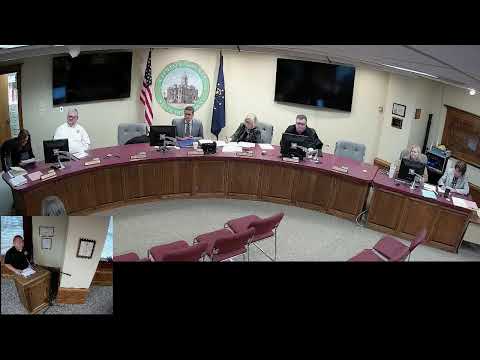
Clinton County prosecutor asks council to restore deputy to full time; council approves 5-0
Summary
Clinton County Prosecutor Tony Sommer asked the county council to convert a deputy prosecutor position from part time back to full time after a retirement; the council approved the request 5-0 while members and staff noted budget uncertainties tied to pending state legislation.
Tony Sommer, Clinton County prosecutor, asked the Clinton County council to convert a deputy prosecutor position from three days a week back to a full-time position after the incumbent announced her retirement. The council voted 5-0 to approve the change.
Sommer told the council the office currently has the workload for three full-time deputy prosecutors and that two criminal-side deputies and a full-time juvenile (house court) deputy are already in place. He said the budget request covers only the salary dollars and that fringe benefits would add to the county cost if the council approved the change.
Sommer described a pending state bill, House Bill 1006, that would create a state reimbursement program for deputy prosecutor salaries but said the bill has not passed and includes a minimum-salary threshold that Clinton County’s current deputy salaries would not meet. “House Bill 1006 . . . is going to open a door for state reimbursement for deputy prosecutor salaries,” Sommer said, adding that amendments establish a minimum salary level and that “right now, the salary level for my deputy prosecutors would not qualify for reimbursement.”
He also warned council members that the salary amounts are a moving target, because elected prosecutor pay is typically adjusted July 1 and any reimbursement formula tied to a percentage of that pay could require future adjustments. When asked whether the bill would carry retroactive reimbursement to Jan. 1, 2025, Sommer said he did not see retroactivity in the bill text and that the program would be effective upon passage.
On the fiscal details, Sommer told the council the full impact is tied to the salary ordinance: “The full impact, would be the difference between, 51.5, and 80 3 point 5 7 4 on the current salary ordinance,” (transcript excerpt). He said he had discussed alternative approaches with the council, including using the part-time allotment to raise the pay of two deputies to a minimum threshold while waiting to see whether HB 1006 passes, then restoring the third position if reimbursement became available. Sommer said the office could function if the council delayed, but it would increase workloads for remaining attorneys and that trial scheduling and a reduced number of courtrooms this spring make the timing difficult.
After discussion, a motion to approve converting the third deputy position to full time was made; the motion was seconded by Todd (surname not provided in the record). The vote was taken by voice/hand and recorded as "Motion carries 5 to 0." The record does not list individual roll-call votes.
Sommer said the position has not been posted; if the council’s approval permitted moving forward, he expected hiring to take about one to two months based on past experience.
Why it matters: the county’s prosecuting office framed the request as necessary to meet current caseloads and trial demands, while acknowledging possible state-level reimbursement in the future. The council’s vote moves the county’s budget commitment forward now but leaves open the prospect of revisiting pay and reimbursement if the legislature changes eligibility or salary benchmarks.
What’s next: Sommer will proceed with the budget/position approval process so the county can post the position; any state reimbursement under HB 1006 would require the county to adjust pay and certification steps if the bill passes and provides reimbursement.