Get Full Government Meeting Transcripts, Videos, & Alerts Forever!
Get email alerts on the Reentry Legal Services topic
No spam. Unsubscribe anytime.
Legislation would fund reentry legal services for women at Coffee Creek Correctional Facility
Summary
House Bill 22 33 would appropriate $1.2 million to the Criminal Justice Commission for grants to the Oregon Justice Resource Center to continue a reentry‑focused legal services program at Coffee Creek Correctional Facility; witnesses said the program helps address family law, debt, housing and other civil issues encountered on release.
House Bill 22 33 would fund a legal services program to assist adults incarcerated at Coffee Creek Correctional Facility with reentry issues including employment, housing, benefits and protection from domestic violence. Testimony on Feb. 11 described the program’s work and a legislative proposal to appropriate $1,200,000 to the Criminal Justice Commission for grants to the Oregon Justice Resource Center (OJRC).
Representative Tana Sanchez, the bill sponsor, described the program’s origins in an initial pilot serving Native American women and said unaddressed civil legal issues — from unpaid bills and foreclosures to garnishments and family‑law barriers — can drive recidivism and undermine reentry. “People coming out of prison and struggling with owed bills … were barriers to women being able to successfully reintegrate into the community,” Sanchez said.
Julia Yoshimoto, an attorney and project director for the Women’s Justice Project at the Oregon Justice Resource Center, testified that the Remembering Legal Services program began as a pilot and was expanded by the legislature in 2019. Yoshimoto said the program conducts intensive intakes while clients are incarcerated, resolves civil matters when possible, and prepares people with next steps for release. “We assist 60 to 70 clients per year, assisting most with multiple legal issues,” Yoshimoto said. She listed common issue areas as family law, debt and financial issues, driver’s licenses, property, housing, employment and education matters, and gave examples of avoided foreclosures, defended actions by abusive partners, probate assistance and correction of sentencing judgments.
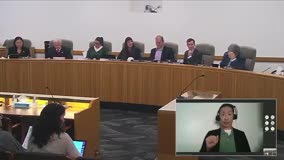
Tom Anderson, a co‑sponsor, said the bill would restore a legal services capacity that supports reentry and asked the committee to approve the appropriation. Bhavin Singh, executive director of the Oregon Justice Resource Center (appearing online), said state funding accounts for roughly 85–90% of the program’s sustainable budget and the program supplements state dollars with philanthropy and grants; OJRC had previously privately supported the program when state funding lapsed.
The measure would appropriate $1,200,000 from the general fund to the Oregon Criminal Justice Fund for the biennium beginning July 1 to allow the Criminal Justice Commission to issue grants to OJRC; it would require CJC and OJRC to report to the legislature by Sept. 15, 2026, include an emergency clause making the act effective on passage, and repeal the appropriation on Dec. 31, 2027. Witnesses and committee members discussed the program’s pilot history, the difficulty of relying on private grants for sustained operations, and the committee’s interest in more outcome data such as recidivism comparisons; panelists said recidivism data were not immediately available but could be developed with the Criminal Justice Commission.
No formal committee vote on HB 22 33 was recorded during the Feb. 11 hearing; sponsors asked the committee to advance the measure.