Get Full Government Meeting Transcripts, Videos, & Alerts Forever!
Get email alerts on the Hospital Assessment topic
No spam. Unsubscribe anytime.
Oregon House committee adopts dash-2 amendment to hospital assessment bill, forwards measure to revenue committee
Summary
The House committee adopted the dash-2 amendment to HB 2010, giving the Oregon Health Authority flexibility to set separate inpatient and outpatient assessment rates and extending OHSU’s intergovernmental transfer arrangements; the committee then sent the bill to the House floor with a due-pass recommendation.
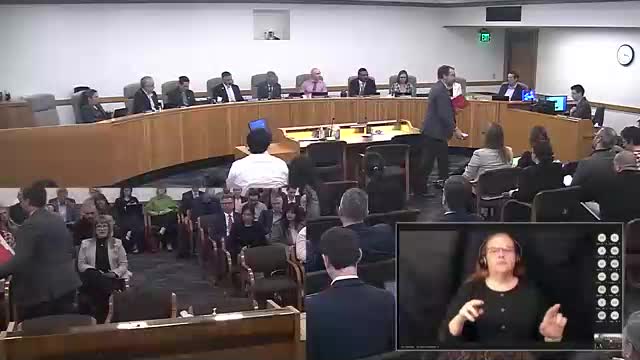
Chair Nos opened a work session and public hearing on House Bill 2010 before the House Committee on Behavioral Health and Health Care and called forward representatives of the Oregon Health Authority to explain the dash-2 amendment. The committee adopted the dash-2 amendment and then voted to send the bill to the House floor with a due-pass recommendation and referral to the House Committee on Revenue by prior reference.
The OHA’s deputy director for policy and programs, Dave Baden, told the committee the amendment permits the authority to manage the hospital assessment program with greater flexibility, specifically allowing separate inpatient and outpatient assessment rates. Baden said the change does not create a new fiscal impact in the underlying bill but gives OHA authority to adjust rates over time to maximize federal Medicaid revenue. He also described language in the amendment extending Oregon Health & Science University reimbursement rates through the intergovernmental transfer (IGT) program and continuing the IGT treatment through 2032 to align timing with assessments.
Committee members asked whether the amendment allows the OHA director to set patient-revenue-based rates without returning to the Legislature; Baden said the amendment preserves existing practice and is intended to keep OHA flexible to meet the legislative intent of targeting an overall assessment rate (discussed as approximately 6 percent). Representative Emily McIntyre and others sought clarification that the amendment does not represent a change in current practice but codifies the flexibility OHA has used in the past. OHA committed to providing more detailed revenue figures on Medicaid hospital revenues for the record.
Vice Chair Javadi moved adoption of the dash-2 amendment; the committee adopted it by roll call. The committee then moved the main bill, as amended, to the floor with a due-pass recommendation and referred it to the House Committee on Revenue by prior reference.
Votes at a glance - Dash-2 amendment to House Bill 2010: adopted (roll call). - House Bill 2010, as amended: moved to the House floor with a due-pass recommendation; referred to the House Committee on Revenue.
Why it matters Hospitals and the Medicaid program rely on provider assessment programs and intergovernmental transfers to draw federal matching funds. The amendment gives OHA managerial flexibility to set different assessment rates for inpatient and outpatient services and extends IGT treatment for OHSU, measures OHA said are necessary to preserve federal revenue flows that support Medicaid services.