Get Full Government Meeting Transcripts, Videos, & Alerts Forever!
Get email alerts on the Public Health Pornography topic
No spam. Unsubscribe anytime.
Committee hears wide testimony declaring pornography a public health hazard; adopts concurrent resolution to that effect
Summary
The Judiciary Committee heard multiple in‑person and remote witnesses urging the committee to declare pornography a public health hazard and unanimously approved a due‑pass recommendation on Senate Concurrent Resolution 4017.
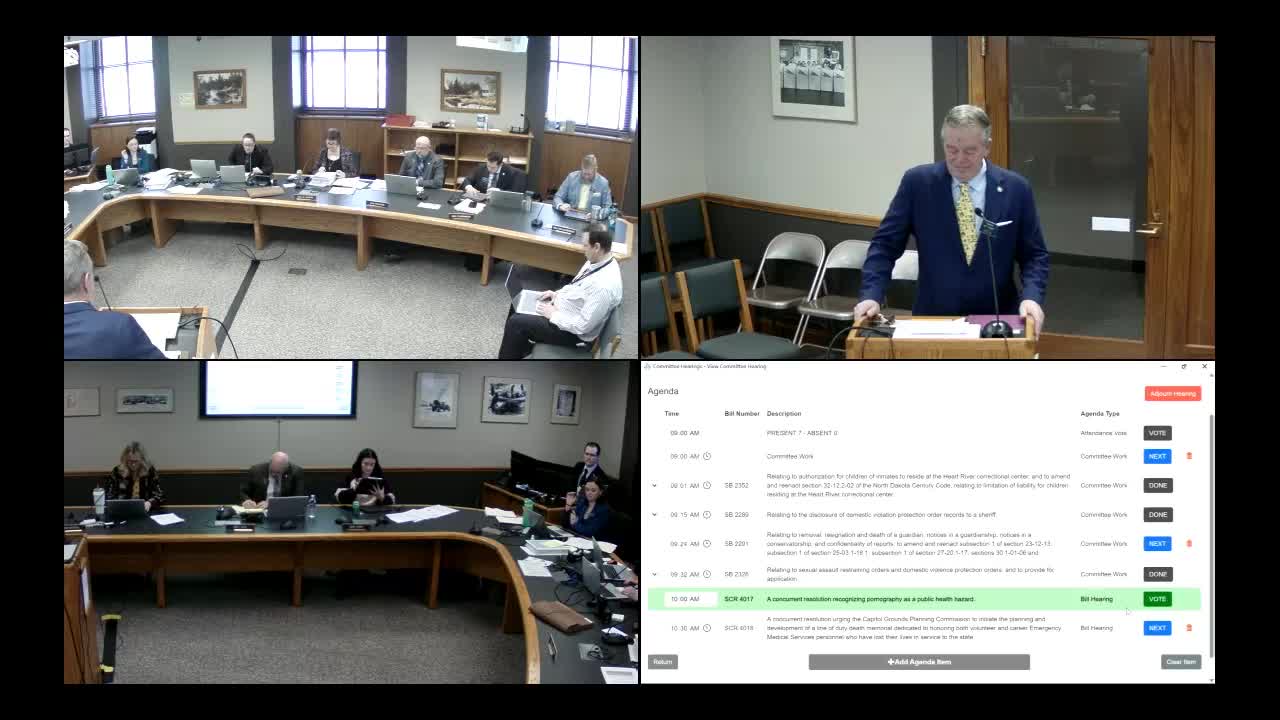
The Senate Judiciary Committee on Jan. 29 received extensive testimony during a public hearing on Senate Concurrent Resolution 4017, a nonbinding resolution that would recognize pornography as a public health hazard. After hearing multiple live and remote witnesses, the committee voted to recommend the resolution for a due‑pass.
Supporters included faith‑based groups, trafficking prevention advocates, and survivors who described pornography’s harms to individuals, families and communities. Witnesses linked pornography consumption to addiction‑like behavior, mental‑health harms, objectification and an alleged increase in demand that traffickers exploit. Several witnesses referenced research and cited other states that have adopted similar resolutions.
Why it matters: Although the resolution is nonbinding, supporters said a legislative declaration would mobilize resources for prevention, education, and treatment and underscore the state’s concern about online sexual exploitation and related harms.
Testimony highlights: Witnesses who testified in support included Mark Engott (Powers Lake), a representative from the North Dakota Family Alliance, Todd Fasetta (a trafficking‑prevention volunteer and trainer), Tammy Brown Rodriguez (policy director at a trafficking prevention organization and family member of a survivor), and others. Speakers recounted personal and professional experiences and urged members to act. Committee members asked questions and then moved for a due‑pass recommendation.
Vote and next steps: The committee moved a due‑pass recommendation; roll call votes were recorded and the motion carried. Senator Bridal was designated to carry the resolution on the floor; committee leadership said they would hold the resolution for at least a day to allow the floor sponsor time to recover before floor action.