Get Full Government Meeting Transcripts, Videos, & Alerts Forever!
Get email alerts on the Land Use topic
No spam. Unsubscribe anytime.
Columbia council debates permitted uses for McGinnis Innovation Park, flags truck traffic and special exceptions
Summary
Councilmembers spent more than an hour reviewing a table of permitted uses for the McGinnis Innovation Park, debating whether to allow industrial and retail activities that could generate heavy truck traffic and agreeing to use special exceptions and further ordinance definitions to limit impacts while keeping the property marketable.
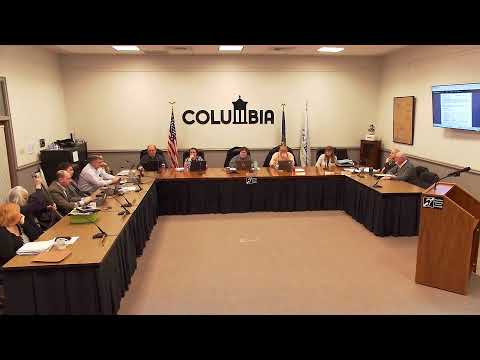
Councilmembers and staff on Feb. 11 reviewed and revised the borough's draft table of permitted uses for the McGinnis Innovation Park, the borough's light-business district parcel that officials hope to sell for development.
The session focused on which businesses to allow outright, which to require by special exception, and which to bar, with repeated concerns about daily heavy-truck traffic through neighborhood streets and under an underpass that limits vehicle routes.
Why it matters: McGinnis is a large borough-owned parcel intended to expand Columbia's tax base. Allowed uses will affect the site's marketability, the kinds of off-site improvements a buyer must pay for, traffic patterns through the borough, and the likely tax revenue from any development.
Council and staff ran page-by-page through residential, commercial, industrial and institutional uses. Councilmembers flagged uses they viewed as low-value or likely to create frequent large-truck trips'examples included large-scale distribution centers, building-supply wholesale yards, and some heavy manufacturing'and recommended either banning those uses or allowing them only by special exception with explicit criteria.
Derek, a borough staff planner, told council that "anything that is listed as a special exception use has special exception criteria listed in your ordinance. So yes. If it's permitted, boom, you can do it. If it's a special exception, somewhere in your ordinance says, you can do this, but you need to provide this, this, this, this, or this." He added that if a use meets its special-exception standards the borough has "limited to no ability to tell them no." Council discussed using special exceptions to require additional on-site parking, traffic-mitigation measures or conditions that would shift off-site improvement costs to a buyer.
Community development staff member Eric (first name only in the record) urged flexibility to keep the site attractive to buyers. "My opinion is that we make it suitable to sell for the largest possible dollar we can get and not handcuff ourselves to what our vision was originally," he said, while acknowledging that some light-industrial uses could be noisy or require siren testing.
Council debated many specific items that would affect truck volumes and neighborhood impacts. Examples discussed include: - Lumber yards and wholesale building-supplies operations: councilors noted both resemble high-truck-volume uses and recommended consistent treatment (either permitted or restricted) and clearer definitions in the zoning code. - Warehousing and package-distribution centers: several members opposed warehouse/distribution as a permitted use because of frequent truck trips. The group agreed warehouses could be left off the permitted list and considered by special exception, with conditions requiring access that would route trucks to U.S. 462 rather than neighborhood streets. - Auto repair, vehicle restoration, and boat repair: councilors debated whether these should be permitted, disallowed, or require special conditions (for example, on-lot parking and limits on outdoor storage). - Restaurants and taverns: the council agreed a restaurant without a drive-through should be permitted; taverns/microbreweries could be allowed by special exception. - Large industrial operations (asphalt plants, quarries, bulk chemical manufacture): generally marked not permitted.
Council also discussed development strategies: staff described conditional-use or master-planned development approaches that treat the site as a single cohesive project for one developer. Derek said those approaches work best when one developer intends to build and manage the full project; otherwise developers subdividing the parcel could lead to a fragmented outcome. Council members said they want to preserve choices that will attract higher-value development while protecting neighborhoods from high-volume truck routes.
Process and next steps: Council instructed staff to mark potentially sensitive uses as "special exception" and asked the planning commission to draft specific special-exception criteria. Staff recommended targeted text amendments and adding definitions to the zoning ordinance rather than a full rewrite. Council members also discussed selling the site to a single developer under a conditional-use-style plan or using text amendments as part of a sale contingency if a buyer requests different uses.
Ending: Council agreed the work is preliminary and will continue. Staff said the McGinnis zoning revisions and definitions will be refined in follow-up workshops and then sent to the planning commission for formal review and drafting of special-exception language.