Get Full Government Meeting Transcripts, Videos, & Alerts Forever!
Get email alerts on the Tobacco Retail Limits topic
No spam. Unsubscribe anytime.
DeKalb council signals support to cap retail tobacco stores at four
Summary
Council members broadly supported limiting specialized retail tobacco stores to four in DeKalb and asked staff to return an ordinance amendment; a business owner seeking to open spoke in favor of locating here.
DeKalb City Council members signaled support during deliberations on limiting the number of specialty retail tobacco stores in the city and directed staff to draft an ordinance amendment to set a cap, with council consensus appearing to favor four such stores.
Council members said the measure would apply only to retail tobacco stores as defined in the city’s Unified Development Ordinance—businesses that derive more than 30% of gross revenue from tobacco or nicotine products and dedicate more than 25% of floor area to those sales—not to gas stations, grocery stores or bars. City staff said the city had five such stores until recently, one closed and another party is seeking a license.
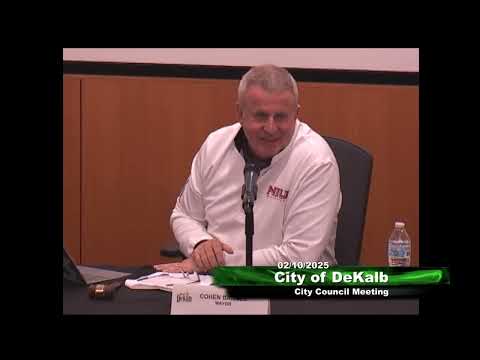
The proposal was introduced by Mayor Barnes to re-open city discussion about whether to limit the number of retail tobacco stores “no different than how we did the video gaming establishments,” and the city manager explained the UDO definition and current local inventory. Alderman Walker told colleagues, “I wanna set the limit. I don't want anymore. If anything, I would like to take more away,” and Alderman Larson said she supported Walker’s position, adding, “four is more than enough, if not too much.” Alderman Zazada said she was “a little flexible” but could support a limit because she believes the stores “don't bring any true value to our community.”
Bashar Saiedi, who identified himself as owner of Flying Puff (Auburn Tobacco Vape Smokeshop), spoke from the audience in support of opening a location in DeKalb, saying his shop would pay taxes and “the lowest prices” and asking the council to welcome him. City staff replied that a prospective operator could still buy an existing licensed location if one became available.
City Manager (unnamed) summarized next steps: staff will prepare an ordinance modification for council consideration in an upcoming meeting. The mayor said if the council maintains consensus on a limit of four, the change would be drafted “as a modification towards the variance” and returned for formal action.
No formal ordinance vote occurred at the meeting; council members framed the discussion as direction to staff rather than an adopted regulation.
The council clarified the cap would not affect convenience stores, gas stations or grocery retailers that sell tobacco as an ancillary product; those businesses are governed by a separate license class and were not the subject of the proposal. The city manager also said a party interested in opening a fifth retail tobacco store may have representatives in the audience and invited them to speak.
Council members said they would review the drafted ordinance when it returns to the council for formal consideration.