Get Full Government Meeting Transcripts, Videos, & Alerts Forever!
Get email alerts on the Beekeeping Ordinance topic
No spam. Unsubscribe anytime.
Farmington planning commissioners direct staff to draft beekeeping ordinance
Summary
At their Feb. 11 meeting, the Farmington City Planning Commission reviewed ordinances from nearby cities and gave staff direction to draft a local beekeeping ordinance with provisions on zoning, colony density, setbacks, barriers, education and inspections.
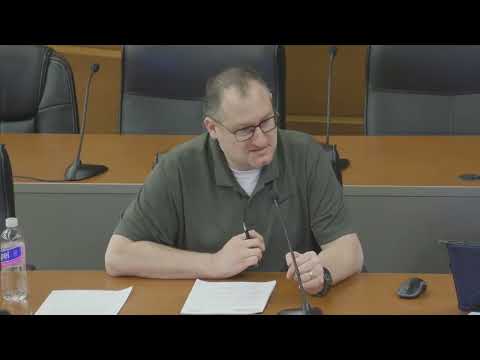
At its Feb. 11, 2025 meeting, the Farmington City Planning Commission directed staff to prepare a draft beekeeping ordinance after reviewing ordinance language from surrounding communities and discussing enforcement, education and setback standards.
The commission’s action followed a staff presentation comparing ordinances from Lakeville, Rosemount and Eagan and guidance from the Minnesota Hobby Beekeepers Association. Jared, a city staff member who led the presentation, said a typical ordinance would include “definitions, permit requirements, performance standards, and then your permit inspection or terminations.” He summarized common provisions: allowing beekeeping in agricultural and single-family residential districts; linking permitted hive density to lot size; locating hives in rear yards; and permitting limits such as two colonies on lots less than 0.5 acre.
Commissioners debated enforcement and public outreach. Commissioner Teske asked whether inspections would be complaint-based or annual; Jared said he would "assume that it would be complaint basis, and there would be, since if it would be an annual permit, we would do an annual inspection as well." Commissioner Windchuttle urged mandatory education for applicants and favored larger setbacks, noting that Eagan’s ordinance requires a 30-foot setback from an adjacent dwelling unit, deck, patio or pool.
Commissioners discussed screening or “flyway” barriers designed to force bees to fly upward and away from neighboring yards. Staff described examples found in other ordinances: a required barrier when a hive is within 25 feet of a lot line, using a wall, fence or dense vegetation at least 6 feet high. Commissioners and staff also discussed a convenient on-site water source to discourage bees from seeking water in neighboring yards and the use of nucleus colonies in hives.
Lakeville’s process, cited by staff, requires an interim use permit with public notice and a $500 fee; staff told commissioners Lakeville enacted its ordinance in 2017 but had only one active permit as of May 2024. Commissioners suggested Farmington consider fees similar to the city’s urban chicken permit (mentioned in the meeting as $100 for the initial permit) if the city will conduct inspections.
Commissioners flagged enforcement questions for the draft, including how to address repeated complaints, refusal of inspection, and criteria for terminating a permit. Jared said the city would work with legal counsel to define termination and enforcement language and bring back a draft ordinance for the commission’s review. Several commissioners expressed consensus that the commission should proceed to a draft and that the draft should include an education requirement and limits to single-family zoning districts.
Staff said the draft ordinance would return to the commission for further refinement and public hearing before any Council action. The commission did not adopt an ordinance at this meeting; it provided direction to staff to prepare a draft for later consideration.