Get Full Government Meeting Transcripts, Videos, & Alerts Forever!
Get email alerts on the Land Use Development topic
No spam. Unsubscribe anytime.
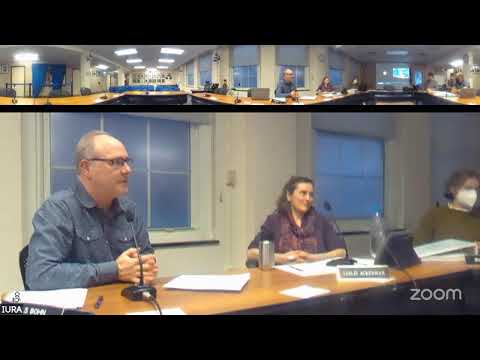
IRA debates next steps for Inland Island project; brownfield cleanup and Coast Guard parcel emerge as hurdles
Summary
Agency members discussed pausing reissuing an RFEI for the Inland Island Urban Renewal Project until development barriers — notably a city-owned brownfield and the licensed Coast Guard Auxiliary parcel — are investigated and potential land-swap terms resolved.
At its Feb. 11 meeting the Ithaca Urban Renewal Agency discussed next steps for the Inland Island Urban Renewal Project and weighed whether to reissue a request for expressions of interest (RFEI) while material site constraints remain unresolved.
One central barrier identified was subsurface petroleum contamination on a roughly half-acre portion of city-owned property. Staff said the site has tight soils and limited groundwater movement and described the contamination as historical; staff noted a similar cleanup in the past (for the Boatyard/Boat Yard Grill site) cost about $350,000 in the early 2000s and said remediation costs and regulatory attention (including updated groundwater rules) have increased since then. Members said the agency previously expected a developer to perform brownfield investigation and cleanup and offset that work in a land purchase agreement, but that approach has impeded private financing in the current market.
Another constraint is the parcel licensed to the Coast Guard Auxiliary. Members said acquiring or swapping rights to that parcel would enlarge the developable footprint and public-access opportunities; the conversation referenced prior informal terms that envisioned an equal-value land swap and noted the city and the Auxiliary have been working on a transfer for years. Staff said the Auxiliary parcel is adjacent to the narrow island site, and resolving its status is important to recreate the scale of the earlier project proposals.
Agency members discussed options in the packet, with several expressing a preference for a “remove barriers first” approach (described as option 3 in the materials): completing targeted brownfield investigation, pursuing the land-swap with the Coast Guard Auxiliary, and then reissuing any RFEI or revised solicitation. Staff warned that the usual state-funded brownfields program no longer has funding and that the agency lacks a full estimate of remediation costs; members discussed pursuing grants, seeking city reimbursement for IRA-incurred investigation expenses, or using one-time loan-fund balances for one-time work rather than committing recurring funds.
Members also suggested alternative, lower-cost ways to gather new ideas about the island, including design or urban-design competitions, academic studio work at Cornell under the city’s faculty MOU, or commissioning a development feasibility consultant. Staff observed prior developer-prepared surveys and feasibility work exist and that outside design exercises can produce creative approaches but do not always address lender-level financial feasibility.
No final binding decision to reissue an RFEI was recorded. The discussion emphasized reducing development impediments before relaunching a solicitation so proposals come in with clearer remediation assumptions and realistic timelines.
Ending: Agency members directed staff to continue work on barrier definitions, explore brownfield-investigation options and ongoing land-swap discussions with the Coast Guard Auxiliary, and to return with options and cost estimates before a decision to reissue an RFEI.