Get Full Government Meeting Transcripts, Videos, & Alerts Forever!
Get email alerts on the Education Technology topic
No spam. Unsubscribe anytime.
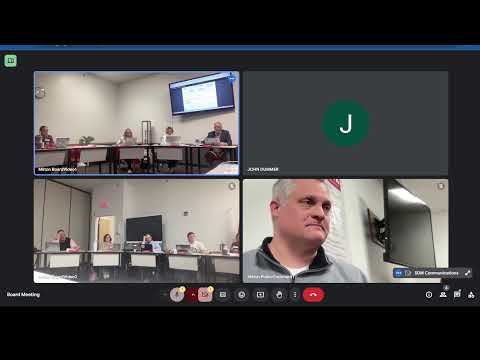
Milton board rejects plan to replace high‑school MacBooks with Chromebooks
Summary
After public comment and extended discussion, the Milton School District board voted down a motion to adopt Chromebooks as the Milton High School 1:1 student device for 2025–26, citing divided views on instruction, student focus and long‑term device strategy.
Milton School District board members voted down a proposal Feb. 10 to adopt Chromebooks as the Milton High School 1:1 student device beginning with the 2025–26 school year.
The motion, which initially named a specific Chromebook model, was moved by board member Rick and seconded by board member Jennifer Johns. The board amended the motion to remove the specific model, then held a roll‑call vote on the amended motion; the board recorded three votes in favor and four opposed, so the motion failed.
The issue drew public comment and lengthy board debate. Two speakers who had participated in the classroom pilot urged the board to switch to Chromebooks. Sarah Prichtl, a teacher, told the board they had “done your homework” and said teachers she consulted believed upperclassmen could adapt after a transition. Bryn (Bridal) Miles, the district’s technology integrator, said she had been skeptical at first but concluded after the pilot and outside conversations that “Chromebooks are the right choice for our learners today and for the future that awaits them.”
Administrators presented a memo recommending Chromebooks for the high school. The memo cited pilot feedback from teachers — clarified during the meeting as coming from 54 classroom teachers — and administration testimony that about 90% of those teachers believed Chromebooks would allow them to meet learning objectives. Administrators and board members also discussed device counts and costs: a district figure presented during the meeting showed a plan to refresh and maintain 800 MacBooks (with roughly half allocated to staff) and identified the per‑device retail comparisons used in the financial argument, including a board member’s remark that a MacBook costs roughly $879 versus about $299 for a Chromebook.
Supporters of the Chromebook proposal said the devices and the district’s management tools (including ClassWise) would reduce classroom distraction, lower costs for families and the district, and better match the web‑based tools students encounter in higher education and many workplaces. Opponents said MacBooks supported advanced coursework and creativity in classes such as digital media, raised concerns about relying on a single large technology vendor, and worried about locking the district into a single platform. Some board members also said they would have liked more time to review teacher and student feedback.
Board members asked staff how policy and discipline would address off‑task or inappropriate use. Administrators said they use multi‑layered classroom management, that teachers and offices currently redirect students and apply discipline when devices are misused, and that the pilot helped identify training needs that would be addressed in a broader rollout if the board had approved the change.
The board’s final tally on the amended motion was 3 in favor, 4 opposed. The district will keep its current device plan for now and return to technology‑and‑finance planning as needed.
Votes at a glance
- Motion (amended): District use Chromebook as the Milton High School 1:1 student learning device starting with the 2025–26 school year. Moved by Rick; seconded by Jennifer Johns. Amendment to remove the specific model passed. Final motion failed on roll call (Yes: 3; No: 4). (Named roll‑call votes explicitly recorded in the transcript: Jennifer Johns — yes; Tracy — no; Joe — yes; Rick — yes; Annette — no; remaining two board votes were recorded only in the roll‑call total and not individually attributed in the transcript.)
Context
The devices decision followed months of pilots and committee work at the high school. Administrators described a multi‑year refresh plan, loaner pools for breakage/missing devices, and staff training plans. Board members across the room and in public comment repeatedly framed the question as balancing instructional capability, classroom focus, family cost and long‑term vendor/platform dependence.
Ending
With the motion defeated, the district will continue operating under its existing device plan. Administrators said they will bring any future procurement, leasing or major policy changes back to the board for approval.